A tree can be leaning over a roof, lifting a driveway or dropping limbs onto a footpath, yet still be subject to protected tree removal consent. That can feel frustrating when the problem is clearly visible, but protection rules exist to prevent the loss of significant trees without proper consideration of safety, landscape value and practical alternatives.
For property owners, managers and developers, the key is to identify the tree’s status before booking removal work or allowing a contractor onto site. A little preparation can prevent costly delays, avoid enforcement action and ensure the work is planned safely from the start.
What is protected tree removal consent?
Protected tree removal consent is approval from the relevant local authority to remove, or sometimes carry out work on, a tree covered by a planning control, tree register, heritage listing or other environmental rule. The exact name of the approval and the criteria used will vary between councils and planning schemes.
A protected tree is not always a large, old tree in a public reserve. It may be a mature specimen on a private section, a group of trees within an overlay area, a tree connected to a heritage place, or a species protected because of its ecological value or a tree or group of trees covered in a development consent. Rules can also apply to trees above a specified trunk diameter or height or Species in some areas, even where they are not individually listed.
Removal is not the only activity that may require approval. Heavy pruning, root cutting, excavation near the trunk, trenching for services, changes to ground level and construction work within the root zone can all affect a protected tree. Treating consent as a removal-only issue can create problems well before the chainsaw arrives.
Check the tree before making plans
The first step is to confirm the property’s planning controls and whether the individual tree falls within them. Do not rely solely on a neighbour’s advice, a previous owner’s comments or the fact that other trees in the street have been removed. Planning maps, property files and council advice are more reliable starting points.
It also helps to establish what is actually proposed. There is a meaningful difference between removing a dead tree, reducing an overextended branch, clearing land for a new building platform and removing a healthy tree because it blocks light. Each situation may be assessed differently, and the supporting information needed can change accordingly.
Photographs are useful, but they rarely tell the whole story. Take clear images of the tree from several angles, its proximity to buildings and services, visible defects, and the wider site. Note recent changes too, such as storm damage, soil movement, fungi at the base, construction activity or branches falling from the canopy.
A tree report can turn concern into evidence
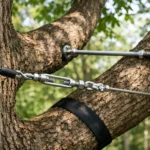
Where consent is likely, an arborist’s assessment often provides the practical evidence needed to support an application. It may identify the tree species, size, condition, remaining useful life expectancy, structural defects, risk factors and amenity value. It can also set out options other than full removal, such as targeted pruning, cabling and bracing, exclusion zones or ongoing monitoring.
This is especially valuable where a tree is considered hazardous. A statement that a tree “looks unsafe” is not always enough for a consent authority, insurer or project team. Clear arboricultural evidence explains the defect, the likelihood of failure, what could be struck if it failed, and why the recommended work is proportionate.
For development sites, the report may also define a tree protection zone and specify how machinery, stockpiles, temporary fencing and services should be managed. Damage to roots during early site works can leave a tree unstable or in decline years later, even if its canopy initially looks unaffected.
Safety concerns do not always mean removal is automatic
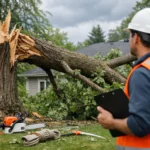
If a protected tree poses an immediate threat, safety must come first. A split limb above an occupied area, a storm-damaged tree against a building or a tree affecting live lines needs prompt professional attention. In an emergency, authorities may allow urgent work to make the area safe, but this should never be assumed.
The sensible approach is to document the condition, contact the relevant authority where possible and engage approved qualified arborist who can complete only the work necessary to control the immediate hazard. Keep records of photos, weather events, communications and work completed. If further removal is required once the immediate danger has passed, consent may still be needed.
There is also a trade-off to consider. Removing a hazardous limb may be enough to manage the risk while retaining a valuable tree. On the other hand, repeated reductions on a badly decayed or poorly structured tree may not provide a safe long-term outcome. The right decision depends on the defect, the target beneath the tree, future maintenance requirements and the tree’s capacity to recover.
How the consent process usually works
Most applications need a clear description of the proposed work, site details, photographs and reasons for the request. Depending on the situation, the council may ask for an arborist report, site plan, construction drawings or evidence that less invasive options have been considered.
Be precise about the scope. “Trim back branches” is vague. A better work specification identifies the branch or canopy area, the intended pruning method, the reason for the work and the desired clearance from a structure, accessway or service. Precise information helps an assessing officer understand what will happen and helps the contractor deliver the approved result.
Processing times can vary. Applications may involve a site inspection, requests for further information or conditions requiring replacement planting, seasonal timing restrictions, supervision by an arborist, or protection measures during work. This is why protected-tree checks should happen early in a project, not once equipment and crews are already booked.
Do not begin work simply because an application has been lodged. Consent generally needs to be issued by the authority before non-emergency work starts, and conditions must be read carefully. Approval to prune is not approval to remove. Approval for a specific tree does not automatically extend to nearby trees, stumps, roots or vegetation clearance.
Choose a contractor who is approved and understands the conditions
Protected-tree work needs more than a capable climbing crew. It requires a contractor who can interpret the approved scope, work around sensitive root zones, use appropriate access methods and leave the site tidy without causing avoidable damage.
For example, a large truck or elevated work platform may be efficient on an open site but unsuitable where ground compaction could harm roots. In tight residential access, a climbing arborist, careful lowering systems and smaller machinery may be the safer choice. The method should suit both the tree and the conditions of consent.
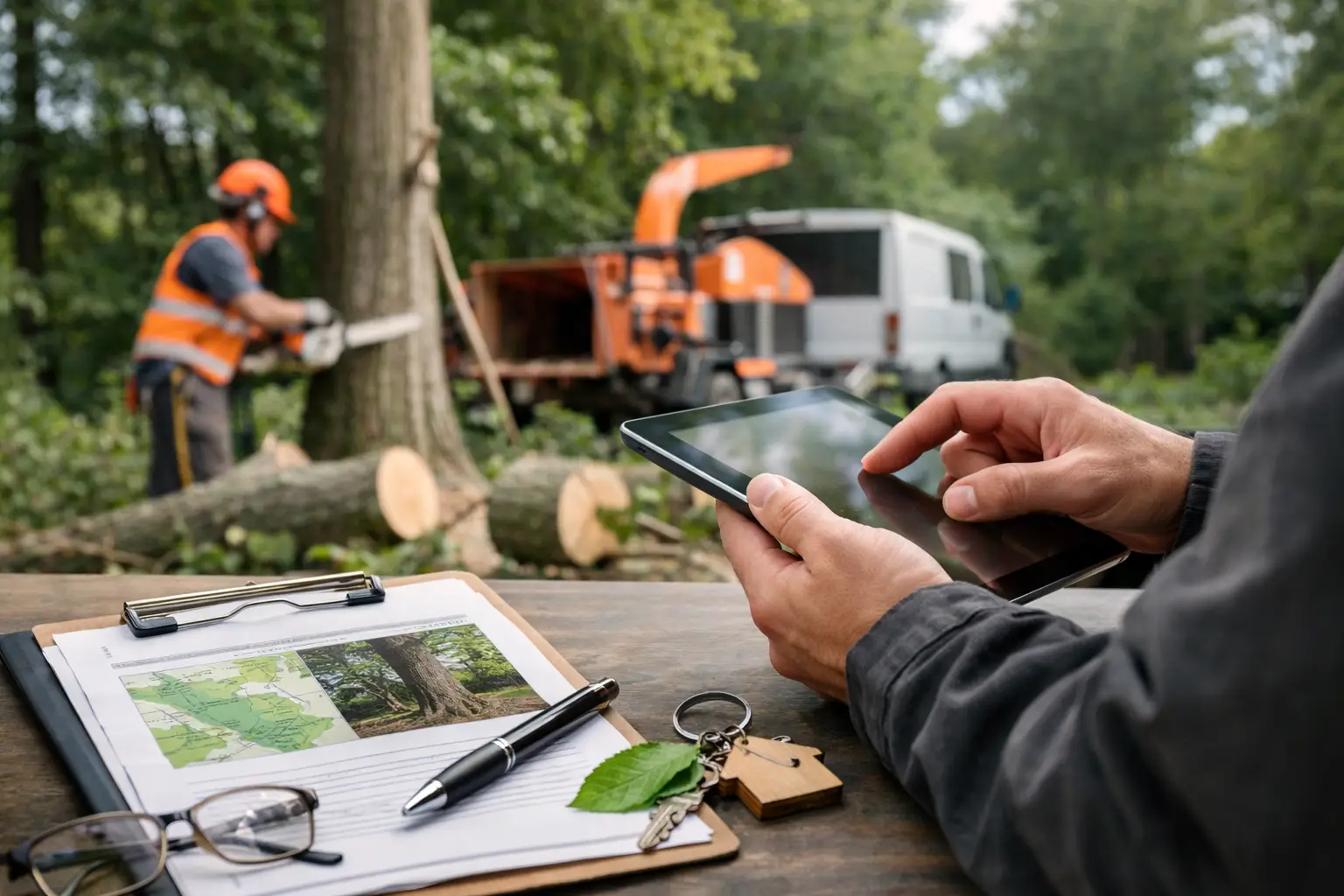
Ask for a written scope of work that matches the approval. It should cover site access, traffic or pedestrian management where relevant, protection of lawns and gardens, management of timber and chip, and how the work area will be left. For commercial properties and managed sites, documented safety planning and clear communication reduce disruption for tenants, staff and visitors.
Tree Technician approaches protected-tree work with the same safety-first thinking applied to technical removals, pruning and hazard management. Well-maintained equipment, experienced crews and arboricultural expertise matter most when there is little room for error.
Avoid the shortcuts that create bigger problems
The most common mistake is treating a protected tree as an ordinary garden-maintenance job. Topping a canopy to make it smaller, cutting roots to stop lifting, or removing branches without checking controls can compromise the tree and breach the rules at the same time.
Another mistake is waiting until a construction programme is fixed. If a protected tree affects a driveway, drainage route, building footprint or crane access, assess it during the design stage. A revised layout or a properly designed tree protection plan may save more time than a late attempt to secure removal approval.
Finally, avoid judging tree health from one symptom. Leaf drop, deadwood or surface roots do not automatically mean a tree is beyond saving. Equally, a full green canopy does not guarantee sound structure. An informed inspection provides a stronger basis for action than guesswork.
A protected tree can be an obligation, but it may also be one of the most valuable assets on a property. Start with its status, get sound advice where risk or development is involved, and allow enough time for consent before the work needs to happen. Planning is everything when dealing with sensite consents!
www.treetechnician.co.nz