A tree does not need to be on the ground to be dangerous after a storm. A cracked limb lodged in the canopy, roots lifting beside a driveway, or a trunk leaning towards a home can all create an urgent hazard. If you need storm damaged tree help, the first priority is simple: keep people away, avoid making the damage worse, and have the tree assessed by a qualified arborist.
Strong winds, saturated soil and heavy snow can expose weaknesses that were not obvious before the weather event. Canterbury properties often have mature shelter belts, large specimen trees and boundary plantings close to homes, sheds, fences and overhead services. A calm, safety-led response protects people first, then gives the tree the best possible outcome.
Make the area safe before inspecting the tree
Do not walk directly beneath hanging branches or a split canopy. Storm damage can leave timber suspended under tension, and it may move without warning as wind changes or the wood fibres continue to fail. Keep children, pets, visitors and vehicles outside the potential fall zone.
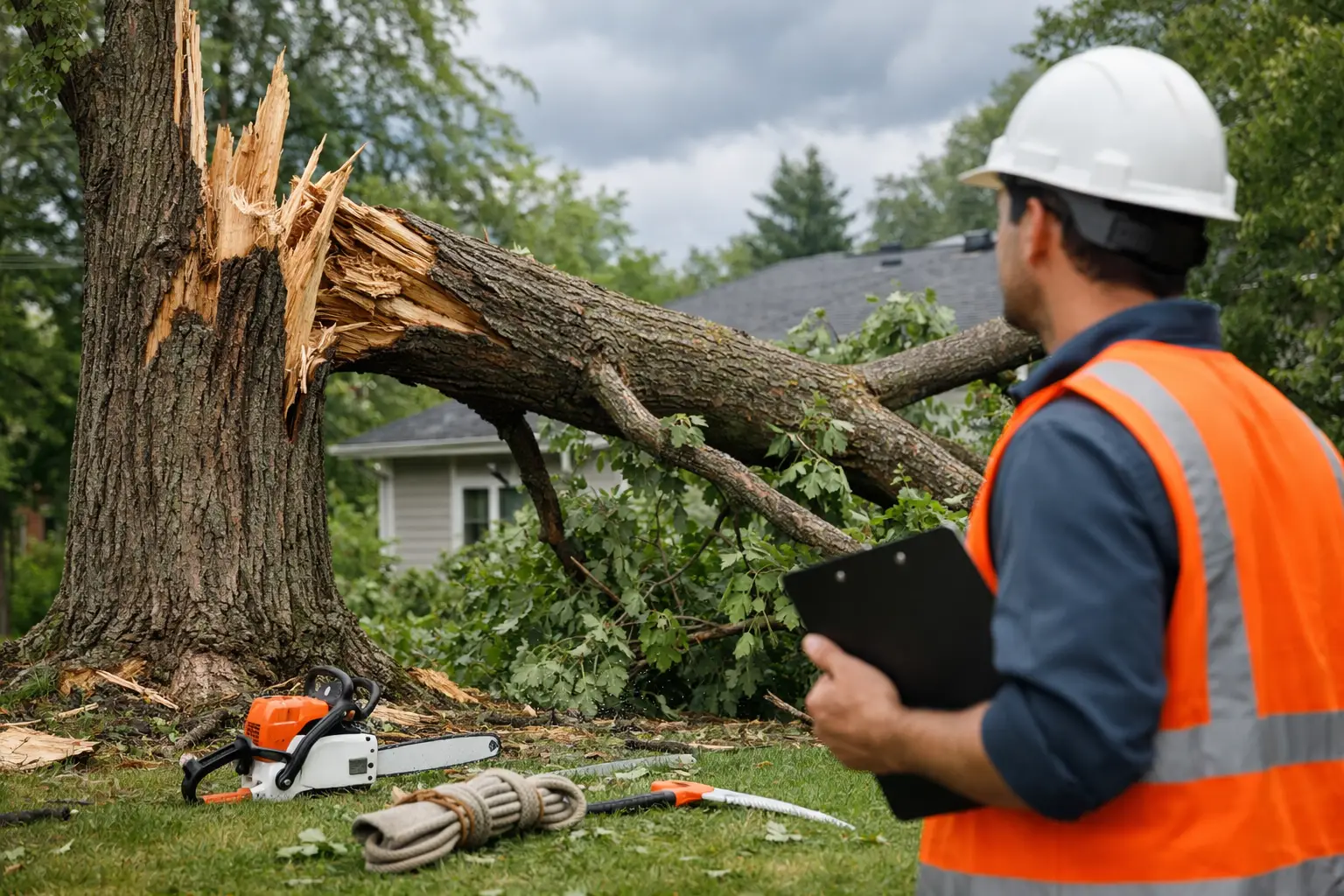
Look from a safe distance for obvious warning signs: freshly exposed pale wood, branches caught in other branches, a new lean, cracks in the trunk, lifted soil around the base, or limbs resting on a roof or fence. Take clear photos if you can do so safely. They can help an arborist understand the situation before arriving, but photos are never a substitute for an on-site assessment.
If a tree or branch is touching power lines, stay well clear and contact your electricity network operator immediately. Do not attempt to move the branch with a pole, ladder, rope or machinery. Even a line that appears to be down or inactive must be treated as live. Where there is an immediate threat to life or property, contact emergency services as well.
When storm damaged tree help is urgent
Some damage can wait for a planned visit. A small branch on an open lawn, for example, may be inconvenient but manageable if the area is cordoned off. Other situations need a prompt emergency response because the risk is active or the consequences of failure are high.
Call for professional assistance promptly when a tree has fallen onto a building, blocked access, damaged a fence, is leaning over a house or public area, or has major limbs hanging above a driveway, footpath or entrance. Root plate movement is especially serious. If the ground at the base has heaved, cracked or lifted, the tree may have lost much of its anchorage even if its canopy still looks largely intact.
Commercial sites, schools, body corporate properties and rural accessways need particular care after a storm. The person responsible for the site should isolate the affected area, record the hazard and arrange assessment before staff, tenants, contractors or the public return to normal use. A documented inspection can also support ongoing hazard-tree management and insurance conversations.
Avoid the tempting DIY fixes
After a storm, it is natural to want to clear the mess quickly. The most dangerous work often begins when someone climbs a ladder with a chainsaw or tries to pull a lodged branch free from the ground. Storm-damaged trees are not routine pruning jobs. Branches can be twisted, compressed, suspended or loaded against another part of the tree.
Do not climb the tree, cut limbs under tension, use a vehicle to pull on branches, or work beneath a damaged canopy. Avoid cutting a branch that is resting on a roof or structure, as removing it can change the load suddenly and cause further damage. Even experienced operators need the right rigging, access equipment, exclusion zones and cutting plan for this type of work.
There is also a trade-off between fast clearance and protecting what can be retained. Removing every damaged limb may seem like the safest option, but unnecessary cutting can leave a healthy tree unbalanced, vulnerable to decay or unable to recover well. Proper arboricultural judgement identifies which defects require removal and which can be reduced, pruned cleanly or monitored.
What a professional arborist will assess
A qualified arborist starts by assessing the tree, its surroundings and the likely targets if it fails. The question is not simply whether a branch is broken. It is whether the remaining tree is stable, how the defect will behave in changing weather, and whether people or property could be affected.
The assessment commonly considers the extent of crown damage, trunk cracks and cavities, root stability, soil saturation, tree species, previous pruning, decay, and proximity to buildings or services. A mature tree with a single failed branch may be suitable for corrective pruning. A tree with a split main stem, extensive root movement or severe structural failure may require controlled removal.
Where retention is practical, careful remedial work can improve safety and recovery. This may include removing torn branches back to suitable growth points, reducing an overextended limb, clearing broken material from the canopy, or installing cabling and bracing in appropriate cases. Not every damaged tree should be removed, but every retained tree should have a realistic plan for safe management.
Safe removal needs planning, not force
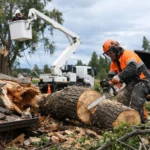
Technical tree removal after a storm often requires more than a chainsaw and a clear patch of ground. The tree may need to be dismantled in sections, with ropes and rigging used to lower timber away from roofs, glasshouses, gardens, vehicles and neighbouring properties. Restricted access can influence the method, as can soft ground, overhead lines and the condition of the remaining canopy.
A professional crew will establish an exclusion zone, use maintained equipment and select a method that controls the direction and impact of each section. For larger or more complex work, machinery may be used where site access allows. The aim is to restore safe use of the property while keeping disruption, ground damage and unnecessary removal to a minimum.
Cleanup matters too. Storm debris can hide sharp timber, trip hazards and damaged fencing. Ask whether the work includes chipping, removal of green waste, timber processing and a final site tidy. If a stump creates a trip hazard or prevents repairs, stump grinding may be the sensible next step once the tree has been removed.
Check for protection and future obligations
Before major pruning or removal, check whether the tree is protected through local planning rules, consent conditions, a covenant or site-specific management requirements. This is particularly relevant on development sites, heritage properties, schools, rural properties with significant shelter plantings, and land managed by organisations.
Storm damage does not always remove the need for approvals. In a genuine emergency, immediate work may be justified to make the site safe, but documenting the damage with photographs and obtaining professional advice remains wise. An arborist can help distinguish essential emergency works from follow-up work that may need consent or a formal assessment.
For property managers and landholders with multiple trees, a post-storm inspection is often worth arranging even when no obvious failure has occurred. Wind may have opened cracks, loosened limbs or revealed decay that is hard to see from the ground. Early action can prevent the next weather event from becoming an emergency.
Help trees recover after the immediate risk has passed
Once hazards are removed, give retained trees time and sensible care. Avoid heavy fertilising or aggressive pruning in an attempt to force rapid regrowth. Trees need energy reserves to compartmentalise wounds and rebuild a balanced canopy. Keep soil around the root zone free from compaction and construction disturbance, particularly where stormwater has softened the ground.
Monitor the tree over the following months for new cracks, dieback, fungal growth, abnormal leaf loss or continued leaning. A follow-up inspection may be recommended for trees with moderate damage, especially large specimens near occupied areas. The right outcome is not always immediate removal or complete restoration. Sometimes it is careful pruning now, monitoring through the next season and making decisions from clear evidence.
Tree Technician provides emergency response and practical arboricultural assessment for storm-affected properties across Canterbury. Whether the job involves a broken limb over a roof, a compromised shelter belt or a tree that needs a considered recovery plan, qualified advice helps turn a stressful situation into a controlled, safe piece of work.
After the wind has dropped, resist the urge to rush in. Secure the area, take note of what has changed and arrange professional assessment before anyone starts cutting. That one decision can protect your property, preserve a recoverable tree and keep a storm clean-up from becoming a serious accident.