A fallen tree can turn a quiet morning into a serious safety issue in seconds. If you are wondering what to do after a fallen tree comes down, the first job is not reaching for a chainsaw. It is keeping people clear, identifying immediate hazards and getting the right help in place before damage or injury gets worse.
Whether the tree has landed across a driveway, fence, roof, paddock or footpath, treat it as unstable until a qualified arborist has assessed it. Storm damage is rarely as straightforward as it looks from ground level.
What to do when a tree has fallen
Start by creating distance. Keep children, pets, neighbours and staff well away from the tree, its branches and the area where it fell. A tree that appears settled may still shift as limbs release tension, soil moves around the root plate or wind catches the canopy.
If the tree is on a public road, footpath or shared accessway, prevent people from entering the area only if you can do so without putting yourself at risk. Keep clear of traffic and do not stand underneath hanging branches. If there is an immediate threat to people, contact emergency services.
Take a few photographs from a safe distance once the area is secure. Photos can help document the condition of the tree, the point of failure and any property damage for insurers, body corporates or property records. They can also give an arborist useful context before arriving on site.
Do not climb over the trunk to inspect the damage. A limb may be supporting part of the tree, holding back debris or resting under pressure against a building or fence. One cut in the wrong place can cause a sudden and violent movement.
Treat power lines as an emergency
A fallen tree near overhead electricity lines needs a different response. Stay well clear, keep others away and report the hazard to your electricity distributor or emergency services. Do not touch the tree, nearby fencing, puddles, vehicles or branches that may be in contact with lines.
Electricity can travel through timber, wet ground and metal. Even if a line looks intact, it may be damaged or energised. Never attempt to pull branches off a line, cut the tree into smaller sections or move a vehicle that is touching electrical equipment.
The same caution applies to service lines running from the street to a house, shed or commercial building. Leave the site untouched until the relevant network operator confirms it is safe and an appropriately qualified tree crew can begin work.
Check the tree from a safe distance
Once urgent hazards have been reported, look for signs that the situation is more complicated than a single fallen trunk. This is particularly relevant after high winds, saturated ground or heavy rain. A tree that has failed can place new loads on neighbouring trees, fences, retaining walls and structures.
Watch for a lifted root plate, cracked soil, split stems, hanging limbs, torn bark or branches caught in another canopy. These are common signs of stored tension and secondary failure risk. A partially uprooted tree can sometimes stand for hours or days before falling further.
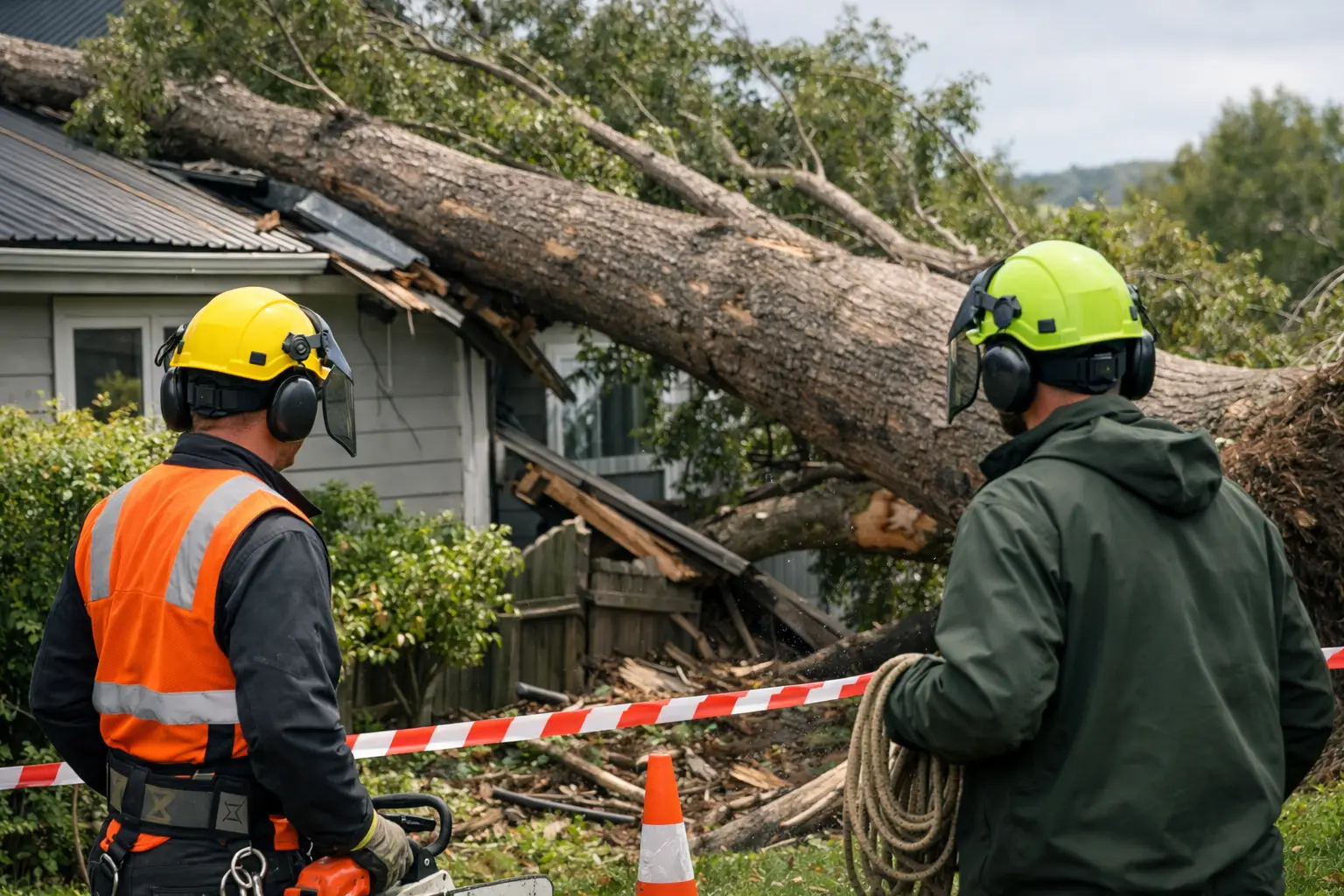
If the tree has struck a roof, guttering, garage, vehicle or boundary fence, avoid entering the affected area if there is any doubt about structural safety. Water can enter through damaged roofing quickly, so move belongings away from leaks only when it is safe to do so. For larger impacts, a building professional or insurer may need to inspect the structure as well as the tree.
Why chainsaw work is not a DIY fix
It is tempting to clear a driveway or recover a damaged fence as soon as the weather eases. However, fallen-tree removal is one of the highest-risk jobs in arboriculture. The timber may be compressed, twisted, suspended or loaded in ways that are difficult to read without training and experience.
A chainsaw cut can release stored energy in an instant. Branches can spring, roll, whip or drop unexpectedly. Large timber may shift towards the operator, especially on a slope or where the trunk is supported at more than one point. The risk increases when work is rushed, visibility is poor or the ground is wet.
Small, loose branches that are clearly detached and lying flat on open ground may be manageable for a capable property owner using suitable protective equipment. But if the tree is large, tangled, elevated, close to a building, on a slope, near services or under tension, leave it to professionals. The right crew will assess the forces involved, plan the dismantle sequence and use appropriate machinery, rigging and exclusion zones.
Arrange an arborist assessment and removal plan
A professional arborist does more than cut up the visible mess. They assess why the tree failed, whether the remaining stump or canopy presents a risk and how to remove the tree without causing further damage. On a confined residential site, that may mean sectional dismantling and controlled lowering. On a rural block or development site, machinery may be the safer and more efficient option.
The removal approach depends on access, timber size, ground conditions, nearby structures and whether the tree is protected. Trees subject to local planning controls, heritage listings or development conditions may require specific approvals before non-emergency work begins. Where there is a genuine immediate hazard, document the condition and seek professional advice promptly.
For commercial properties and managed sites, keep a clear record of the event. Note the time and weather conditions, isolate the area, photograph the damage and notify the relevant facilities manager or insurer. A formal arboricultural assessment may be useful if the fallen tree raises questions about other trees on site, maintenance history or future risk management.
Think beyond the tree on the ground
One fallen tree can be a warning sign rather than an isolated event. Windthrow may expose compacted soil, poor drainage, root decay, previous root damage or a canopy that has become too dense and unbalanced. It can also reveal defects in nearby trees that were previously hidden by foliage.
After the immediate removal is complete, consider an inspection of surrounding trees, particularly mature specimens near homes, driveways, play areas, car parks and public access routes. An arborist can identify deadwood, cavities, fungal decay, structural weakness and poor branch attachments before they become an emergency.
Preventive pruning is not about stripping a tree back. Done properly, it improves structure, reduces excess canopy weight where appropriate and removes hazardous dead or damaged branches while respecting the tree’s long-term health. In some cases, cabling, bracing or monitoring may be suitable. In others, removal and replanting is the responsible decision.
What happens after removal
A good fallen-tree job should leave the site safe and usable, not simply shift the problem into a pile. Ask how timber, branches and woodchip will be managed. Larger logs may be retained for firewood where practical, chipped for mulch or removed from site, depending on access, biosecurity considerations and your preferences.
Stump grinding is worth considering if the stump sits in a lawn, driveway entrance, garden bed or future building area. It removes the trip hazard and frees up the space for replanting or landscaping. If the root plate has lifted soil or damaged drainage, fencing or paving, allow for those repairs once the area is stable.
When replanting, choose a species that suits the mature space rather than the size of the young tree in the nursery. Consider overhead lines, buildings, drainage, shade, wind exposure and maintenance needs. The right tree in the right place is one of the best ways to avoid repeat problems.
A fallen tree is stressful, but a calm response makes a real difference. Keep the area clear, stay away from power lines and leave unstable timber to trained professionals. Once the immediate danger is under control, a practical assessment of the remaining trees can help protect your property long after the storm has passed.