A block can look straightforward from the gate, then reveal mature shelterbelts, buried services, wet ground, protected trees and years of dumped green waste once work begins. That is why land clearing methods compared properly is more useful than simply choosing the biggest machine available. The right approach prepares your site for its next use while controlling cost, protecting the land and keeping people safe.
For a new build, subdivision, fence line, access track or pasture restoration, the best method depends on what is growing, what needs to remain, ground conditions and how the cleared material will be managed. Fast is valuable, but only when it does not create erosion, damage retained trees or leave an expensive mess behind.
Start with the site, not the machinery
Before clearing starts, establish the site boundaries and identify what is actually on the block. Scrub, gorse, small self-seeded trees, established shelterbelts and large mature trees all require different handling. A dense patch of broom may be suited to mulching, while trees near a house, road, power line or neighbouring boundary need controlled dismantling by trained arborists.
The intended outcome matters just as much. A developer may need clean, level ground for earthworks. A rural landholder may only need a safer accessway while retaining wind protection and healthy specimen trees. A commercial property may be aiming for better visibility, reduced fire fuel or more usable outdoor space.
This early assessment should also consider drainage, slope, soil type, stock access, overhead and underground services, and nearby waterways. In Canterbury, dry conditions and exposed sites can make dust, windblown debris and soil loss genuine concerns. Wet ground presents a different challenge, as heavy equipment can compact soil or leave deep ruts that complicate the next stage of work.
Land clearing methods compared: where each works best
Selective manual clearing
Selective clearing uses chainsaws, hand tools, climbing techniques and smaller equipment to remove chosen vegetation while retaining trees, planting areas or sensitive features. It is slower than broad-scale mechanical work, but it offers the highest level of control.
This method suits residential sections, tight-access sites, boundary work and properties where vegetation is close to buildings, fences or services. It is also often the sensible option where a tree assessment identifies trees worth retaining, or where protected-tree rules apply.
The main trade-off is labour. Removing individual trees in sections, lowering limbs carefully and protecting the surrounding area takes time. However, the controlled result can prevent costly damage to lawns, driveways, roofs and neighbouring property. For many established sites, that is better value than a quick clearance followed by repairs.
Forestry mulching
Forestry mulchers use a purpose-built machine to cut and process scrub, saplings, gorse, broom and light woody growth into mulch. The material is spread across the ground rather than carted away, creating a tidy finish with less handling and fewer truck movements.
Mulching is efficient on larger areas with thick regrowth, especially where the goal is to open up land without stripping the topsoil. The mulch can help hold moisture and reduce erosion in the short term. It can also make the site easier to maintain while a longer-term weed-control programme is put in place.
It is not a cure-all. Large trees and substantial stumps are beyond the scope of many mulching operations, and roots remain in the ground. Some invasive species can regrow if follow-up control is not planned. Mulch may also be unsuitable where the site needs to be excavated, levelled or built on immediately. The operator needs to understand the ground beneath the vegetation, as hidden rocks, wire, rubbish and old fence lines can damage equipment and create hazards.
Mechanical clearing and grubbing
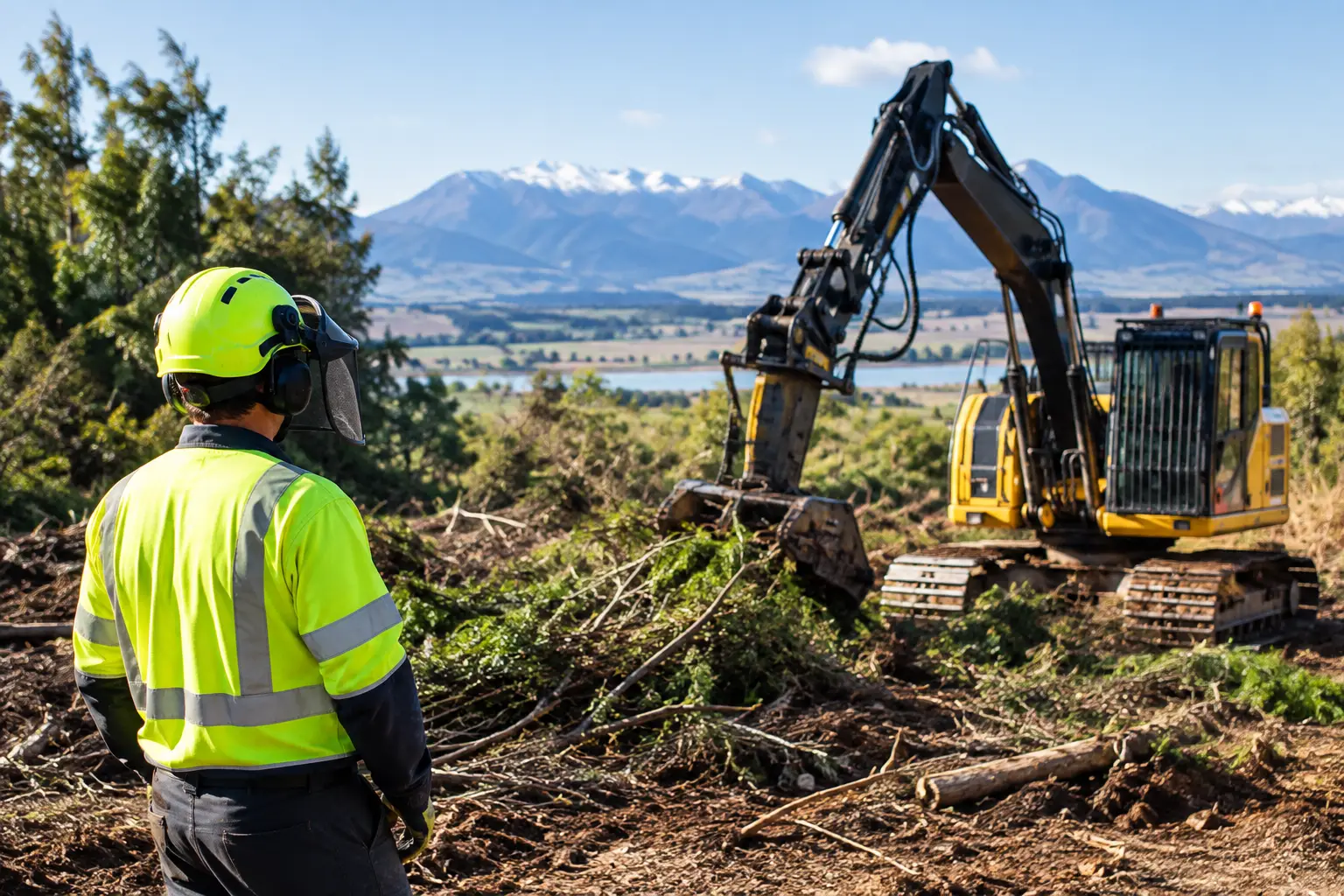
Excavators, loaders and other heavy equipment can push over vegetation, remove roots, grub out stumps and shift material quickly. This is often the preferred method for large development sites or areas that need a clean slate for roading, drainage, building platforms or cultivation.
The strength of mechanical clearing is speed and depth. Where a tree root system or old hedge line must be fully removed, grubbing can achieve a result that surface cutting cannot. Material can then be sorted for chipping, removal, reuse or disposal as part of the wider site works.
The trade-off is disturbance. Heavy machinery can compact soil, damage root zones of retained trees and expose loose ground to wind and rain. On slopes or near waterways, poor planning can lead to sediment movement and erosion. Mechanical clearing should therefore be sequenced carefully, with defined access routes, exclusion zones around retained trees and a plan for stabilising exposed soil.
Felling followed by stump grinding
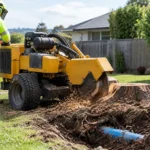
Where individual trees need to come down but the surrounding land will remain in use, felling and stump grinding is often a practical middle ground. Trees are removed in a controlled way, then stumps are ground below ground level to reduce trip hazards and free up usable space.
This approach works well for homes, schools, commercial grounds and smaller land-development areas where complete excavation is unnecessary. Grinding is less disruptive than pulling a stump out with an excavator, particularly near paths, lawns and established gardens.
It does not remove the full root system, so it may not suit foundations, new services or areas requiring deep excavation. The grindings also need to be managed properly. They can be useful as mulch in the right location, but should not simply be left where a level, compacted building surface is required.
Controlled tree dismantling
Some clearance work is really arboricultural work. Large trees beside buildings, roads, power lines or public areas cannot safely be felled in one piece. They need to be dismantled progressively, using rigging, elevated work platforms or climbing systems as conditions require.
This is the most technical and often the most time-intensive method, but it is essential when there is no room for error. A professional crew can lower sections into a defined drop zone, chip branches on site and remove timber without turning a constrained location into a major disruption.
When a tree is structurally compromised, storm-damaged or overhanging a target, safety has to lead the decision. Health and Safety is in our DNA, and no clearing deadline is worth taking shortcuts around unstable timber or public access.
What happens to the cleared material?
A land-clearing plan is incomplete if it only explains how vegetation comes down. Green waste, timber, stumps and mulch all need a destination. Chipping on site can reduce transport and provide useful mulch for suitable areas. Timber may be retained for firewood where appropriate, while larger volumes of vegetation may need removal from site.
Burning is not automatically the easy answer. Smoke, fire restrictions, weather, neighbouring properties and permit requirements can all affect whether it is appropriate. It can also waste material that could be chipped or reused. A planned approach keeps the site cleaner and avoids stockpiles becoming a fire, pest or access problem.
Rules, retained trees and environmental care
Before clearing, check whether any trees are protected through district planning rules, consent conditions, covenants or other site-specific requirements. Mature native trees, trees in sensitive landscapes and vegetation near waterways may need particular care. The same applies to sites where nesting birds or other wildlife may be present.
Retaining the right trees can improve a development rather than limit it. Healthy shelter, shade and established character take decades to replace. An arboricultural assessment can help identify which trees are safe and valuable to keep, which need remedial pruning, and which present an unacceptable risk.
Careful clearance also protects soil. Keeping machinery to planned routes, avoiding unnecessary disturbance and retaining vegetation where it performs a useful erosion-control role can save considerable remedial work later. The cleanest-looking site is not always the best-prepared site.
Choosing a method that suits your project
The best choice is rarely one method alone. A typical project may combine selective dismantling around a house, mulching across scrubby open ground, stump grinding in landscaped areas and mechanical grubbing only where construction requires it. That combination gives you control where it matters and efficiency where the site allows it.
Ask for a clear scope before work starts: what will be removed, what will be retained, how access will be managed, where material will go and what the finished ground condition will be. For development work, clarify who is responsible for permits, service location and any follow-on earthworks. These details prevent surprises once machinery is on site.
A capable land-clearing team will not treat every block the same. They will match the equipment and crew to the vegetation, access, safety risks and intended end use, then leave the area orderly and ready for the next contractor or the next stage of your plans.
If you are unsure whether to mulch, grind, fell or fully grub out vegetation, a site assessment is the sensible first step. A good decision at the beginning protects the land, the budget and the trees that deserve to stay.
www.treetechnician.co.nz