A tree can look healthy from the kitchen window and still present a serious problem overhead. Leaning limbs, fungal decay, storm damage and root movement are not always obvious until a branch lands on a roof, vehicle or fence. Christchurch tree felling is not simply about getting a tree down – it is about making a sound decision, managing the risks properly and leaving the site safe and tidy.
For some trees, careful pruning, cabling or ongoing maintenance is the better answer. For others, removal is the responsible option. The difference comes down to the tree’s condition, location, species, surrounding structures and any planning controls that apply to the property.
When tree felling is the right option
Mature trees add shade, character and habitat, so removal should not be the default response to a few fallen leaves or a branch that needs attention. A qualified arborist will first consider whether the tree can be retained safely through pruning, reduction work or structural support.
Felling may be recommended when a tree has extensive decay, major root damage, a significant lean, repeated branch failure or poor structure that cannot be corrected. Trees affected by storm damage can also become unpredictable. A split trunk or hanging limb may remain in place temporarily, but that does not make it safe.
Location matters just as much as condition. A tree growing close to a home, power services, driveway, neighbouring boundary or busy pedestrian area leaves little room for error. On development sites, removal may be necessary to provide access, establish building platforms or complete earthworks. Even then, a proper assessment helps identify which trees should be retained and protected during construction.
Why Christchurch tree felling needs a planned approach
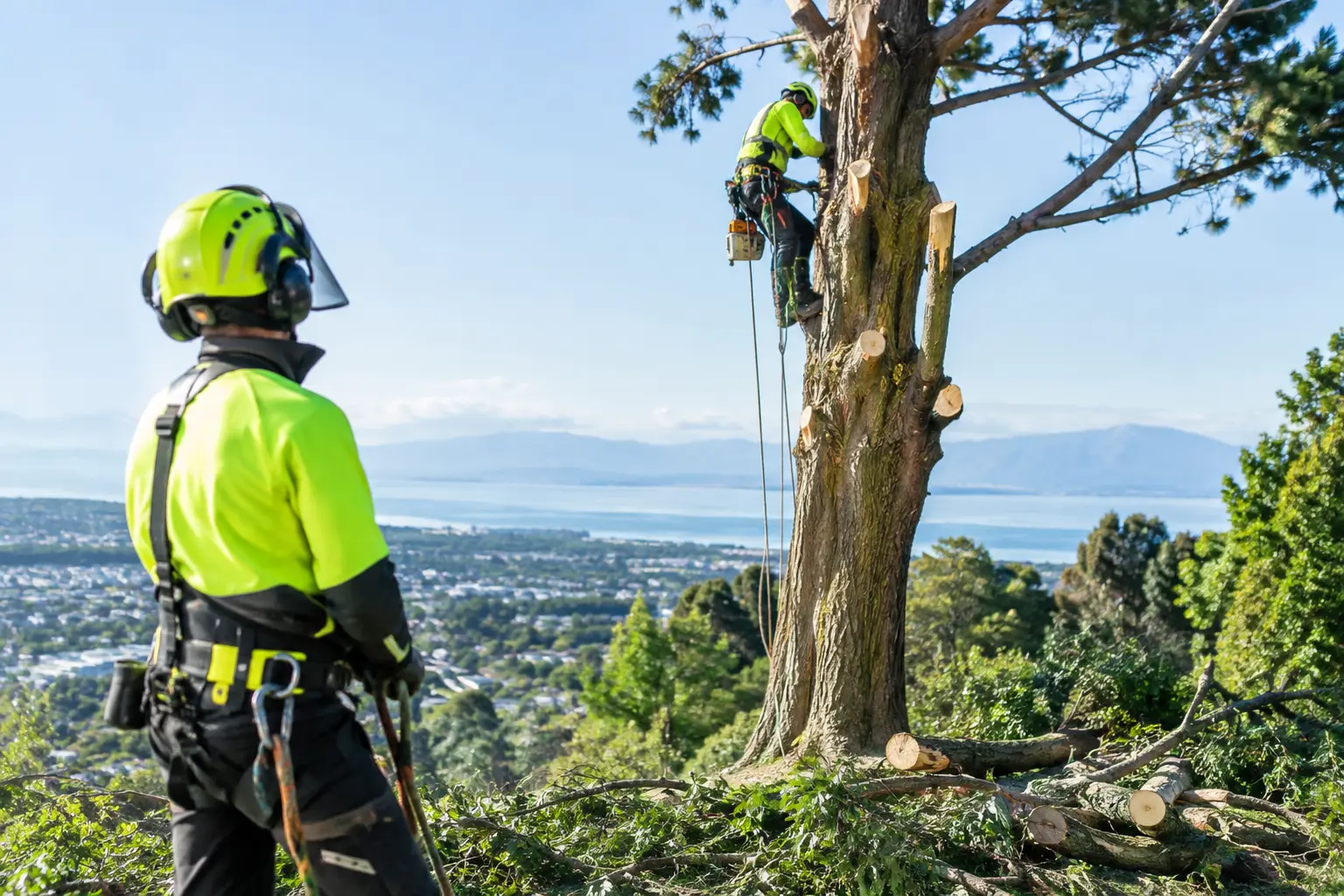
Tree work in built-up areas is rarely a matter of cutting at the base and letting the tree fall. Many removals need to be dismantled in controlled sections, often with a climber working from the canopy and a ground crew managing ropes, exclusion zones and timber below.
This approach protects people, buildings and the remaining landscape. It also allows the team to work around tight access, garden structures, glasshouses, services and neighbouring properties. Where machinery can safely reach the work area, it can make removal more efficient. Where access is restricted, the job may need a more technical climbing-based method.
The safest method depends on the site. A clear section at the rear of a rural property may allow a conventional directional fell. A large conifer beside a house in Christchurch will usually require a different plan entirely. There is no one-size-fits-all solution, and anyone promising one before properly viewing the tree should raise questions.
Safety starts before the first cut
A professional crew assesses the tree, ground conditions, weather, overhead hazards and escape routes before work begins. They also establish a work zone so residents, tenants, staff and visitors stay clear while branches and timber are being lowered.
Health and Safety is in our DNA. Proper personal protective equipment, maintained equipment, clear communication and experienced operators are fundamental to safe tree work. This is particularly important with unstable trees, large timber and jobs involving elevated work near homes or public areas.
For emergency situations, such as a tree across a driveway or a limb resting on a roof, the first priority is to keep people away from the area. Do not attempt to pull down hanging branches or cut timber under tension yourself. Damaged trees can move suddenly, and what appears straightforward from the ground can be seriously hazardous.
Check whether consent or special rules apply
Before arranging tree removal, it is sensible to check whether the tree is protected or subject to site-specific requirements. Rules can apply to scheduled trees, trees within certain areas, land under development or trees near waterways and public assets. A neighbour’s concern is not the same as legal permission to remove a boundary tree.
If a tree is protected, consent may be required before substantial pruning or removal can proceed. The requirements vary by site and circumstance, which is why arboricultural advice is valuable early in the process. A formal assessment can document the tree’s condition, risk level and management options, giving owners, managers and planners a sound basis for the next step.
For commercial properties and managed sites, documentation is especially useful. It supports hazard management, helps prioritise work across a portfolio of trees and provides a clear record of why action was taken. A tree management plan can also make budgeting and maintenance scheduling far more practical than reacting only when something fails.
What a professional removal should include
The job is not finished when the final branch reaches the ground. A well-run tree felling project includes careful site preparation, controlled removal, efficient processing of debris and a clean handover.
Branches can be chipped for mulch, while larger logs may be removed, retained for firewood or processed according to the client’s needs and site access. Stump grinding is worth considering where the area will be replanted, paved, turfed or built on. Leaving the stump may suit a tucked-away part of a large section, but it can become a trip hazard, attract regrowth or get in the way of future work.
Cleanup should be discussed before the work starts. Ask what will happen to woodchip, logs and sawdust, whether the site will be raked and blown down, and whether accessways will remain clear throughout the work. These details affect how smoothly the day runs, particularly at businesses, rental properties and active development sites.
Choosing removal versus pruning
The decision often comes back to useful life. If a tree can be made safe while retaining its structure, shade and amenity value, pruning may be the better long-term outcome. Crown reduction can reduce loading on overextended limbs, selective pruning can improve clearance from roofs and services, and cabling or bracing can sometimes support a valuable tree with weak unions.
Removal becomes more compelling where defects are advanced, the target beneath the tree is high-value, or ongoing maintenance would be excessive for the result achieved. A tree that repeatedly sheds large limbs over a car park, for example, may cost more in disruption and risk than it contributes in amenity.
There is also the question of replacement. Removing an unsuitable mature tree does not mean giving up on greenery. In many cases, replacing it with the right species in the right position is a better outcome for the property over time. Consider mature size, root behaviour, shade, wind exposure and distance from buildings before planting.
Make the decision before the tree makes it for you
Delaying work is understandable when a tree is part of the property’s history or provides welcome privacy. But warning signs deserve prompt attention: fresh cracks in the trunk, mushrooms around the base, lifting soil, dead upper limbs, sudden leaning, cavities, or branches rubbing against a roof or service line.
A professional site visit provides clarity without committing you to removal. It gives you a practical view of the risk, the available management options and the likely scope of work. For homeowners, property managers, developers and rural landholders, that advice can prevent a manageable issue becoming an emergency callout.
Tree Technician brings experienced arboricultural judgement, safe work practices and a clean, professional finish to tree work across Canterbury. If a tree is causing concern, getting it assessed early is usually the easiest, safest next move.
For practical advice or a no-obligation quote, visit www.treetechnician.co.nz