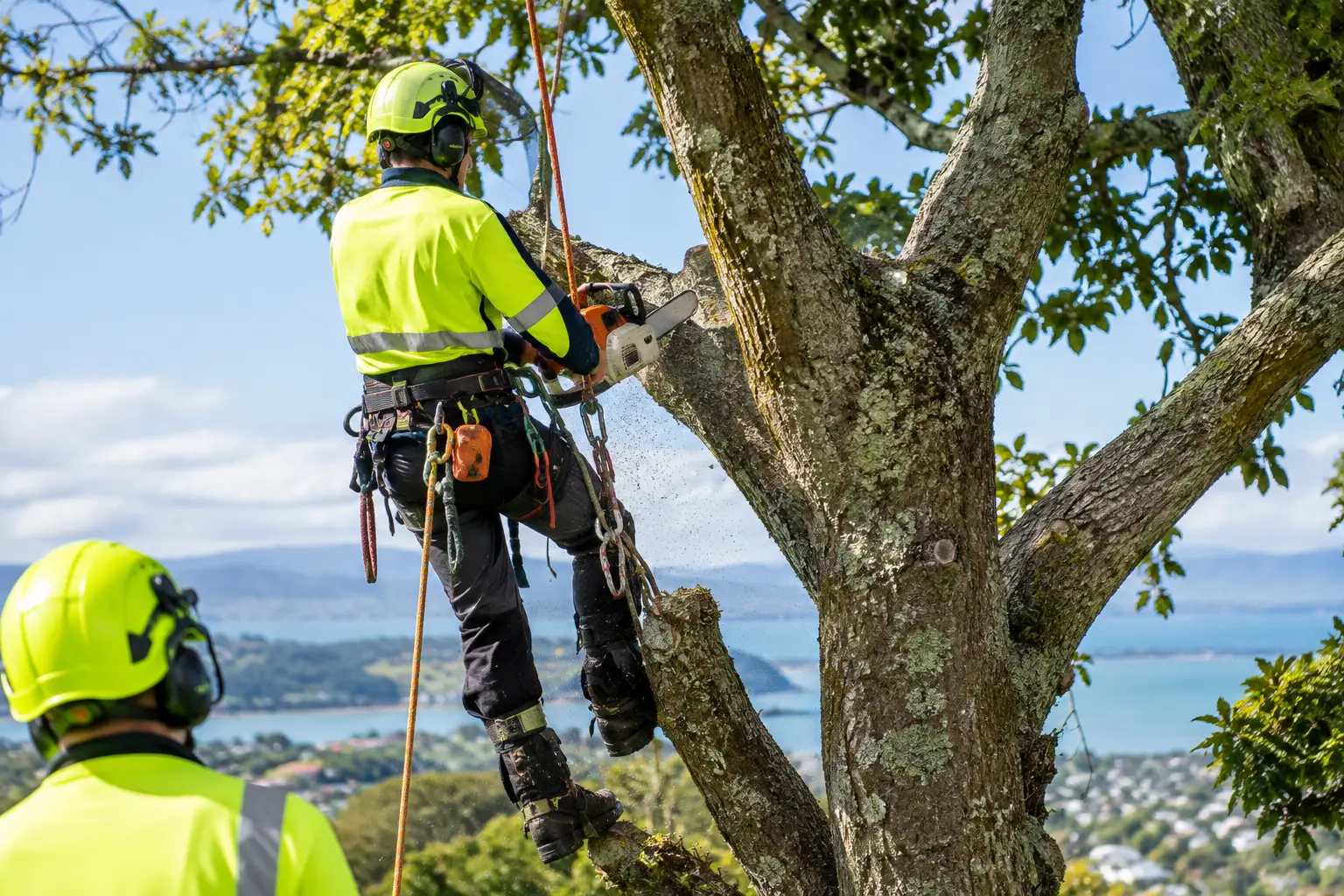
A mature tree can take decades to become a valuable part of a property, yet one poorly placed cut can create a weak point that lasts for years. To prune mature trees well, the goal is not to make them smaller at all costs. It is to manage risk, improve structure and retain the health, character and benefits that made the tree worth keeping.
For Canterbury property owners, this often means balancing a tree’s size with nearby homes, driveways, power lines, sheds, footpaths and neighbouring properties. Mature-tree pruning is specialised work. Large limbs are heavy, decay is not always visible from the ground, and access can be difficult. A considered approach protects both the tree and the people around it.
Why mature trees need a different approach
Young trees generally respond well to formative pruning because small cuts close more readily and their branch structure is still being shaped. Mature trees have a larger canopy, heavier limbs and a more established root system. Their ability to respond to major pruning is more limited, particularly if they are already under stress from drought, compaction, construction work, pests or disease.
That does not mean a mature tree should be left untouched. Well-timed, carefully selected pruning can remove deadwood, reduce the chance of limb failure, provide clearance from buildings and improve light beneath the canopy. It can also reduce wind loading in a dense crown without stripping the tree of the leaf area it needs to produce energy.
The trade-off is that aggressive pruning can do more harm than good. Removing too much live canopy in one visit may trigger stress growth, expose limbs to sun damage, increase decay around cuts and leave the tree with a poorer structure than it had before. The right outcome is usually thoughtful improvement, not a dramatic change.
When to prune mature trees
The best timing depends on the species, the reason for pruning and the tree’s condition. Dead, cracked, storm-damaged or hanging branches should be dealt with promptly where they create a hazard. Safety work should not wait for an ideal season.
For planned maintenance, many deciduous trees are easier to assess during dormancy, when their branch structure is visible. However, pruning at the wrong point in a tree’s seasonal cycle can increase stress or encourage unwanted regrowth. Evergreen species, flowering trees and trees prone to disease each need their own consideration.
In Canterbury, weather also plays a part. High winds, dry periods and saturated soils can affect both tree stability and site access. After a major wind event, a visual inspection from a safe distance can reveal broken limbs, newly leaning trees, lifted roots or branches caught in the crown. Do not stand beneath damaged limbs or try to pull lodged branches down yourself.
If a tree is near a house, vehicle area, public accessway or service line, it is worth arranging an assessment before problems become urgent. Planned work is generally safer and gives more options than an emergency response after a limb has failed.
What good pruning looks like
Professional pruning begins with an assessment of the whole tree, not just the branch that appears inconvenient. An arborist considers species, age, vigour, defects, canopy density, previous pruning, root-zone conditions and nearby targets that could be damaged if a limb fails.
The chosen cuts should have a clear purpose. Deadwood removal takes out branches that no longer contribute to the tree and may fall without warning. Selective reduction shortens individual limbs back to suitable growth points, helping reduce leverage without leaving stubs. Crown lifting removes lower branches where clearance is genuinely needed for access, roofs or vehicles.
Crown thinning can be useful for selected trees, but it is not simply a matter of removing branches evenly throughout the canopy. Excessive thinning can encourage internal shoots, expose limbs and alter how wind moves through the crown. A skilled arborist selects branches to retain a natural form and a sound distribution of foliage.
The finished tree should still look like itself. It should not look stripped, lopsided or abruptly cut back.
Avoid topping and indiscriminate lopping
Topping means cutting large branches or the main stem back to stubs or unsuitable points. It is sometimes requested when a tree feels too large, but it rarely solves the underlying issue. The tree often responds with fast, weakly attached shoots, creating a denser and potentially more hazardous crown in the years that follow.
Large, poorly placed cuts also provide entry points for decay. In some cases, a tree that has been repeatedly topped becomes so compromised that removal is the safer long-term decision. Where size reduction is needed, gradual selective reduction is usually the better option, provided the species and structure are suitable.
Safety comes before the saw starts
Mature-tree work is not a DIY job involving a ladder and a chainsaw. Even apparently small branches can shift unexpectedly when cut, particularly when they are under tension or tangled through other limbs. Large sections require controlled lowering, suitable rigging and a clear exclusion zone below.
Power lines add another level of risk. Branches near electrical infrastructure should never be approached without the right training, planning and authority arrangements. The same applies where access equipment needs to operate near roads, shared driveways or public areas.
A professional crew will assess the work area before starting. That includes identifying overhead hazards, checking the ground for stability, planning where branches can be lowered, protecting buildings and gardens where practical, and setting up exclusion zones. Maintained equipment, competent operators and clear communication make a significant difference on a busy residential or commercial site.
For property managers and commercial clients, documented safety systems are particularly valuable. Tree work often happens around staff, tenants, customers or members of the public. The work needs to be scheduled, controlled and completed with the site left tidy and usable.
Protect the root zone as well as the canopy
The visible canopy is only half the tree. Mature trees rely on broad, shallow root systems that can extend well beyond the drip line. Excavation, new driveways, stored materials, repeated vehicle traffic and changes to soil level can all affect root health.
If pruning is being considered alongside a renovation, subdivision or land-development project, involve an arboricultural adviser early. A tree may appear healthy above ground while its roots are being damaged below. Early advice can help set protection zones, guide access routes and identify whether a tree is likely to cope with nearby works.
This is also relevant for protected trees. Local planning rules may require consent before pruning or removal, especially for scheduled or notable trees. The requirements vary by location and the scope of work, so it pays to check before cutting. An arborist can help identify appropriate pruning specifications and provide the supporting information needed for a consent application where required.
Signs it is time to arrange an assessment
Some concerns are obvious, such as a broken limb over a roof. Others are quieter but just as worth investigating. Fungal growth at the base, cavities, cracks at branch unions, peeling bark, a sudden lean, dead sections in the crown or soil heave around roots can point to a structural issue.
A tree does not have to be removed simply because it has a defect. Cabling, bracing, selective pruning or ongoing monitoring may be appropriate in some situations. It depends on the severity of the defect, the likelihood of failure, the targets beneath the tree and the tree’s capacity to respond.
An experienced assessment gives you clear options rather than a rushed decision. Sometimes the answer is light maintenance and monitoring. Sometimes a more substantial risk reduction is needed. Where a tree cannot be retained safely, removal and replacement can be the most responsible path.
A better result starts with a clear brief
Before work is booked, think about what you need the tree to do. Is the priority safer clearance from the house, more light on a patio, access for a ute, reduced risk over a pathway, or preserving a significant specimen for the future? A clear brief helps shape pruning that is proportionate to the problem.
Take photographs from a safe distance and note any recent changes, such as storm damage, new cracks or construction nearby. Then arrange qualified advice before cutting begins. Mature trees deserve decisions based on their condition and setting, not a one-size-fits-all approach.
A well-managed tree can continue providing shade, shelter, habitat and value for many years, while keeping the people and property around it properly protected.
www.treetechnician.co.nz
Get a free quote
Contact Tree Technician for a free, no-obligation quote.
Explore Tree Trimming & Pruning