A freshly felled or pruned tree can leave behind far more material than most people expect. Wood chip removal is often the final step that turns a noisy, disruptive tree job into a clean, usable property again. Whether chips are spread across a lawn, piled beside a driveway or left after land clearing, the right approach depends on their volume, condition and where they have landed.
For some properties, wood chips are a useful resource. For others, they create trip hazards, smother grass, block access, harbour unwanted pests or simply make a site look unfinished. A professional arborist can help you decide what should stay, what can be repurposed and what needs to be removed.
When wood chip removal is the right choice
Wood chipping reduces branches and tree material into manageable pieces, making site clearance faster and reducing the amount of material sent away as green waste. But chipping is not the same as completing the clean-up. A large tree can produce several cubic metres of chips, and even a modest pruning job can leave more mulch than a household garden can use.
Removal is usually the practical option when chips have been deposited on turf, paving, shared accessways, car parks, footpaths or areas needed for construction. Deep piles can kill grass by cutting off light and airflow, while chips blown or washed into drains can create maintenance issues and leachates can also have an impact on the environment. On commercial sites, loose material near pedestrian routes, loading areas and vehicle access can also become a safety concern.
It is also worth removing chips created from diseased, pest-affected or chemically treated trees. Not every tree health issue means the material must leave the site, but it should be assessed before it is used as garden mulch. Moving potentially contaminated material around a property can create more work later.
For rural landholders and developers, the decision often comes down to scale. A small pile may be useful around shelter belts or newly planted trees. Following clearance of a large site, however, the volume can quickly exceed what is practical to retain. Clearing it efficiently helps keep the next stage of work moving.
Reuse or remove? Start with the site plan
Good wood chip management begins before the chipper is switched on. If you would like mulch retained, identify suitable areas early so the material can be placed where it will be useful, rather than dumped in the nearest open space.
Fresh arborist wood chips/mulch is particularly effective across garden beds, around established trees and on informal paths. They help moderate soil temperature, retain moisture and gradually add organic matter as they break down. A layer around 50 to 100 millimetres deep is generally enough for most mulched areas. Keep chips clear of tree trunks, plant stems, building cladding and fence lines so moisture is not held where it can cause problems. Wood chip places against the bark can trap moisture and cause basal rot and fungal issues in living trees!
That said, fresh wood chips are not suited to every situation. They can look rough in highly formal gardens, may be easily scattered by wind in exposed areas, and are not a substitute for properly specified landscaping material where appearance matters. Some species also produce chips that are coarse, thorny, resinous or slow to break down. A practical discussion before work starts prevents an unwanted pile becoming a disposal problem.
If removal is preferred, the work can be organised as part of the tree removal, pruning or land-clearing job. This is normally safer and more efficient than returning later with separate equipment. It also means the crew can leave access clear, sweep hard surfaces and check that no loose debris has been left in garden beds, gutters or drains.
The amount of material matters
Wood chips are light compared with logs, but they take up considerable space. A pile that looks manageable from a distance can be difficult to shift by hand, especially after rain. Wet chips become heavy, compacted and harder to load. They can also generate heat in large piles and begin decomposing rapidly.
Access affects the removal method as well. A wide driveway may allow machinery or a ute to work close to the pile. Tight residential sections, narrow side access, established landscaping and overhead lines require a more controlled approach. On these sites, crews may use smaller equipment, wheelbarrows or carefully planned loading routes to protect lawns, paving and garden edges.
What professional wood chip removal involves
Safe site clearance is more than loading chips into a vehicle. Before work begins, #Tree Technicians experienced crew considers access, ground conditions, traffic movement, underground services, overhead hazards and the location of neighbouring properties. This planning is especially important when material is being removed from a shared driveway, busy commercial grounds or a sloping section.
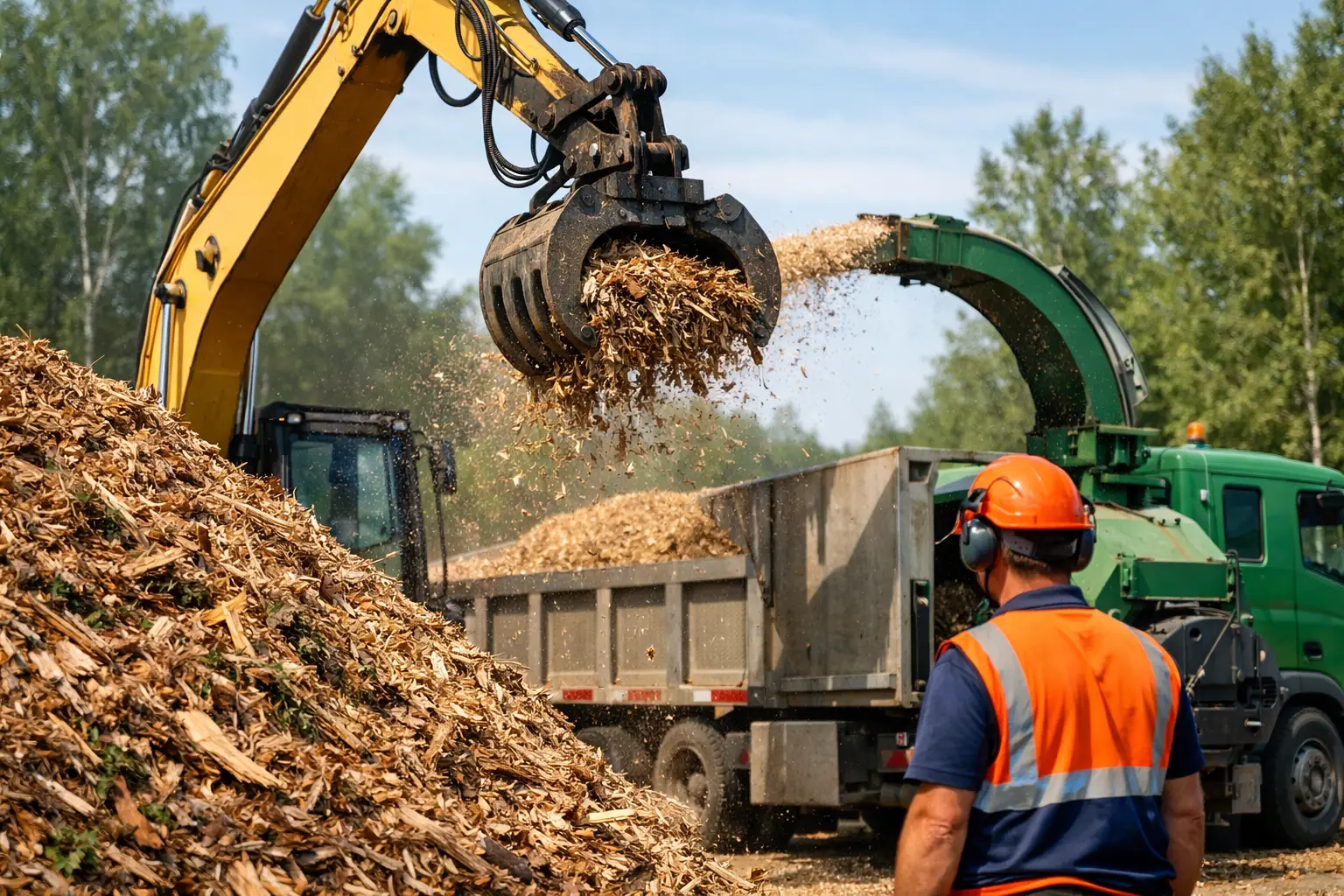
The material is then gathered and loaded using the most appropriate combination of hand tools, compact machinery and transport. The aim is to work efficiently without damaging the ground or creating unnecessary disruption. Where a chipper is being used on site, exclusion zones and clear communication are essential. Chippers are powerful machines and should only be operated by trained people using appropriate protective equipment.
A proper clean-up should include more than the obvious pile. Fine debris can collect along kerbs, in planting beds, beneath hedges and around gates. Hard surfaces should be cleared so chips are not tracked indoors or carried onto the road by vehicles. If stump grinding is also part of the job, the resulting grindings need separate consideration, as they are often mixed with soil and are different from clean branch chips.
At Tree Technician, health and safety is built into every job from the first site assessment through to final tidy-up. Maintained equipment, trained crews and a clear work plan make a noticeable difference when a property needs to remain accessible and presentable throughout the work.
Common mistakes to avoid with leftover chips
The most common mistake is leaving a pile with no intended use. Wood chips do not disappear quickly, particularly when a pile is deep, compacted or sitting in shade. What begins as a temporary solution can remain for years and gradually spread into surrounding areas.
Avoid piling chips directly against buildings, decks or timber structures. The retained moisture can encourage decay and may attract insects. It is equally unwise to spread chips thickly over lawn in the hope they will improve the soil. Grass needs light and air, and a heavy layer will usually create bare, muddy patches rather than a healthier lawn.
Do not assume all chips are suitable for vegetable beds or young plants. While many arborist chips are useful in garden settings, the species, freshness and intended use all matter. If you are unsure, use the material around established ornamental trees and shrubs, or have it removed.
Fresh arborist wood chip can be used immediately but allowing it to rest for around three weeks helps mellow strong tannins found in species like Pine and Macrocarpa. This brief settling period improves moisture absorption and creates a more balanced, garden‑ready mulch.
Burning is rarely a sensible alternative. Green chips burn poorly, smoke heavily and can create fire and nuisance risks. Requirements vary by location and season, so burning should never be treated as an easy disposal method.
Planning clearance around tree work
The easiest time to organise wood chip removal is when booking the tree work itself. Let the arborist know whether you want chips retained, spread in nominated areas, removed completely or divided between these options. If access is restricted, mention gates, parking limitations, soft ground, school hours, tenants, pets and any areas that must remain open.
For commercial properties and managed sites, it is useful to agree on a completion standard before work begins. This might include keeping fire exits clear, maintaining vehicle access, protecting public areas and removing all visible green waste before reopening the space. For development sites, removal can be coordinated with clearing, stump grinding and the next contractor so material does not need to be moved twice.
Protected trees and trees subject to consent conditions need extra care. The removal and handling of arisings may form part of the approved scope of work, particularly where work is close to waterways, public land or sensitive areas. A qualified arborist can help ensure the site is managed in line with the relevant requirements.
A clean site is not just about appearance. It protects access, reduces hazards and gives you a clear view of what needs to happen next. When chips are planned for rather than left as an afterthought, tree work can finish exactly as it should – safely, efficiently, clean and tidy with your property ready to use.