A tree contractor insurance review is not paperwork for paperwork’s sake. When a large limb is suspended above a roof, a crew is working beside power lines, or machinery is moving through a tight driveway, the right insurance helps protect everyone if something goes wrong. Before approving tree work on your property, take a few minutes to understand what the contractor is covered for and what that cover means in practice.
For homeowners, property managers, developers and rural landholders, insurance should sit alongside experience, qualifications, safety systems and the condition of the equipment being used. A certificate alone does not prove a contractor is the right fit, but a professional contractor should be comfortable explaining their cover and supplying current evidence when requested.
Why insurance matters in tree work
Tree work carries risks that are not always obvious from the ground. A decayed limb can react unexpectedly during a dismantle. A tree may have grown around fences, garages, sheds, glasshouses or service lines. Access can be limited, weather may change quickly, and a job that begins as straightforward pruning can reveal hidden decay or unstable timber.
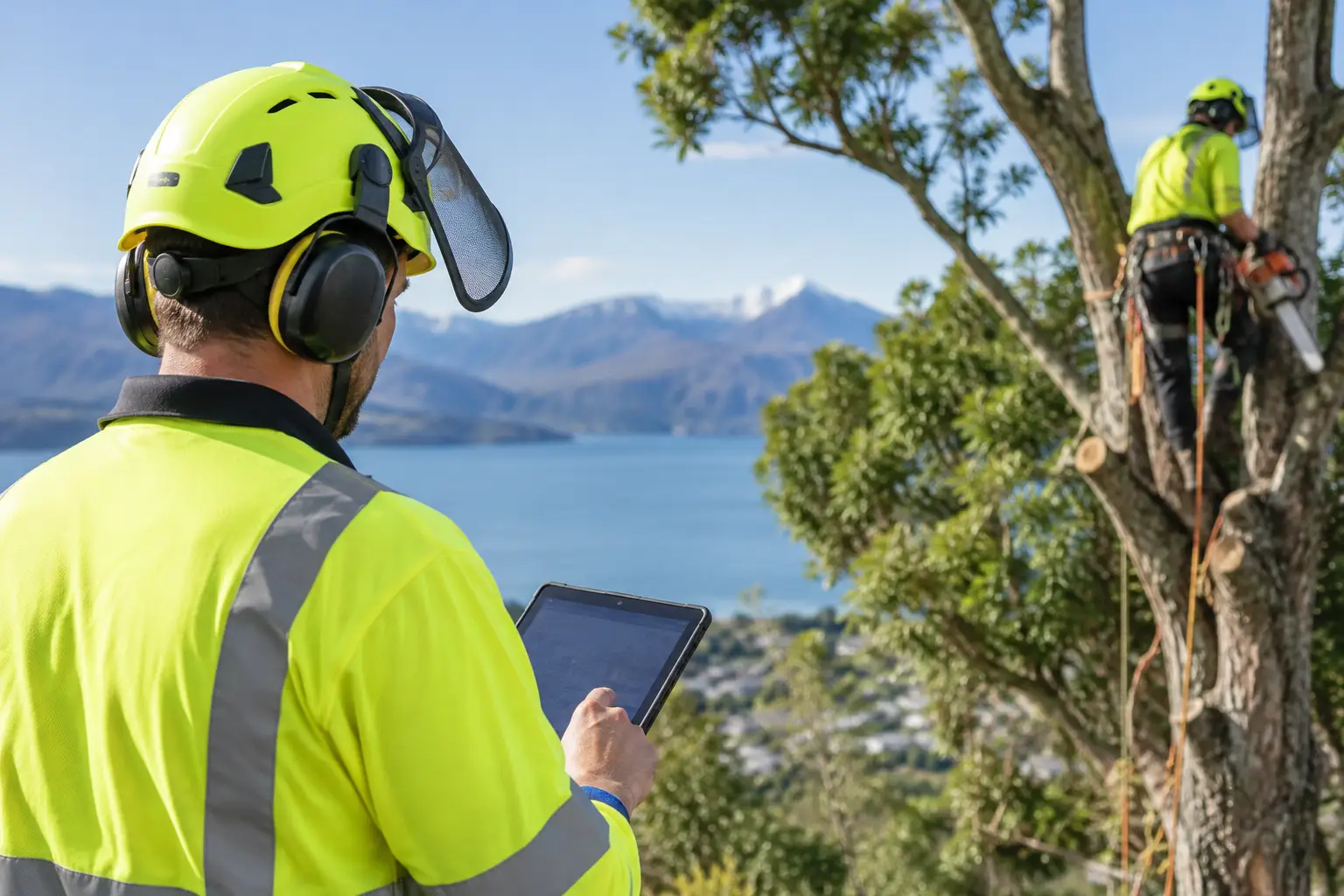
A capable arborist manages those risks with planning, trained staff, maintained equipment and safe work procedures. Insurance provides a financial backstop if accidental damage or a third-party claim arises despite those controls. It also signals that the business takes its responsibilities seriously.
The key point is that insurance does not replace good tree-care practice. It supports it. A contractor who cannot explain their risk controls, has no clear plan for site access, or appears careless around your home should not become acceptable simply because they say they are insured.
Tree contractor insurance review: the cover to ask about
The cover required depends on the work. Pruning a small ornamental tree in an open lawn is very different from removing a mature tree over a house, clearing a development site, or preparing a formal hazard assessment. Still, there are several areas worth discussing before work begins.
Public liability insurance
Public liability is usually the first item property owners ask about. It is designed to respond to certain claims where a contractor’s work causes injury to another person or damage to third-party property. In tree work, that could include accidental damage to a building, fence, vehicle or neighbouring property.
Ask to see a current certificate of currency and check that the insured business name matches the company you are engaging. Confirm the policy is active for the dates of the job and that the type of work being undertaken is covered. If the project is unusual, such as a crane-assisted removal, work near infrastructure or large-scale land clearing, it is sensible to discuss this specifically rather than making assumptions.
The amount of cover matters too, particularly for commercial sites, body corporates and developments. Larger or higher-risk projects may have contract requirements that need to be confirmed before a crew arrives on site.
Cover for employees and subcontractors
A professional team should be clear about who will be doing the work and how they are engaged. In New Zealand, ACC arrangements are part of the picture for workplace injury, but that does not remove the need for sound health and safety systems or appropriate business insurance.
If subcontractors are involved, ask whether they are independently insured and managed under the contractor’s site safety processes. This is especially relevant where specialised machinery, traffic management, crane work or electrical clearance requirements are involved. Clear responsibility avoids confusion if an incident occurs.
Professional indemnity for arboricultural advice
Not all tree work is simply cutting and clearing. Consultancy arboriculture can involve hazard assessments, tree reports, management plans, protected-tree applications and advice used for development or property decisions.
Where you are relying on formal written advice, professional indemnity insurance may be relevant. This cover is intended for claims connected with professional services or advice. It is worth asking about when a report will inform a consent process, a dispute, a risk-management decision or future site works.
For routine trimming, public liability may be the more immediate concern. For formal assessment work, both practical competence and professional cover deserve attention.
Vehicle, plant and equipment cover
Chippers, stump grinders, elevated work platforms and trucks are costly pieces of equipment, but their insurance is primarily the contractor’s concern. What matters to you is whether the contractor has suitable, maintained equipment for the job and a safe plan for operating it on your site.
A heavy stump grinder can mark soft ground, and a chipper needs space to operate safely. Before work starts, agree on access routes, where vehicles can park, how garden features will be protected, and what will happen to woodchip and green waste. Insurance may help after an incident, but good site planning is how many incidents are avoided in the first place.
Questions that reveal more than a certificate
A certificate of currency is useful, but it is only one part of your due diligence. A short conversation often tells you much more about the standard of the contractor.
Ask what the crew will do if the tree is found to be more unstable than expected. Ask how they will protect structures, manage pedestrian access and communicate with neighbours where needed. For a tree near a power line, ask what clearance and safety arrangements apply. If the tree may be protected, confirm who will check the relevant requirements before work begins.
You should also understand the job scope. A written quote should describe what will be pruned or removed, whether stump grinding is included, how debris will be handled and the expected site condition after completion. Ambiguity can cause disputes even where insurance is in place.
For commercial properties and development sites, request the contractor’s health and safety documentation where appropriate. Evidence of established safety systems, such as SiteWise Gold certification, can provide additional reassurance that the business has formal processes behind its on-site work.
Watch for gaps in assumptions
Insurance policies have limits, exclusions and conditions. Property owners do not need to become insurance specialists, but they should avoid broad assumptions such as “any damage will automatically be covered”. The circumstances matter, as does the policy wording.
Existing defects can be one area of misunderstanding. If a tree is already failing, a contractor may identify that removal or reduction carries a risk that cannot be entirely eliminated. Likewise, damage from vehicle access, underground services, poor ground conditions or unapproved work near protected trees can create issues that should be addressed before the job proceeds.
Be open with the contractor about anything that may affect the work. Point out irrigation lines, septic systems, buried cables, fragile paving, roof access limitations and neighbouring concerns. The more accurate the pre-work information, the safer and more efficient the job is likely to be.
Insurance is part of choosing the right tree contractor
The best outcome is not one where insurance needs to be used. It is one where a qualified crew assesses the tree properly, selects the right method, controls the work area and leaves your property tidy and safe.
Look for a contractor with practical arboricultural experience, clear communication, current insurance, documented safety standards and equipment suited to the work. For complex trees, storm damage, protected-tree requirements or ongoing property management, choose a team that can provide informed advice as well as hands-on service.
At Tree Technician, health and safety is in our DNA. We take a planned, professional approach to tree care across Canterbury, from routine pruning through to emergency response, tree risk assessment and specialist removals. A clear scope, careful preparation and the right cover help make difficult tree work far less worrying for property owners.
Before signing off on any tree job, ask for the evidence you need, make the site conditions clear and choose a contractor who treats safety as part of the service, not an afterthought.
www.treetechnician.co.nz