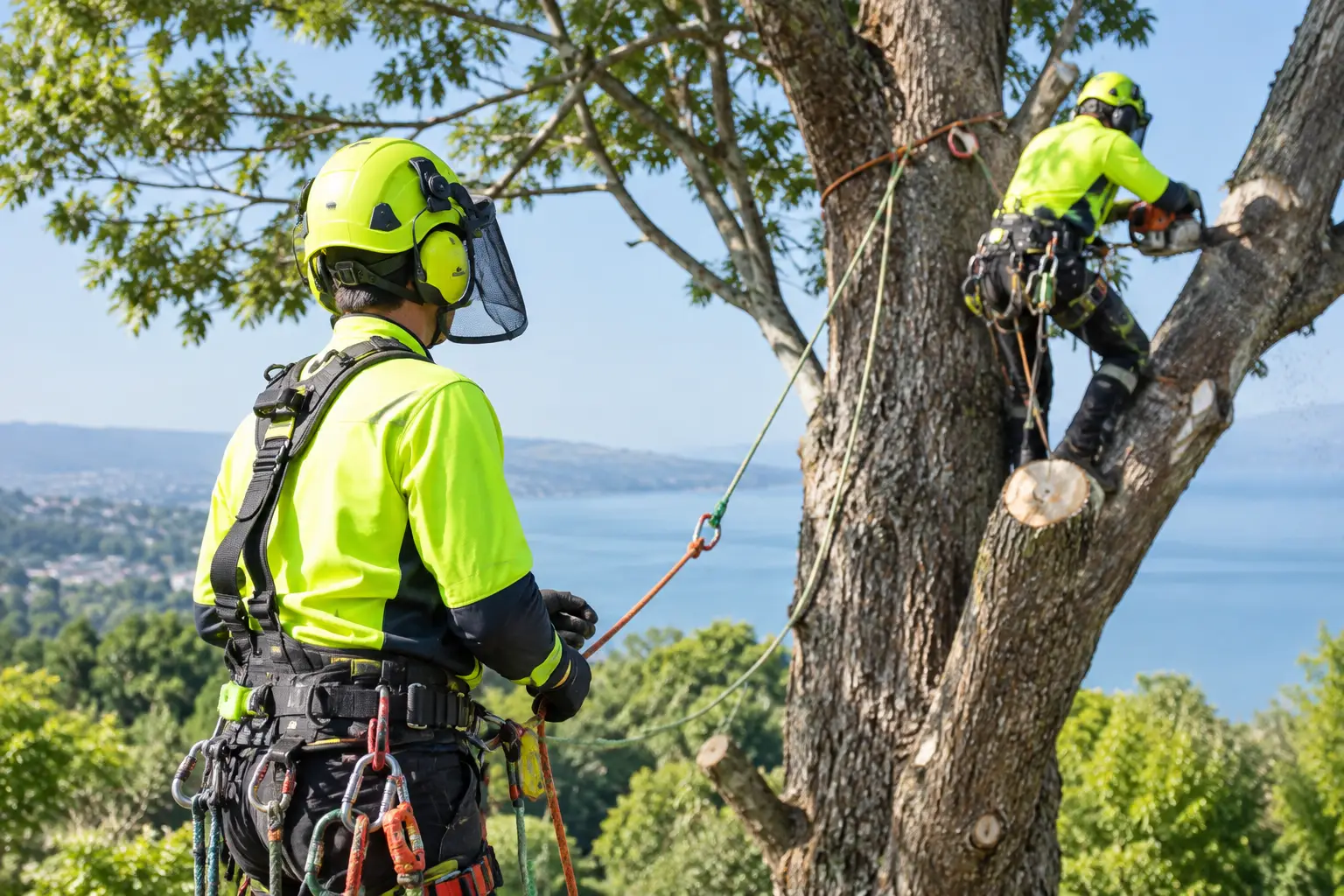
A protected tree work example is rarely as simple as turning up with a chainsaw and removing a limb. On a residential, commercial or development site, the work may require council checks, an arborist report, a clear scope of work and careful protection of the tree, people and surrounding property. Getting those steps right before cutting starts saves delays, avoids unnecessary damage and gives property owners confidence that the job is being handled properly.
A practical protected tree work example
Picture a mature oak in a Christchurch residential garden. It is close to a driveway, overhangs a neighbour’s fence and has several long, low limbs that restrict vehicle access. The homeowner wants the canopy lifted and reduced before winter, but the tree is listed as protected under the relevant planning rules.
The first question is not, “How much can be cut off?” It is, “What work is allowed, and what does the tree need?” Protected status can apply because of a tree’s age, species, size, location, heritage value, landscape contribution or ecological importance. The rules can also change between districts, zones and individual properties.
An experienced arborist begins by identifying the tree, its condition and the reason for the proposed work. They assess branch structure, decay, deadwood, clearance requirements, signs of stress and any hazards to people or property. Just as importantly, they consider whether pruning will preserve the tree’s health and form over the long term.
Checking the rules before work starts
For this example, the arborist reviews the applicable council requirements and confirms whether consent is needed for the proposed pruning. A protected tree may allow limited routine maintenance, such as deadwood removal or minor clearance pruning, while larger reductions, root disturbance or removal may require formal approval.
If an application is required, a report may set out the tree’s dimensions, condition, photographs, proposed pruning points and reasons for the work. The report should explain how the work meets a genuine need, whether that is risk reduction, access, infrastructure clearance or tree health. It should also describe the methods that will minimise harm.
This stage matters on development sites as well. A protected tree can affect building footprints, vehicle access, services, drainage and earthworks. Leaving the assessment until machinery is already on site can lead to costly changes. Early advice gives designers and project managers a workable path forward.
Planning the work around the tree and site
Once the approval pathway and scope are clear, the work is planned in detail. In our oak example, the crew may be authorised to remove dead branches, reduce selected overextended limbs and lift the canopy above the driveway. They would not simply top the tree or make broad cuts to force a quick result. Topping often creates weak regrowth, increases decay risk and can compromise the very tree a property owner is required to retain.
The pruning specification is based on sound arboricultural practice. Cuts are selected to retain natural branch unions and avoid removing too much live canopy at once. The goal is a balanced crown, adequate clearance and a tree that remains stable and attractive.
Site conditions shape the method. The driveway may need to be closed during the work, and the neighbour should be advised if branches are being lowered near their boundary. Drop zones are established, vehicles are moved, and pedestrian access is controlled. If power lines are nearby, the approach must account for safe separation distances and, where required, coordination with the network operator.
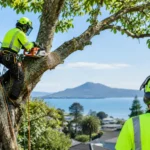
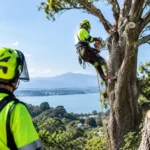
For a large tree, a qualified climbing arborist may use ropes and rigging to lower sections in a controlled way. Where access and ground conditions allow, elevated work platforms or other machinery can improve efficiency. The right method depends on the tree, terrain, access, nearby structures and the level of risk, not just the quickest option.
Protecting roots is part of protected tree work
Pruning is only one part of the job. In many protected tree cases, root protection is the bigger issue, particularly around construction and land development.
A tree’s roots commonly extend well beyond the edge of its canopy. Excavation, compaction, stockpiled soil, repeated vehicle movements and changes to drainage can all affect root health. The damage may not be obvious immediately. A tree can appear fine after works, then decline months or years later because its root system has been disturbed.
A protection plan may establish a fenced tree protection zone before building work begins. Within that zone, no materials should be stored, no spoil piled, and no vehicles driven unless there is an agreed method to manage the impact. Where services need to pass nearby, options such as careful hand excavation, trenchless techniques or revised service routes may be considered.
In the oak example, the homeowner is not undertaking construction, but the same principle applies. The crew avoids placing heavy equipment over the root area and keeps chip piles and cut material away from the base of the tree. If compacted ground or poor drainage is contributing to decline, the arborist may recommend a separate soil and root-zone management approach rather than excessive canopy reduction.
Carrying out the approved work safely
On the day, the crew completes a site-specific safety check before climbing or operating equipment. This includes weather, ground stability, access, overhead hazards, vehicle movements and the condition of the tree itself. Health and Safety is in our DNA because tree work can change quickly when wind rises, ground is wet or hidden decay is found aloft.
The arborist then works through the agreed specification, reassessing as needed. If the tree reveals a cavity or a previously unseen defect, the crew may pause and discuss the finding with the property owner. Consent to prune does not mean every cut is automatically sensible. Good judgement remains essential.
Branches are lowered carefully to prevent damage to roofs, fences, gardens and driveways. Wood is processed on site where practical, and the work area is left tidy. For many clients, that clean finish is not an extra – it is part of a professional job.
What the finished result should look like
A well-managed protected tree should not look stripped, lopsided or hacked back. In this example, the oak retains a natural crown, has better clearance above the driveway and no longer carries dead limbs over the high-use area. The pruning cuts are limited and purposeful, while the property remains clean and accessible.
The paperwork also matters. Keep copies of any approval, arborist report, work specification and photographs. For commercial properties, schools, body corporates and developers, this record supports future maintenance planning and demonstrates that the tree has been managed responsibly.
When removal may be considered
Removal of a protected tree is generally a higher threshold than maintenance pruning. It may be considered where an independent assessment identifies serious decline, structural failure risk, disease, damage that cannot be managed, or a conflict that has no practical alternative. Even then, approval requirements may apply, and replacement planting or other conditions may be attached.
The best outcome is not always retaining every tree exactly as it stands. It is finding the safest, most responsible option for the tree, the people around it and the site’s future use. Sometimes that means careful ongoing pruning. Sometimes it means cabling or bracing, root-zone protection, monitoring, or a formal management plan.
If you are unsure whether a tree is protected, or you need work completed without creating avoidable regulatory or safety issues, arrange advice before the first branch is cut. A clear plan gives you a safer site and a better chance of keeping a valuable tree healthy for years to come.
www.treetechnician.co.nz