A mature tree leaning over a driveway, a cracked limb above a roof, or a row of ageing shelter trees can force a difficult decision quickly. Tree surgery versus removal is not simply a choice between saving a tree and cutting it down. The right option depends on its condition, the risk it presents, its position, its long-term prospects and any rules affecting the site.
For homeowners, property managers and developers, a sound decision protects people first while also respecting the value trees bring to a property. Good arboricultural work is about making a practical call based on evidence, not removing healthy trees unnecessarily or trying to retain a tree that has become unsafe.
What tree surgery means in practice
Tree surgery is a broad term for skilled work that improves a tree’s health, structure, clearance or safety without removing the whole tree. It may involve selective pruning, crown reduction, deadwood removal, formative work on young trees, pest and disease management, or installing cabling and bracing where suitable.
The aim is to retain a viable tree while reducing a specific problem. A large branch may be growing over a building, for example, but that does not automatically mean the entire tree needs to go. Careful pruning can create roof clearance, reduce limb weight and improve the canopy’s shape without leaving the tree unbalanced or stressed.
Good tree surgery is selective. Topping, indiscriminate lopping and removing too much live foliage can create larger issues later, including weak regrowth, sun damage and decay. A qualified arborist considers the tree species, age, natural growth habit and ability to recover before recommending a pruning specification.
When surgery is often the better option
Surgery is generally worth considering when the tree is fundamentally healthy and stable but needs management. This may apply to overgrown trees shading living areas, limbs encroaching on power lines, low branches affecting vehicle access, or dense canopies restricting light and airflow.
It can also be the right approach for significant specimen trees and established shelterbelts. In Canterbury, wind exposure, dry summers and heavy snow events can place extra pressure on poorly structured branches. Targeted crown work can reduce wind loading and remove dead or damaged growth while preserving the shelter, character and environmental benefits the tree provides.
A tree with an identified defect is not always a removal job. A split limb, included bark junction or overextended leader may sometimes be managed through pruning and an appropriate support system. The key question is whether the remaining tree can be managed at an acceptable level of risk over time.
Tree surgery versus removal: how the decision is made
Tree removal is recommended when the risks or constraints cannot be responsibly managed through pruning, support systems or ongoing monitoring. It is a last resort for many trees, but it is sometimes the safest and most sensible option.
An arborist will assess the whole picture rather than focusing only on what is visible from the ground. That includes the canopy, trunk, root zone, soil conditions, nearby targets and signs of decline. A hollow trunk does not always mean failure is imminent, just as a leafy canopy does not always mean a tree is structurally sound.
Health and structural condition
Trees with advanced decay, major trunk cavities, extensive fungal fruiting bodies, root damage or significant dieback may no longer have the structural strength needed for their location. Some species tolerate decay better than others, so there is no single visual sign that determines the outcome.
The location matters just as much as the defect. A declining tree in an open paddock may be monitored or retained as habitat where appropriate. The same tree beside a home, school, public accessway, car park or busy worksite requires a much more cautious approach.
Site plans and future use
Removal may be appropriate where a tree is directly preventing a compliant driveway, building project, drainage work or safe access. That does not mean clearing should happen before proper assessment. Early arboricultural advice can help developers and landholders identify which trees are worth retaining, how to protect roots during construction and where removal is unavoidable.
For land clearing projects, a staged approach often produces a better result than blanket removal. Retaining suitable established trees can improve site amenity, provide shade and shelter, and help new planting establish. Conversely, leaving compromised trees within a future building area can create an ongoing liability.
Maintenance needs and realistic ownership
Some trees can be retained safely, but only with regular inspection and cyclical pruning. This is a reasonable solution for an owner who understands the commitment and has a maintenance plan in place. It may not be suitable where access is difficult, budgets are limited or the tree’s condition is likely to worsen quickly.
A clear recommendation should explain both the immediate work and what comes next. If a tree is retained, you should know when it needs reassessment, what changes to watch for and whether further pruning is likely. If it is removed, the plan should cover safe dismantling, site protection, debris removal, stump grinding where required and sensible replacement planting options.
Safety is not negotiable
Tree work carries real risks. Branches can be under tension, trunks can behave unpredictably and nearby buildings, fencing, services and footpaths need protection. Storm-damaged trees are especially hazardous because fractures and root movement are not always obvious.
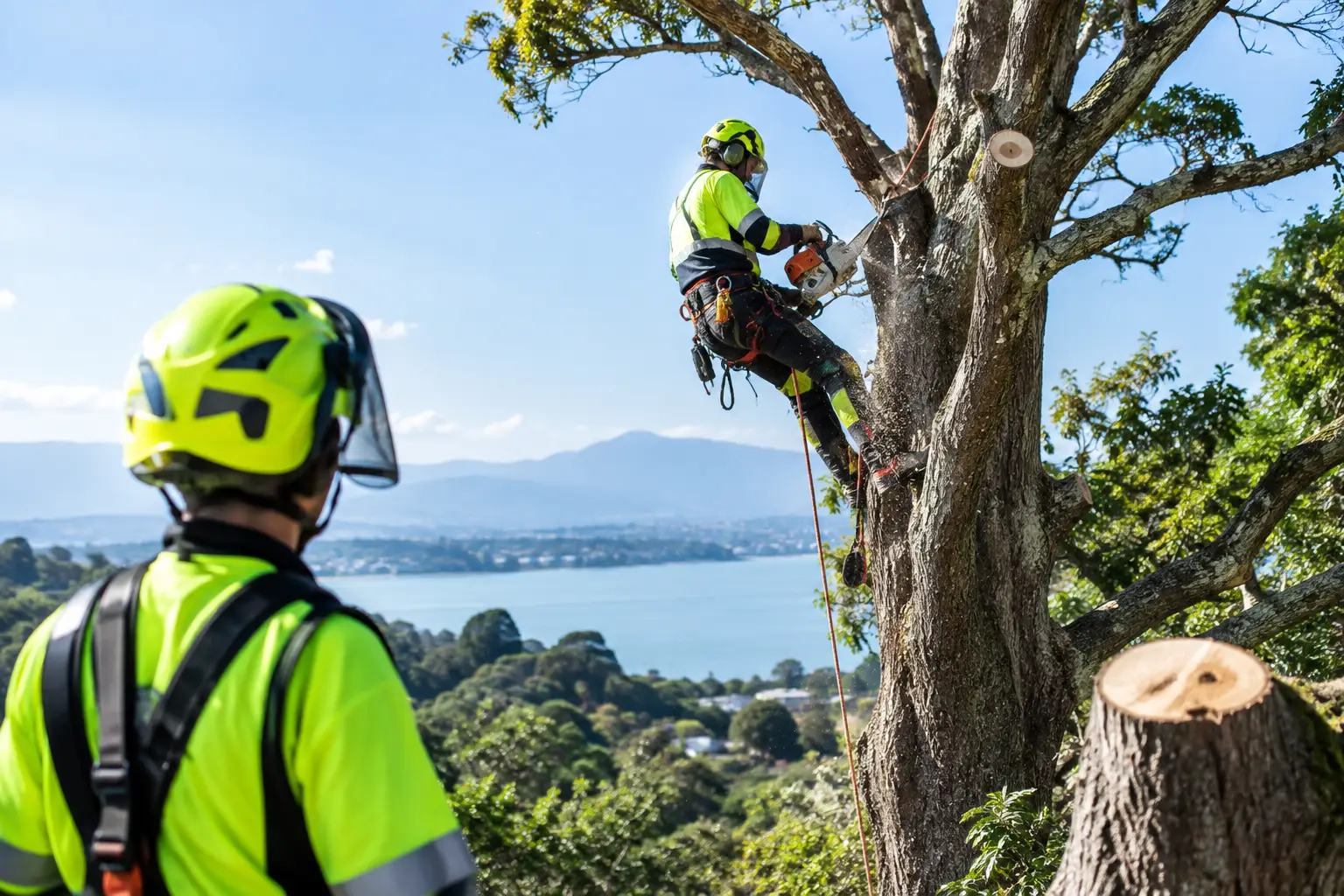
This is why removal should never be judged solely by how easy a tree appears to be to cut down. Professional crews use suitable climbing systems, elevated work platforms, rigging techniques, traffic or pedestrian management where needed, and maintained equipment to control each stage of the job. Health and Safety is in our DNA because a quick shortcut can put people and property at risk.
Emergency situations need a practical response. If a tree or large branch has failed after high winds, keep people clear of the area and do not attempt to pull, climb or cut it yourself. The priority is making the site safe, then assessing whether the tree can be retained or needs complete removal.
Check protected-tree and consent requirements first
Before arranging significant pruning or removal, check whether the tree is subject to district plan rules, a consent requirement, a covenant or other protection. Requirements can vary by location, species, tree size and site zoning. Work on protected trees often needs a clear justification and may need to follow approved conditions.
An arboricultural assessment can document the tree’s condition, risk factors and recommended work. For commercial properties, schools, body corporates and development sites, this provides a useful record of responsible decision-making as well as a practical management plan for future maintenance.
Do not assume that a tree can be removed because it is on private land, or that it must be retained because it is large. The answer depends on the specific tree and the rules affecting the property.
What happens after removal matters too
A professional removal should leave the site tidy and ready for its next use. Branches can be chipped, timber can be processed or removed as agreed, and the work area should be cleared of debris. Where the stump will interfere with landscaping, replanting, paving or construction, stump grinding can remove the remaining obstacle below ground level.
Replacement planting deserves thought. A smaller species with appropriate mature height and root behaviour may suit a garden near services or buildings far better than replacing like-for-like. On rural and larger sites, choosing the right mix of natives, shelter species and specimen trees can create a more resilient landscape over time.
Get advice before the problem grows
The best time to assess a questionable tree is before a branch fails or a project is underway. Photos can be useful for an initial conversation, but an on-site inspection gives a far more reliable picture of structure, health, access and risk.
Tree Technician brings practical field experience, modern equipment and qualified arboricultural judgement to tree surgery, removal, emergency work and formal assessments. The goal is straightforward: retain trees where they can be managed safely, and remove them professionally when that is the responsible call.
If you are unsure which path suits your tree, arrange an assessment while there is time to make a considered decision rather than an emergency one.
www.treetechnician.co.nz