A mature tree can be the feature that makes a property feel established – right up until a heavy limb hangs over a roof, a development footprint changes, or roots begin affecting services. Before arranging major pruning or removal, tree consent requirements need checking. In Canterbury, the answer is rarely as simple as ‘it is on my land, so I can remove it’.
Whether consent is needed depends on the tree, its location, the proposed work and the rules of the relevant local authority. Getting clear advice early can prevent a stopped job, delays to a build programme, enforcement action, or irreversible damage to a tree worth retaining.
What tree consent requirements are designed to protect
Tree consent requirements are generally part of district-plan rules intended to protect scheduled, notable or otherwise protected trees. These may have recognised landscape, ecological, cultural, historic or amenity value. A large old tree in a residential garden may be protected, but so may a modest specimen within a mapped area, heritage setting or development site.
The rules are not there to prevent sensible property management. They allow councils to consider whether work is necessary, whether the proposed method is appropriate, and whether a better outcome can be achieved through careful pruning, protection measures or replacement planting.
For property owners and managers, the practical point is this: do not rely on size, species, a previous owner’s advice or what has happened on a neighbouring property. Protection status and exemptions can change between council areas and planning updates.
When consent may be required
Consent may be required where a tree is listed in a district plan schedule or covered by a planning overlay. The wording varies, but controlled work can include removal, felling, topping, significant pruning, root cutting, excavation within the root zone and damage caused by construction activity.
A tree may also be affected by rules relating to a heritage place, conservation area, waterway margin, reserve boundary or subdivision consent. For development projects, the tree itself may not be the only issue. Earthworks, vehicle access, stockpiles, trenching and changes to ground level can all compromise a retained tree without a chainsaw ever touching it.
Emergency situations are different, but they still need sound judgement. If a storm-damaged limb presents an immediate threat to people or property, urgent work may be justified to make the site safe. Take photographs where it is safe to do so, record the condition and keep details of the work completed. Once the immediate risk has been addressed, further pruning or removal may still require council confirmation.
Common situations that deserve an early check
A consent check is sensible before removing a mature tree, heavily reducing its canopy, clearing a site for a new build, or carrying out excavation close to established trees. It is also worthwhile when a tree appears on property files, planning documents or a council schedule.
If the work is minor deadwood removal or light formative pruning, consent may not be required. That does not make poor workmanship acceptable. Incorrect cuts can create long-term decay, weaken the structure and turn a manageable tree into a greater hazard.
Start with the right information
The fastest route to a clear answer is to identify the property correctly, define the proposed work and confirm the tree’s status with the relevant council. In Canterbury, requirements may differ between Christchurch, Waimakariri, Selwyn, Hurunui and other districts, so advice must relate to the actual site rather than the nearest town.
Useful information includes the property address and legal description, clear photographs, tree species where known, approximate size, and a description of what needs to happen. For a building project, provide a site plan showing structures, access routes, excavation and services in relation to the tree.
An arborist’s assessment can add the detail that a broad enquiry cannot. It identifies species, condition, defects, canopy spread, root protection areas and the likely effects of the proposed work. It can also explain why a particular pruning specification or removal method is the most reasonable option.
That evidence matters when work is being considered around a protected tree. ‘The tree is messy’ is unlikely to carry the same weight as documented limb failure, disease progression, structural defects, interference with essential infrastructure or a clearly demonstrated development constraint.
Consent is not always the only approval
Tree work often sits alongside other responsibilities. A tree near power lines requires the right approach and appropriate clearances. Work beside a road, on a shared accessway or near public land may require traffic management or separate permission. A boundary tree can also create neighbour issues, particularly where access is needed from the adjoining property.
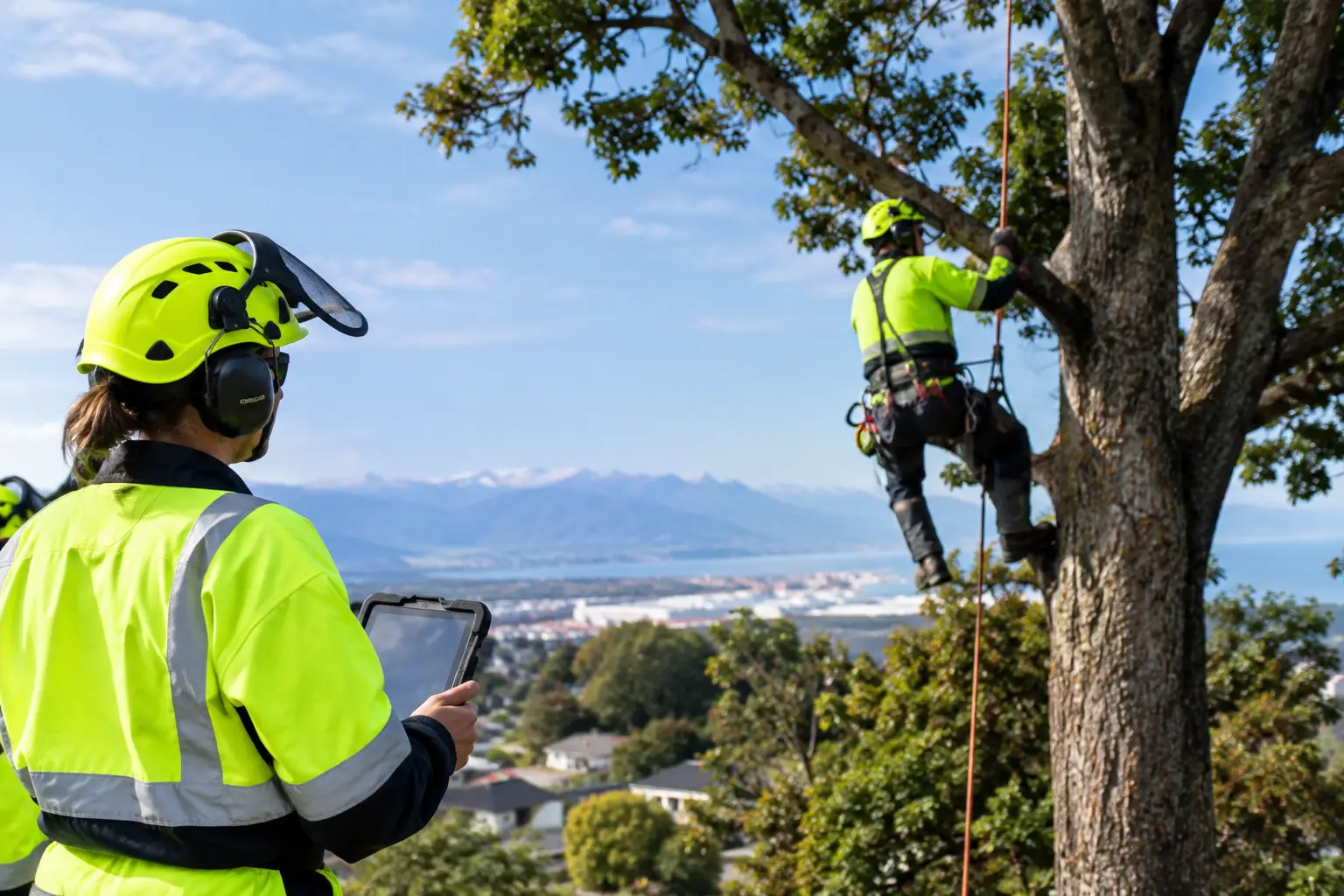
Being allowed to undertake tree work does not remove obligations around health and safety. A poor access plan, unqualified climbing, unsuitable machinery or inadequate exclusion zones can put residents, staff, buildings and passing traffic at risk. Health and Safety is in our DNA, and it should be visible in the planning before the crew arrives.
For commercial sites and developments, keep consent records, arboricultural reports, site protection plans and completion notes together. This creates a useful audit trail and helps prevent contractors accidentally working outside approved limits later in the project.
How an arborist helps prepare a stronger application
Where formal approval is needed, a well-prepared application is usually easier for everyone to assess. An arborist can inspect the tree, explain the management options and prepare documentation that reflects the actual site conditions.
The best recommendation is not automatically removal. In some cases, targeted reduction, deadwood removal, cabling and bracing, or a root protection plan can manage the risk while retaining a valuable tree. In other cases, removal is the responsible decision because the tree is in decline, structurally compromised or incompatible with essential works.
A useful report normally sets out the tree’s condition and significance, photographs and measurements, the proposed scope of work, potential effects, alternatives considered and mitigation such as replacement planting. For construction sites, it may also specify no-go areas, protective fencing and supervision points for excavation.
This level of detail helps a council understand what is proposed and gives the site team clear boundaries. It also prevents the common problem of asking for broad permission, then finding the approved work does not match what is required on the day.
Avoid the shortcuts that create costly problems
The most expensive mistakes tend to happen before work starts. Removing a tree first and checking later can lead to enforcement action, restoration requirements and disruption to a sale or development. Equally, delaying a genuine hazard assessment because a tree might be protected can leave people exposed to avoidable risk.
Another trap is treating drastic topping as a compromise. Topping can trigger weak regrowth, decay and future failure, and it may still be considered significant pruning under planning rules. A properly specified reduction is a different operation and should be based on the tree’s species, structure and ability to respond.
Finally, do not assume a contractor’s verbal assurance is enough where consent could apply. Ask what has been checked, what work is authorised, and whether any conditions need to be followed. Clear written scope protects the property owner as well as the contractor.
Plan early, especially around development
Trees and building plans need to be considered together from the beginning. A retained tree can add shade, character and value to a finished site, but only if there is enough room for roots, canopy and safe construction access. Once foundations, driveways and services are fixed on a plan, options can become limited.
For homeowners, the same principle applies on a smaller scale. If a tree is getting too close to a house, gutter, fence or service line, arrange an assessment before the issue becomes urgent. Timely pruning is often lighter, safer and better for the tree than a last-minute major cut.
Tree consent requirements are manageable when the facts are clear and the work is planned properly. A qualified arborist can help you understand the condition of the tree, prepare practical options and carry out approved work safely, with a clean site at the end of the job.
For practical advice on protected-tree work, hazard assessments and professional tree care across Canterbury, visit www.treetechnician.co.nz