A Canterbury spring can bring warm, still afternoons one week and damaging wind, late frost or heavy rain the next. That sudden change is exactly why spring is a critical time to look closely at the trees around your home, business, development site or rural property. Healthy growth is welcome, but new leaves can also expose deadwood, weak branch unions, pest damage and limbs that have become too close to buildings, driveways or power lines.
Good tree care at this point in the season is not about cutting everything back. It is about making sound decisions that support tree health, reduce avoidable risk and keep your property looking cared for through the busy growing months.
Why spring tree care matters
As soils warm and daylight increases, many trees direct stored energy into new shoots, foliage and roots. That makes spring a useful time to identify what has changed since winter. A branch that looked harmless when bare may now be extending over a roof. Dense new growth can catch more wind. Fungal issues, leaf discolouration and insect activity can also become easier to spot.
For property managers and commercial sites, spring is also when outdoor areas become more visible to tenants, staff and visitors. Clear accessways, tidy hedges, safe car parks and well-managed trees all contribute to a professional presentation. For homeowners, it is often the season when a tree starts blocking light, dropping debris into gutters or competing with garden planting.
The right work depends on the species, age, condition and position of the tree. A light formative prune on a young specimen is very different from managing a mature tree with decay at the base. Rushing into heavy pruning can create stress, encourage weak regrowth or remove too much canopy at once.
Start your spring check from the ground
You do not need to climb a tree to notice many early warning signs. Walk around the tree on a dry day and look from several angles. Pay attention to changes rather than just obvious damage. A mature tree may have a natural lean, for example, but a fresh lean or raised soil on one side of the trunk needs prompt attention.
Look at the trunk and root zone for cracks, cavities, mushrooms, loose bark, soil movement or damage from vehicles and machinery. Check whether branches are rubbing together, hanging over roofs or fences, or sitting above areas where people park, walk and sit. Dead branches often stand out because they have no buds or leaf growth, though a professional inspection is the safest way to confirm their condition.
New foliage tells its own story. Sparse leaf cover, unusually small leaves, early browning or dieback at branch tips can point to stress. The cause may be compacted soil, drought, disease, poor drainage, root disturbance or past pruning. It is not always a reason to remove the tree, but it is a reason to investigate before the issue becomes more serious.
Check the space around the tree
Spring projects can unintentionally damage tree roots. Excavation, new fences, driveways, stored materials and repeated vehicle movements may affect roots well beyond the trunk. Roots are usually concentrated in the upper soil layers and can spread far wider than many people expect.
Before building, landscaping or clearing work starts near established trees, seek arboricultural advice. Early planning can help retain worthwhile trees, identify practical protection zones and avoid costly changes once work is underway. This is particularly valuable on development sites where trees may be protected or subject to council governance.
Spring pruning needs a clear purpose
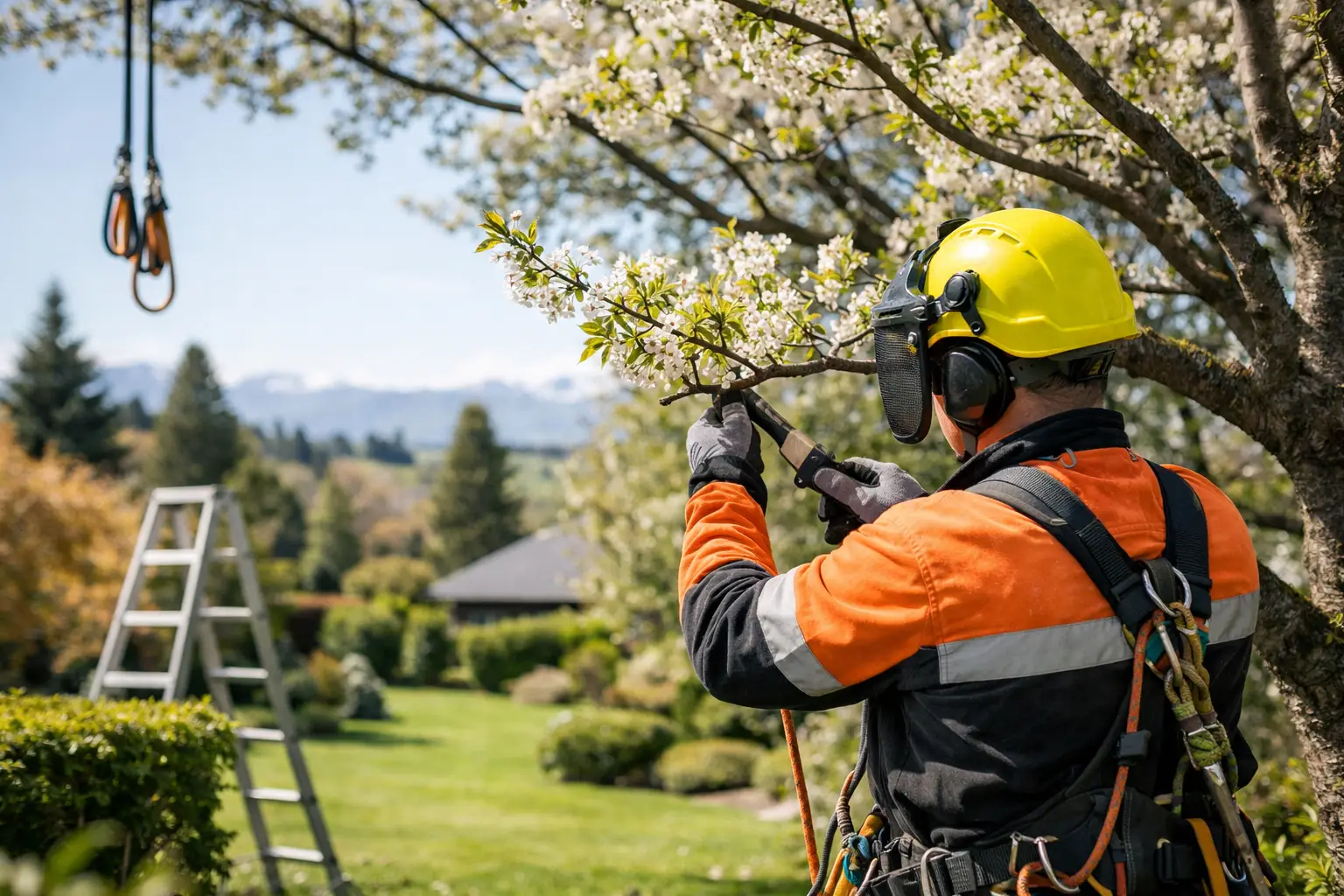
Pruning should have an outcome in mind: remove deadwood, improve clearance, reduce a specific defect, guide the structure of a young tree or maintain an appropriate hedge shape. Random cutting, topping or stripping out inner growth rarely achieves a good long-term result.
For many established trees, a selective approach is best. Removing dead, damaged and poorly attached branches can improve safety without taking away the canopy the tree needs to produce energy. Where a limb is encroaching on a roof or accessway, careful reduction may provide clearance while retaining the tree’s natural form.
Timing matters too. Some species tolerate spring pruning well, while others may bleed sap, be vulnerable to disease entry or respond with excessive regrowth if cut at the wrong time. Bird nesting activity is another consideration. If there is an active nest, work may need to be delayed or adjusted to avoid disturbance.
Hedges are often ready for their first tidy-up as spring growth gathers pace. Regular, lighter trims generally produce a denser and healthier hedge than leaving it until it is overgrown and then cutting hard into old wood. Keep the base slightly wider than the top where practical, so lower growth receives enough light.
Do not attempt elevated pruning with ladders, chainsaws or improvised equipment. The combination of unstable footing, falling timber and nearby structures can turn a small job into a serious incident. Professional arborists use appropriate climbing systems, elevated work platforms, rigging techniques and maintained equipment to manage branches safely and control where material lands.
Give trees the right conditions for growth
A spring tidy-up should include the ground beneath the canopy. Remove rubbish, check that mulch has not been piled against the trunk and avoid repeated mowing or spraying right up to the base. A broad ring of organic mulch can help retain moisture, moderate soil temperature and reduce competition from grass, provided it is kept clear of the trunk itself.
Watering needs to suit the weather and the tree. Newly planted trees benefit from deep, consistent watering while their roots establish, especially if Canterbury conditions turn dry or windy. Mature trees usually need less intervention, but can still struggle after prolonged dry periods or root damage. Frequent shallow watering is less useful than a thorough soak that reaches deeper into the root zone.
Be cautious with fertiliser. A stressed tree does not always need feeding, and adding nutrients without understanding the cause of poor growth can be unhelpful. Soil condition, drainage and root health often matter more. If a tree is declining, an assessment can distinguish between a manageable issue and a structural or health concern requiring more urgent action.
Caution when spraying the lawn with chemicals such as Weed and Feed around the base of any tree, as these chemicals leach into the soil and into tree roots thinking its is food. This can injure or slowly kill established trees.
Prepare for spring wind and changing weather
Canterbury weather has a habit of testing weak limbs. Before stronger spring winds arrive, check trees near homes, sheds, boundary fences, roads, play areas and car parks. Branches with visible cracks, heavy end weight, cavities or poor attachment deserve attention, particularly where there is a clear target beneath them putting people or infrastructure under them.
[Cabling and bracing] (https://treetechnician.co.nz/services/cabling-bracing/) can sometimes support a tree with a valuable but vulnerable structure. It is not a fix for every defect, and it should never be treated as a substitute for proper assessment. In the right situation, though, a professionally designed support system can reduce movement and help retain a significant tree.
After a storm, keep people away from fallen or partially failed branches. Do not pull on hung-up limbs or approach trees near power lines. Photograph damage from a safe distance if needed, then arrange an [emergency response] (https://treetechnician.co.nz/services/emergency-services/). Fast action can reduce further damage, but safety comes first.
When to bring in an arborist this spring
Call for professional advice when a tree has suddenly changed shape, has large dead limbs, shows cracks or decay, is interfering with services, or is close to buildings and high-use areas or simply to undertake remedial work needed. The same applies if you are planning work within the root zone, need protected-tree guidance or want a documented assessment for a commercial property or development.
An experienced arborist will assess the tree as a living structure, not just simply a job. That includes its species, health, form, likely failure points, site conditions and the consequences if a branch or tree were to fail. From there, the recommendation may be pruning, monitoring, cabling, removal or a management plan. Sometimes the best recommendation is to leave a tree alone and review it later.
Tree Technician brings practabile field experience, modern equipment and safety-first planning to spring tree work across Canterbury. Whether the job is a small residential prune or a complex site assessment, the aim is straightforward: manage the tree responsibly, protect the people and property around it, and leave the site clean and ready to enjoy.
A few well-timed checks in spring can prevent an avoidable callout later in the season. If something about a tree does not look right, trust that instinct and have it assessed before growth, wind or site activity makes the problem harder to manage.
www.treetechnician.co.nz