A mature tree can add shelter, privacy and real character to a property. But when should trees be removed? The answer is rarely based on size alone. A healthy, well-structured tree can stand safely for decades, while a smaller tree with hidden decay, poor roots or storm damage may need urgent attention.
Removal is a last resort where practical, particularly for established trees that support shade, wildlife and the look of a site. In many cases, careful pruning, cabling, bracing or targeted pest and disease management can reduce risk and retain the tree. Where a tree is unsafe, declining beyond recovery or incompatible with planned works, though, removal may be the most responsible option.
When should trees be removed rather than pruned?
Pruning can remove deadwood, reduce end weight in selected limbs, improve clearance from buildings and manage a tree’s form. It cannot repair a compromised root system, reverse extensive internal decay or make every structurally poor tree safe. The key question is whether the risk can be managed for the long term without causing further harm to the tree.
An arborist considers the tree’s condition, structure, location and likely targets. A target is anything that could be harmed if part or all of the tree fails: people, homes, sheds, vehicles, power lines, neighbouring properties, footpaths or busy accessways. A tree in an open paddock may be able to remain with monitoring, while the same tree over a driveway or commercial car park may require removal.
Serious structural defects
Trees do not always show their weaknesses from the ground. Decay can develop inside a trunk or major branch while the outer canopy still looks green. Cavities, large cracks, hollow sections, peeling bark around a wound, fungal fruiting bodies and branches that have begun to split are all reasons to arrange an assessment.
Some defects can be managed. For example, a sound tree with one poorly attached limb may benefit from selective pruning or a support system. However, removal is more likely where there is extensive decay at the base, a large crack through a main stem, several competing leaders with included bark, or a defect above a high-use area. Do not climb the tree, cut into damaged limbs or assume a few removed branches have solved the issue. Tree failures can be unpredictable, especially in wind.
Root damage and instability
Roots do more than anchor a tree. They supply water and nutrients, and damage below ground may not show in the canopy until months or years later. Excavation for drainage, driveways, new builds, retaining walls and services can sever major roots and seriously reduce stability.
Warning signs include fresh soil lifting around the base, a new lean, exposed or broken roots, cracking ground, or a tree that moves noticeably in moderate wind. Root decay can create similar concerns, particularly where water regularly ponds around the boot or soil levels have been raised against it. A leaning tree is not automatically dangerous – some trees naturally grow at an angle – but a recent or worsening lean needs prompt professional attention.
Decline, pests and disease
A thinning canopy, dead branch tips, premature leaf drop and reduced annual growth can indicate stress. That does not automatically mean a tree needs to come down. Drought, compacted soil, poor drainage and construction impacts can all cause decline that may be addressed with the right management.
Removal becomes more likely when decline is advanced and the tree has little prospect of recovery, particularly if deadwood is increasing or major limbs are failing. Certain pests and diseases can also affect the wider landscape. An arboricultural assessment helps identify whether treatment, monitoring, pruning or removal is appropriate, rather than removing a tree on appearance alone.
Warning signs that call for a prompt assessment
After strong winds, heavy rain or a sudden change on site, it pays to inspect trees from a safe distance. Contact a qualified arborist promptly if you notice four or more of the following signs:
- a large dead, hanging or broken branch;
- a new crack, split or cavity in the trunk or a major limb;
- mushrooms or bracket fungi at the boot base;
- lifted soil, fractured ground or exposed roots near the tree;
- a recent lean or movement at the root plate;
- branches rubbing on a roof, growing into power lines or obstructing vehicle access; or
- substantial dieback through the upper canopy.
If a branch is suspended over a home, road, vehicle or area used by people, keep clear. In an immediate emergency involving electricity, treat all lines as live and contact the relevant network provider first. Never attempt to remove branches near overhead lines yourself.
Storm damage is not always an automatic removal job
Canterbury weather can put trees under real pressure, particularly where dry periods, saturated ground and strong winds occur in the same season. A storm-damaged tree may look beyond saving, but the right response depends on what has failed.
A torn limb can sometimes be pruned back to a suitable point, leaving a balanced, healthy tree. A tree with a split trunk, uprooting roots or multiple failed leaders may have a much poorer outlook. Quick decisions matter after a storm, but they should still be based on an informed assessment where circumstances allow. Rushed cuts can destabilise the remaining tree or create hazards for the person doing the work.
Trees that no longer suit the site
Not every removal is caused by disease or imminent failure. Trees can outgrow the space available, shade solar panels, drop heavy limbs over a building, interfere with drainage, crowd neighbouring trees or become difficult to maintain safely. On development sites, a tree may also conflict with approved building footprints, vehicle access or essential services.
That said, removal should be weighed against alternatives. Crown reduction may create clearance without the stress of severe topping. Root-zone protection can help retain a valuable tree during construction. A revised driveway position or building layout may preserve a healthy specimen that adds long-term value to the property.
For commercial sites and developments, early arboricultural input is particularly useful. A tree assessment can identify retention opportunities, hazard concerns, likely protection measures and trees that need removal before machinery arrives. This reduces delays, avoids preventable root damage and supports clearer planning around compliance requirements.
Check protected-tree and consent requirements first
Before arranging removal, check whether the tree is protected by local planning rules, a consent condition, covenant or heritage listing. Requirements can vary by location, species, size, site zoning and the work proposed. A protected tree may require formal approval even where it is on private land.
Emergency work is different when there is an immediate risk to people or property, but documentation is still valuable. Clear photos, notes about the hazard and an arborist’s findings can help explain why urgent action was needed. For planned work, obtain the appropriate advice before cutting begins. Removing a protected tree without approval can create unnecessary cost and complications.
What a professional tree assessment looks at
A proper assessment is more than a quick look at the canopy. It considers the species, age class, vigour, stem/ branch condition, branch unions, root environment, past pruning, recent changes on site and the consequences if the tree or a limb were to fail.
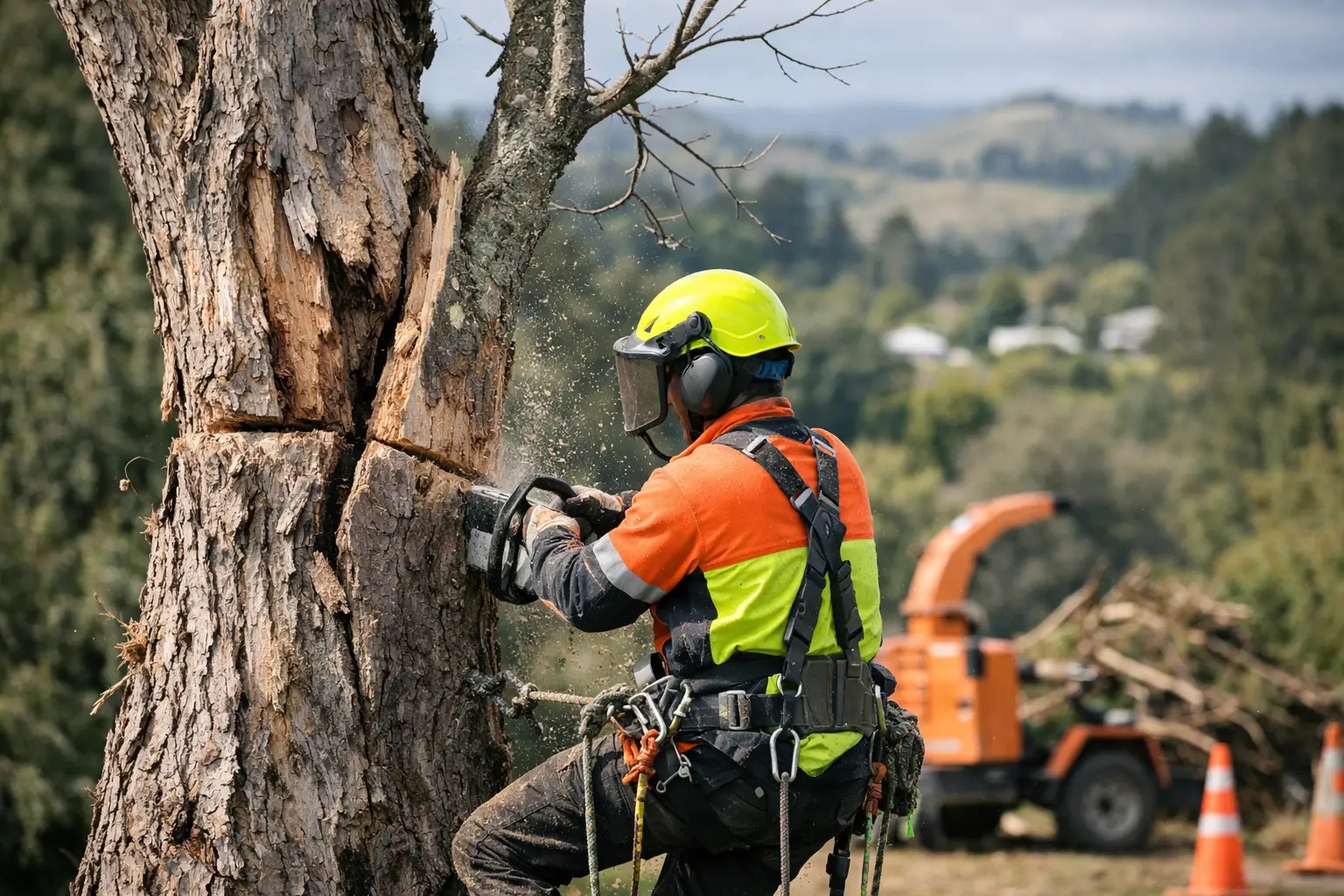
The result may be a recommendation for monitoring, pruning, cable bracing, root-zone care, removal, or further investigation. Where removal is the right call, the plan should also cover safe access, nearby structures, traffic or pedestrian management, power-line clearance, controlled dismantling and thorough site clean-up. Stump grinding can be considered where the area needs to be replanted, turfed, paved or developed.
For homeowners, this gives you a clear path forward without guessing. For property managers, developers and rural landholders, it supports safer decisions across larger sites and helps prioritise work according to risk.
A tree does not need to be visibly dead before it deserves attention. If something has changed – a crack has appeared, the ground has lifted, a canopy is thinning or storm damage has left uncertainty – arrange an assessment early. Tree Technician can provide practical arboricultural advice and safe, professional removal where that is genuinely the best outcome for the tree, the site and the people around it.
www.treetechnician.co.nz