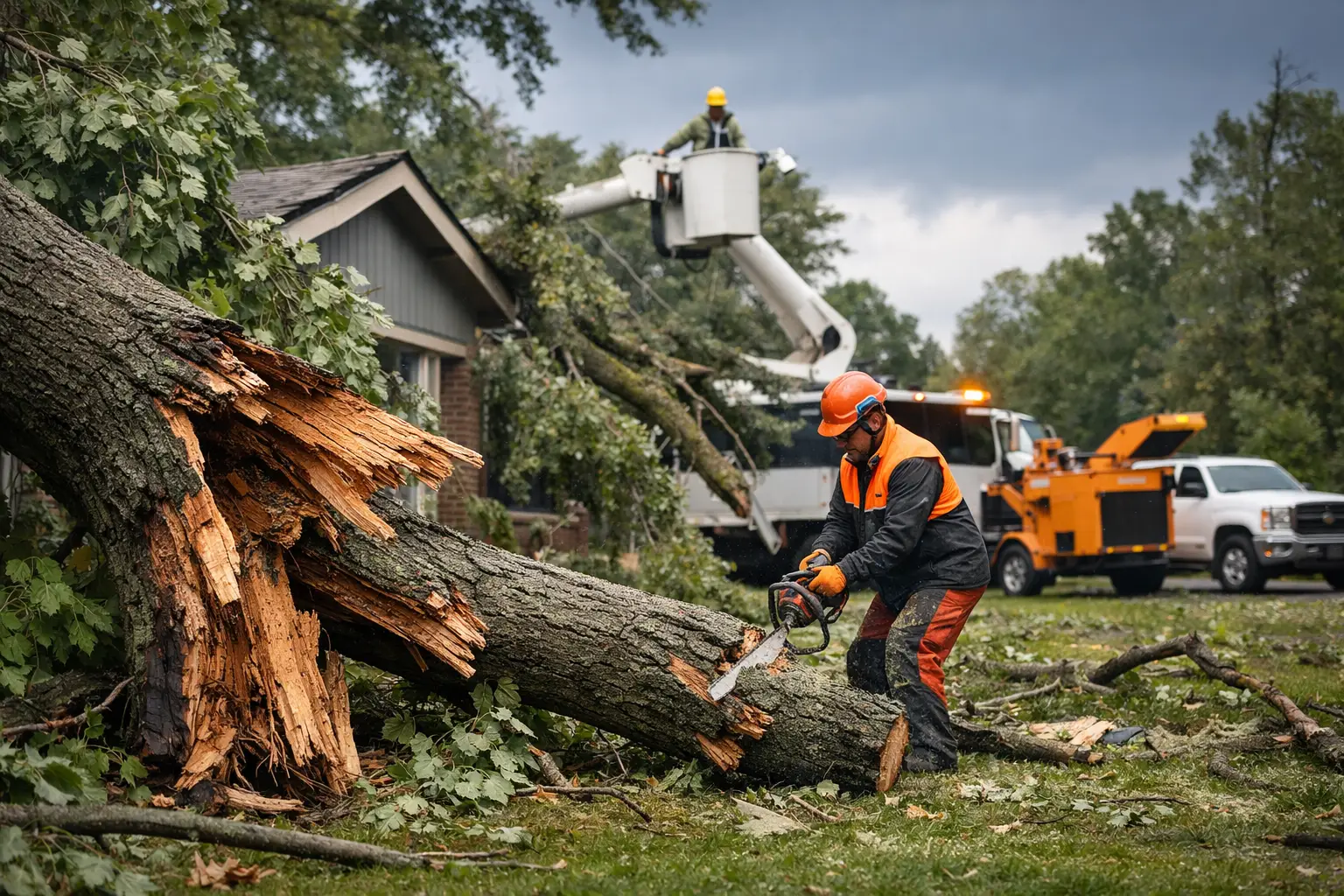
A tree can look stable from one side while its root plate is lifting, a major limb is hanging overhead, or a split trunk is carrying more load than it can handle. This emergency tree response guide explains what to do right after storm damage, impact damage or sudden tree failure, so you can protect people, buildings and access routes without creating a second emergency.
First priority: keep people out of the danger zone
Do not inspect a damaged tree up close. Wind, rain and poor light make hazards harder to see, while branches that appear caught or settled can move without warning. Keep family members, staff, tenants, visitors, public and pets well clear of the tree, its canopy and the area where it could fall.
A useful rule is to treat the whole height of the tree as the minimum exclusion area. If a leaning tree is 12 metres tall, do not stand, park or work within at least 13 metres of its likely fall direction. Increase that distance where the tree is leaning, the ground is saturated, or broken limbs are suspended in the canopy.
If the tree has damaged a house, vehicle, fence or other structure, do not assume the damage is limited to what you can see. A branch through a roof can affect ceilings, wiring and structural framing. Avoid entering affected rooms until the area is assessed and made safe.
Deal with power lines as a life-threatening hazard
Any tree, branch or debris touching or close to overhead power lines must be treated as live. Keep everyone well away, including neighbours who may be tempted to move a branch from the driveway or footpath. Never attempt to cut, pull, climb or move a tree near lines, even with a non-metal tool.
Contact the electricity network operator and emergency services where there is immediate danger. If a line is down, stay clear of puddles, fences, vehicles and objects that may be energised. Keep gates closed and prevent access until the network operator confirms the area is safe.
Power-line work requires specialist planning, approved methods and the right permits and assurances from the network owner. It is not routine pruning, and it is never a suitable job for a property owner after a storm.
Make the site safe from a distance
Once people are clear, take simple steps that do not put you beneath the canopy or within the fall zone. If it is safe to do so, move vehicles away from the area. Block access to a driveway, path or work zone with cones, temporary barriers or clear signage. Tell occupants, staff or neighbours why the area is closed.
Do not use a ladder to look for roof damage, and do not climb a tree to remove a broken limb. Avoid parking machinery beneath damaged branches or using a Ute to pull on a leaning trunk. Tension within damaged timber is unpredictable, and improvised pulling can bring the tree or branch down in the wrong direction.
If weather conditions are still severe, wait. Strong gusts can turn a manageable limb failure into a full tree collapse. A professional response starts with controlling the site, not rushing into cutting.
Signs that need an urgent arborist assessment
Some damage is obvious, but other warning signs can be just as serious. Call a qualified arborist (https://treetechnician.co.nz/contacts/) for urgent advice if you see a tree leaning more than usual, fresh cracks in the ground near the base, exposed or lifted roots, a split trunk, hanging branches, or large limbs resting on a roof or fence.
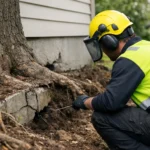
Also take notice of sudden canopy change. A tree that has lost one major limb may now be badly unbalanced, particularly if the remaining canopy is loaded on one side. Cracks where branches join the trunk, bark splitting along a stem, and soil heaving around the root zone all point to possible structural failure.
Trees near homes, schools, car parks, public accessways and busy work areas require a faster response because the consequence of failure and damage or injury is higher. The same is true for trees over sheds, stock areas, boundary fences and access tracks on rural properties.
What to record before help arrives
Photos can help an arborist understand the urgency and prepare suitable equipment, provided they are taken from a safe location. Photograph the whole tree, the damaged section, the base of the trunk and nearby targets such as buildings, roads or power lines. A wide photo is often more useful than a close-up because it shows the tree’s lean and surroundings.
Note when the damage occurred, whether the tree was already leaning or showing decline, and whether the ground has become waterlogged. For commercial properties, record the time the hazard was identified, the area isolated and who was notified. This supports stronger site management and gives the response crew a clearer starting point.
Do not clear debris simply to make the site look tidy before an assessment. Fallen branches may reveal the point of failure, while like tyre marks, cut stubs or disturbed ground can make it harder to assess what happened. Small debris well outside the hazard area can wait until the tree itself is stable.
Choosing the right emergency response
Not every storm-damaged tree needs removal. A qualified arborist (https://treetechnician.co.nz) will assess the extent of the failure, the tree’s species, condition, root stability, remaining structure and position. In some cases, careful sectional dismantling is the safest option. In others, damaged limbs can be removed, a split branch union may be supported with cabling or bracing, or the tree may be retained with follow-up monitoring.
The trade-off is clear: retaining a tree can preserve shade, amenity and habitat, but only where its remaining structure can be managed at an acceptable level of risk. A tree with severe root-plate movement, extensive decay or a compromised main stem may not be a candidate for retention, especially near occupied buildings or public areas.
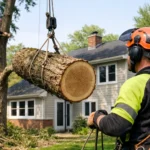
Emergency work often requires controlled rigging, elevated access equipment, traffic or pedestrian management, and careful protection of nearby structures. The fastest safe solution is not always the quickest-looking cut. A well-planned job prevents further damage and avoids leaving an unstable stump, suspended limb or debris pile behind no one can safely reach.
Tree Technician provides 24/7 emergency tree response backed by experienced arboricultural expertise, maintained equipment and a safety-first approach. For high-risk sites, the right qualified team will assess the hazard first, establish exclusion zones and explain the recommended work before starting.
After the immediate hazard is removed
Once the damaged material is safely dealt with, inspect the broader site. Check neighbouring trees for broken hangers, fresh lean, root disturbance and branch failures that may have been hidden by the first incident. Storms often expose existing decay or weak branch unions rather than causing every defect from scratch.
Ask whether the remaining tree needs corrective pruning, a formal tree assessment or a longer-term management plan. This is particularly valuable for body corporates sites, schools, commercial grounds, developments and rural properties with multiple mature trees. A documented assessment helps owners prioritise work based on risk, tree condition and how the site is likely to be used in the future.
If the tree is protected or located in an area subject to council governance, check the relevant requirements before non-emergency follow-up work begins. Genuine hazard situations may need immediate action, but that does not remove the need for appropriate records, photographs and regulatory advice once the site is safe.
Reducing the chance of the next callout
Regular inspection and pruning cannot prevent every storm failure, but it can greatly reduce foreseeable hazards. Removing deadwood, managing overextended limbs, improving clearance from buildings and identifying decay early are practical steps that make trees safer and easier to manage.
Pay particular attention after long dry periods followed by heavy rain. Soil can soften quickly around a stressed root system, and trees with prior root damage may become unstable when saturated ground and strong wind arrive together. Mature trees are valuable assets, but they need informed care rather than neglect or indiscriminate cutting.
When a tree changes suddenly, trust that warning sign. Keep people clear, isolate the area, and bring in qualified help before a manageable concern becomes a serious incident.
www.treetechnician.co.nz