A large limb above a roof is not a job for a ladder, a chainsaw and good intentions. When a tree is close to a home, garage, fence or power line, every cut has consequences. Safe tree removal near a building or any infrastructure is about controlling where branches and trimer cut goes, protecting the people below, and leaving the site clean rather than creating a costly repair job.
For some trees, careful pruning is enough to reduce the risk and retain an important part of the landscape. For others, declining health, poor structure, storm damage or encroachment makes removal the responsible option. The right approach starts with an arboricultural assessment, not the first cut.
What safe tree removal near a house involves
Removing a tree in an open paddock is very different from taking down one squeezed between a dwelling, garden beds, neighbour’s boundary or powerlines. The available drop zone may be no larger than a driveway. There may be glass, gutters, solar panels, sheds, water pipes, communication cables and prized planting directly below the canopy.
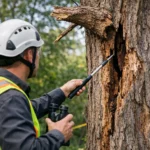
A qualified crew assesses the tree from the ground and, where needed, from within the canopy. They look at its height, lean, branch spread, weight distribution, visible decay, deadwood, cracks and root condition. They also identify access points, overhead and underground services, nearby structures, public areas and the safest place for equipment and workers to stand.
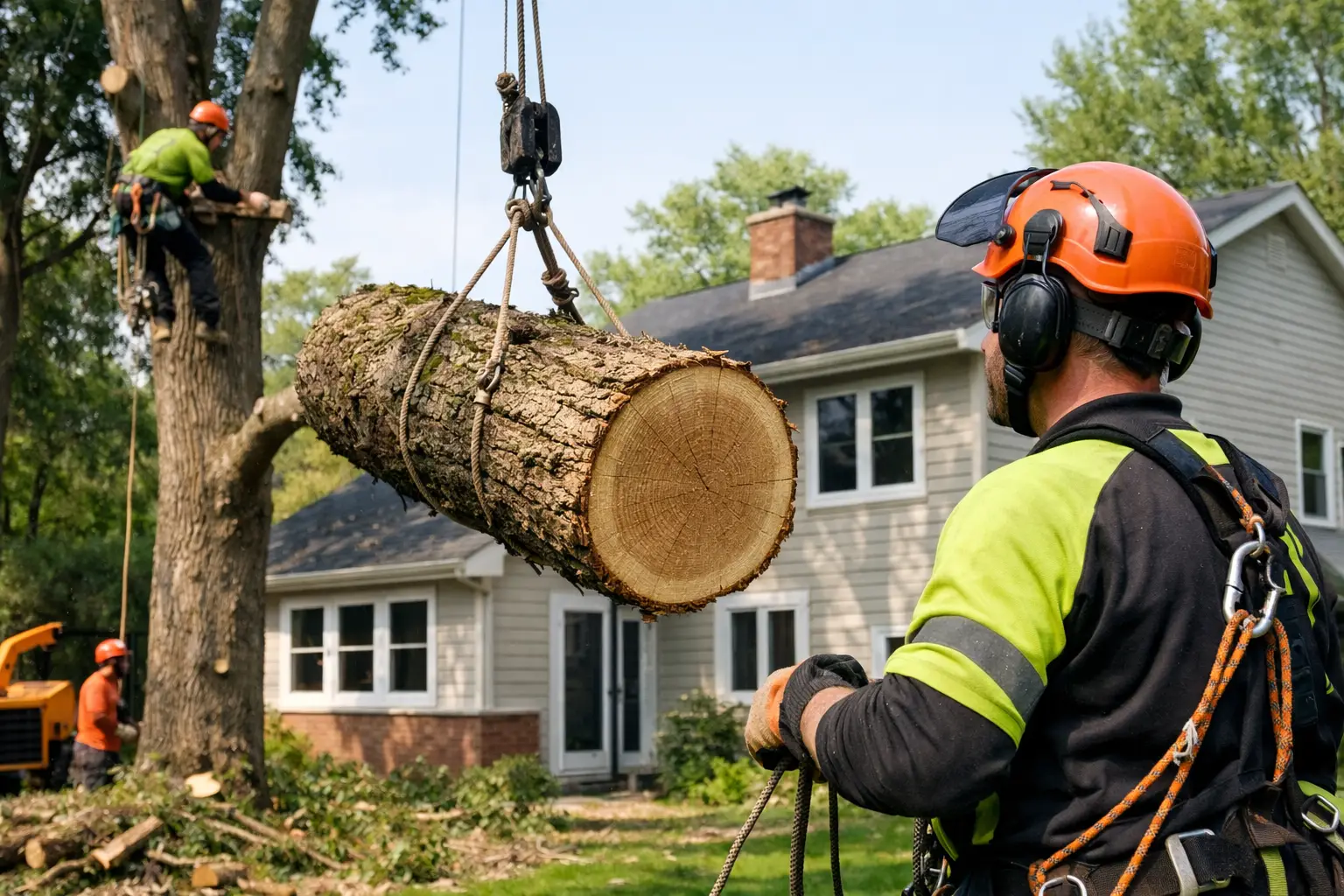
This planning determines whether the tree can be felled in one controlled direction or needs to be dismantled in sections. Near a house, sectional dismantling is often the safest method. Our qualified arborist climbs the tree or uses an elevated work platform, removes manageable pieces from the outside of the canopy, then works down the stem. Ropes, rigging devices and lowering systems allow branches and trunk sections to be guided into a clear landing area instead of being dropped.
It takes longer than simply cutting at the base, but that is the trade-off. Time spent planning and lowering timber carefully is far less disruptive than repairing a crushed fence, damaged roof or broken garden feature or damage to the lawn.
The condition of the tree changes the plan
Not every hazardous-looking tree is ready to fail, and not every leafy tree is sound. Internal decay can be hidden behind healthy foliage. Fungal growth around the base, hollow sections, peeling bark, cavities, dead upper limbs and soil movement can all indicate that a tree needs closer attention.
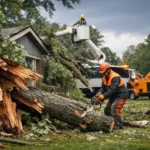
A tree that is dead, fire-damaged or storm-affected requires extra caution because timber may be brittle and unpredictable. A compromised stem may not safely hold a climber or withstand conventional rigging forces. In these situations, the crew may use a crane or elevated work platform, alter the dismantling sequence, or establish a larger exclusion zone.
Wind also matters. Strong or gusty conditions can turn a controlled lowering operation into an unnecessary risk, particularly when working high in the canopy. A professional team will postpone work when weather conditions are unsuitable. That decision protects workers, residents and property, even when a job feels urgent.
Why access and equipment matter
The most efficient removal method depends on the site, not just the size of the tree. A wide driveway with clear access may allow a chipper, truck, elevated work platform or crane to be positioned close to the work area. A narrow rear garden with limited entry may require climbing, manual handling and careful removal through side access.
Before machinery arrives, the crew should consider ground conditions. Soft lawns, paving, irrigation, septic systems and tree roots can all be damaged by heavy equipment if protection is not put in place. Ground mats, sensible vehicle placement and a clear traffic plan help minimise that risk.
The equipment itself should suit the task and be properly maintained. Chainsaws, lowering ropes, harnesses, rigging hardware and wood chippers are specialist tools, not shortcuts. Their safe use relies on inspection, trained operators and a crew that communicates clearly throughout the job.
On tighter sites, good communication is as important as machinery. The climber, ground crew and property owner need to know where the exclusion zone begins, which accessways must remain clear, and when vehicles or people cannot pass beneath the work. Children, pets and visitors should be kept well away with cordons and signs until the site has been made safe.
Power lines and services need a separate level of care
Trees growing near electricity lines should never be treated as ordinary pruning or removal work. Branches can conduct electricity, lines may be difficult to judge from the ground, and contact can occur even without a worker touching a cable directly.
If a tree is close to overhead power, the work may require coordination with the relevant network operator and a suitably qualified contractor. The crew must establish safe approach distances and use a method appropriate to the voltage, tree condition and site layout. Do not attempt to cut, pull or climb a tree that is touching or threatening power lines.
Underground services matter too. Before stump grinding, excavation or machinery access, services such as gas, water, drainage, electrical cables and communications should be considered. The visible part of the job may be above ground, but a professional removal plan accounts for what is below it as well.
Removal is not always the first recommendation
A good arborist does not assume every overgrown tree needs to come out. Selective pruning can remove deadwood, reduce end weight on long limbs, improve clearance from the building and manage a poor branch union. Cabling or bracing may also be appropriate for selected trees with a valuable canopy and a correctable structural weakness.
That said, pruning is not a cure for every problem. Severe decay, major root disturbance, repeated limb failures, an irreversible lean towards a dwelling or conflict with future building works can make removal the more sensible long-term decision. The aim is to recommend the option that manages risk while respecting the tree’s value, not to remove healthy trees without cause.
Local council rules and protected-tree requirements may also apply. Mature or notable trees can be subject to controls, especially in established neighbourhoods, heritage areas or developments. Checking the relevant requirements before work begins can prevent delays, fines and avoidable disputes.
What homeowners can do before the crew arrives
Property owners do not need to manage the technical side of a removal, but a little preparation helps the day run smoothly. Move cars from the driveway and keep access clear for trucks and equipment. Bring in outdoor furniture, pot plants, washing lines and anything breakable from the likely work zone.
Let the crew know about concealed hazards, including irrigation lines, septic tanks, fragile paving, shared driveways, gates with limited clearance and any known underground services. If access involves a neighbour’s property, arrange permission early rather than on the morning of the job.
It is also useful to discuss the finish you want. Some clients want firewood cut to manageable lengths, while others prefer all timber chipped and removed. Stump grinding may be worthwhile if the area will be replanted, turfed, paved or used for a new structure. Leaving the stump can suit a less-used area, but it may continue to sprout or become an obstacle over time.
Clean-up is part of a professional result
Tree removal does not end when the last section of trunk reaches the ground. Branches need chipping or removal, logs need to be processed as agreed, and the work area should be raked, blown and checked for stray debris. On a shared or commercial site, the crew may also need to manage pedestrian access and leave paths, driveways and entrances ready for normal use.
At Tree Technician, health and safety is in our DNA. That means matching the removal method to the tree, the site and the conditions rather than forcing a quick solution. With our experienced arborists, maintained equipment and a clear safe work plan, even difficult trees can be removed with care.
If a tree is leaning, shedding limbs, showing signs of decline or growing too close to your home, act before the next storm puts it to the test. An on-site assessment gives you a clear view of the risk and the safest practical path forward for both you and your tree.
www.treetechnician.co.nz