A stump may look like a straightforward obstacle in the lawn, but the ground around it can hold far more than roots. So, can stump grinding damage pipes? Yes, it can – if underground services are unknown, poorly located or too close to the stump. With the right checks, suitable machinery and an experienced operator, the risk is usually very manageable.
For homeowners, property managers and developers, the key is not to assume that every pipe is buried deeply or follows a neat, obvious route. Older properties in particular may have drainage lines, water pipes, irrigation or electrical conduits running close to trees that were planted decades ago.
Can stump grinding damage pipes?
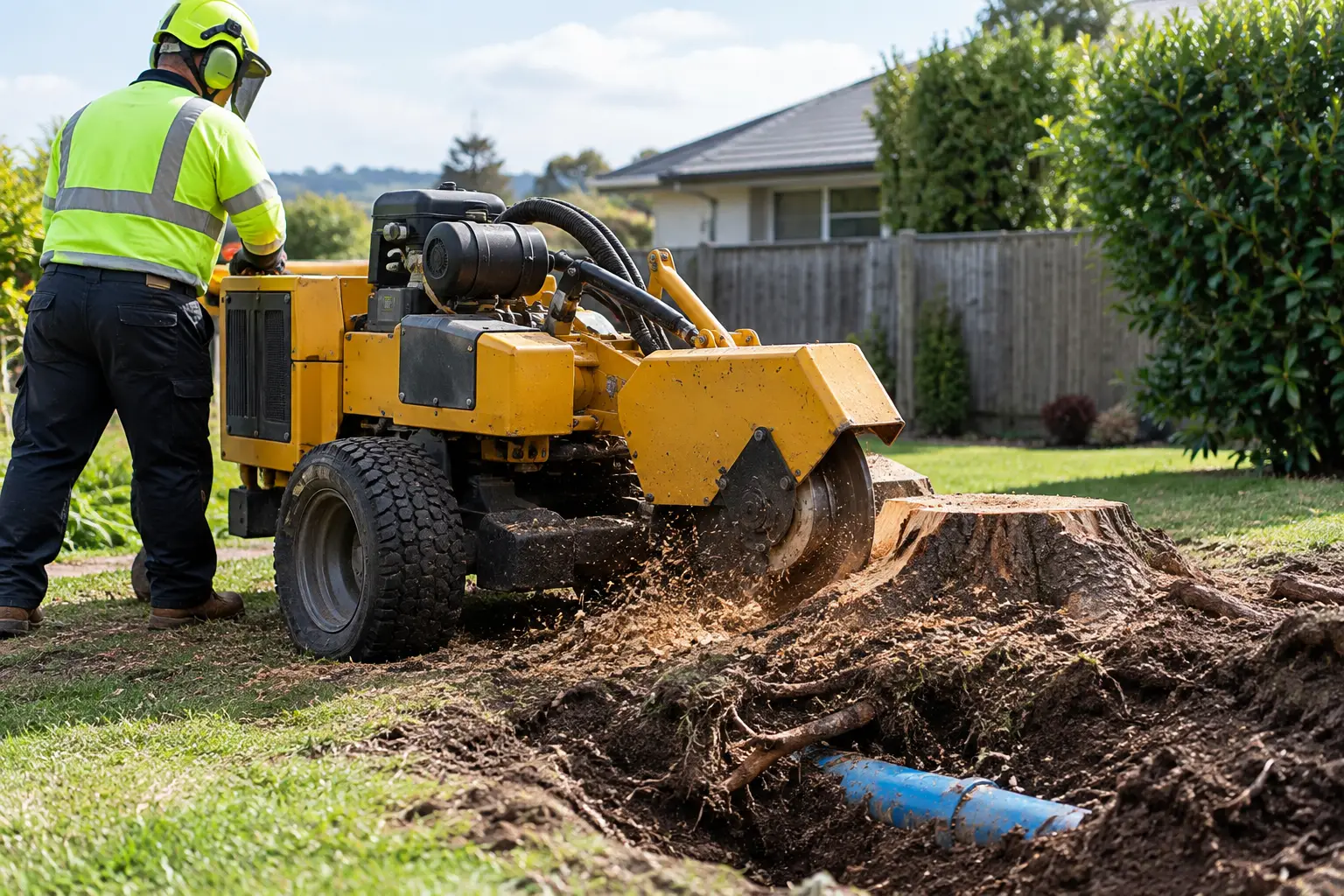
A stump grinder removes timber by gradually shaving it into mulch with a rotating cutting wheel. The machine works in a controlled area around the stump and is generally set to grind below ground level, allowing the site to be levelled, turfed or replanted.
The cutting action is powerful. If a grinder reaches an unprotected pipe, cable or conduit, it can crack, crush, cut or dislodge it. Damage is more likely where the service is shallow, old, poorly installed, already weakened, or positioned directly beneath large roots.
That said, stump grinding is not automatically risky simply because there are pipes on the property. Professional operators assess the site before grinding and adjust the work plan where services may be present. In some situations, this means reducing the grinding depth, changing the grinding area or leaving part of the root system undisturbed.
Why pipes and tree stumps can be closer than expected
Trees, pipes and buildings are often added to a property at different times. A mature tree may have been there before a drainage upgrade, new irrigation system, driveway extension or garden renovation. Equally, a pipe may have been installed first and a tree planted too close to it later.
Root systems do not usually break sound pipes by force alone. However, roots are drawn to moisture and can enter small cracks, loose joints and ageing pipe connections. Once inside, they can create a blockage or worsen existing damage. When the tree is removed, those roots do not disappear immediately. They remain in the ground and may still be entwined around services near the stump.
The pipework most likely to need consideration includes stormwater and sewer lines, water supply pipes, irrigation systems, electrical and communications conduits, gas lines and private drainage. Not every service is shown accurately on plans, especially on older residential sites or rural properties with previous alterations.
The factors that determine the level of risk
Risk is not just about how near the stump is to a visible drain cover or water meter. It depends on the full site picture, including the stump size, tree species, service depth and ground conditions.
A large established tree generally has a wider root plate than a small ornamental tree. The main structural roots can run well beyond the visible stump, while finer roots may spread even further. Clay soils, compacted ground, slopes and wet areas can also affect where roots and pipes sit underground.
The following issues deserve particular care:
- Unknown or unmarked services: Private pipes and cables are often absent from public utility records.
- Older pipe materials: Earthenware, concrete and older plastic pipes can be more vulnerable than modern, well-installed services.
- Shallow installations: Irrigation and garden lighting are commonly close to the surface, where a grinder is working.
- Restricted access: Fences, retaining walls, foundations and tight garden beds can limit machine positioning and visibility.
- Evidence of existing faults: Slow drains, damp patches, sinkholes or repeated root blockages should be investigated before work begins.
A capable operator will treat these conditions as part of the job, not as an afterthought once the grinder arrives.
How professionals protect underground services
The safest stump grinding jobs begin before machinery is unloaded. An operator should ask about known services, inspect the area and look for signs such as inspection openings, water meters, pumps, irrigation controllers and recently disturbed ground. Property plans can help, but they should be treated as a starting point rather than a guarantee of precise pipe locations.
For sites where services may be close, utility information and service locating may be required. In New Zealand, checking available underground service records before excavation or ground disturbance is a sensible first step. A specialist locator can identify many buried utilities, although private lines and non-metallic pipes may require additional investigation.
If a pipe route is known, the grinder operator can establish a safe working boundary. Grinding may be kept shallower around the service, or the stump can be reduced carefully without chasing every root. This is often the right trade-off. Removing every last piece of root is rarely necessary, particularly when it would create unnecessary risk to drainage, paving or nearby structures.
Hand digging may be appropriate for exposing a suspected service location, but it must be done carefully. Digging near utilities has its own hazards, so it should never be treated as a quick DIY check with a spade or mattock.
Signs to raise before booking stump grinding
Let your tree contractor know if the stump is near a home, shed, driveway, retaining wall, septic system, drain, water tank, bore, irrigation line or overhead service pole. These details help the team select the right grinder and allow enough time for proper site preparation.
You should also mention any history of blocked drains, previous pipe repairs or root intrusion. A drainage contractor may need to inspect the line with a camera before the stump is ground. This can show whether roots have entered the pipe and help identify the precise section that needs repair or protection.
Visible clues are useful too. A lush strip of grass during dry weather, unexplained wet soil, a dip in the lawn or unpleasant odours can point to drainage trouble. They do not prove a pipe is damaged, but they are good reasons to investigate before machinery begins work.
What if the stump is directly above a pipe?
A stump over a pipe does not always mean the tree cannot be removed. It means the removal method needs to suit the risk. In some cases, a tree can be cut down and the stump left low to the ground rather than fully ground out. In others, the area can be carefully ground to a limited depth after the service has been accurately located.
Where pipe repairs are already planned, it may make sense to coordinate stump work with the drainage work. The pipe can be exposed and repaired first, then the remaining stump material can be dealt with safely. For development sites, this coordination is particularly useful before new landscaping, foundations, paths or services are installed.
Trying to save time by grinding first and checking later can create a much larger repair job. It may also delay landscaping or construction while the service fault is found and fixed.
Do roots keep damaging pipes after stump grinding?
Grinding removes the stump and the surface portion of the root crown, but it does not remove every underground root. Remaining roots will naturally decay over time. They do not continue to grow after the tree has been removed, although existing roots already inside a damaged pipe can remain a problem until the line is cleared or repaired.
If a drain has a crack or displaced joint, removing the tree does not repair that defect. In fact, as roots decay, the soil around old pipework can occasionally shift slightly. This is another reason to investigate known drainage concerns rather than assuming stump removal alone will solve them.
For most healthy, intact pipe systems, stump grinding carried out with sensible precautions does not create an ongoing plumbing issue. The focus should be on protecting the service during grinding and addressing any pre-existing drainage faults separately.
Choose a contractor who plans the job properly
Stump grinding is quick only when the planning is right. A professional tree-care team will inspect access, identify site hazards, use maintained equipment and leave the work area tidy. Just as importantly, they will be prepared to say when full-depth grinding is not the safest option.
At Tree Technician, health and safety is in our DNA. We assess the practical conditions around each stump so the work can be completed efficiently while protecting the property, people and services nearby.
A little investigation before grinding can prevent a damaged pipe, a flooded lawn and an avoidable repair. If you are unsure what lies beneath a stump, treat that uncertainty as a reason to assess the site properly, not a reason to take a chance.
www.treetechnician.co.nz