A large tree with a split trunk or heavy limb over a roof creates a decision that should not be rushed. Tree cabling versus removal is not simply a choice between saving a tree and cutting it down. The right answer depends on the tree’s condition, the likelihood of failure, what sits beneath it, and whether the risk can be managed for the long term.
For many Canterbury property owners, retaining a valued mature tree is a genuine priority. It may provide shelter, privacy, shade or character that takes decades to replace. But where structural weakness could put people, buildings, vehicles or public areas at risk, safety has to lead the decision. A qualified arborist can assess the tree from the ground up and recommend a practical path forward.
What tree cabling and bracing can achieve
Tree cabling and bracing are support systems designed to reduce movement and lower the chance of structural failure. They are commonly used where a tree has two or more major stems with a weak joining point, an overextended limb, or a branch union that needs extra support.
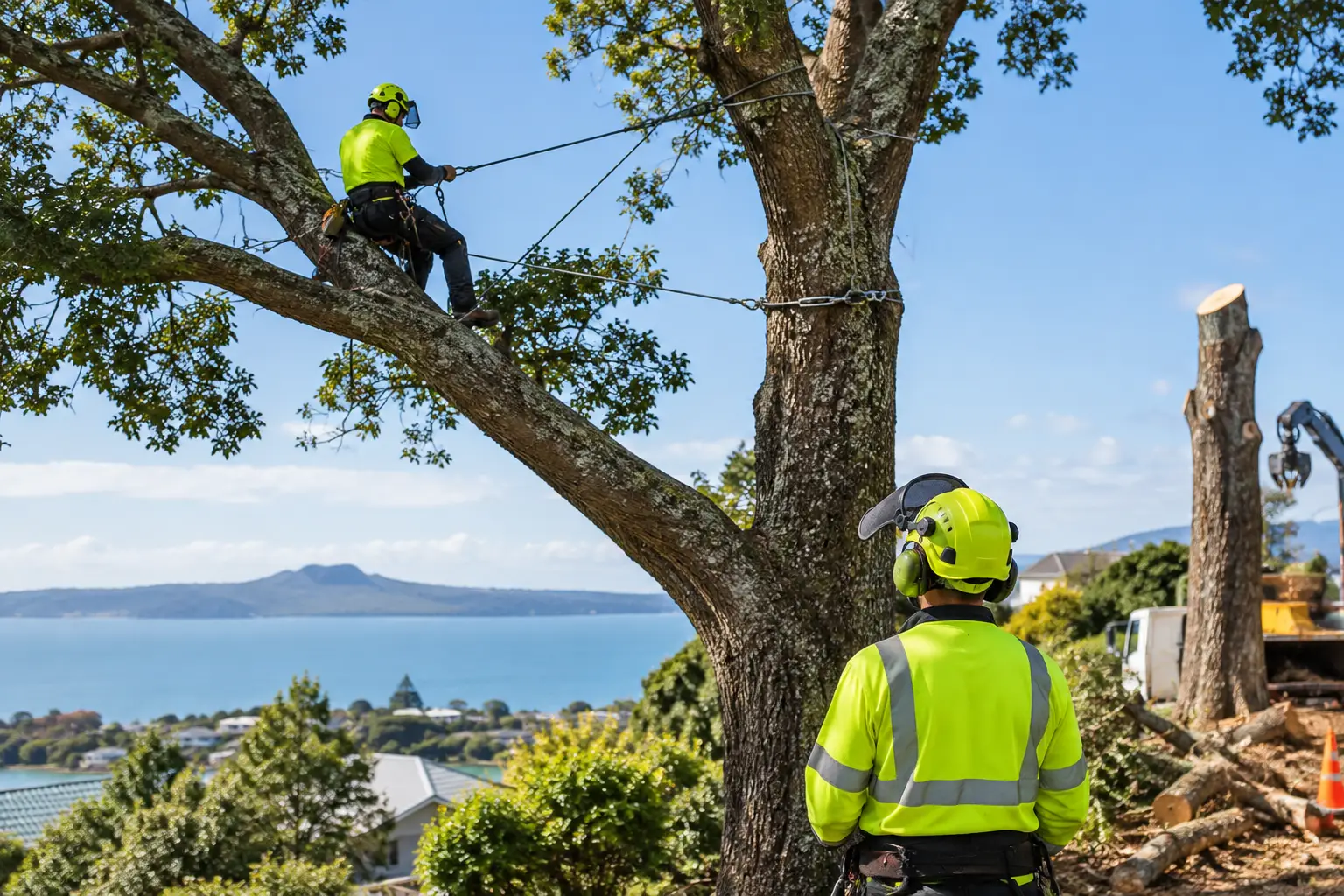
A cable is installed high in the canopy between major limbs or leaders. In suitable trees, it helps share loading during high winds and limits how far stems can move apart. Bracing usually involves rods fitted through a weak union lower in the structure, providing more direct reinforcement. The two methods may be used together where an arborist considers it appropriate.
The key point is that a support system does not make a defective tree perfect. It reduces loading on a specific weak point. Good cabling is paired with considered pruning, ongoing inspections and clear expectations about what the system can – and cannot – do.
For example, a healthy established tree may have a narrow, V-shaped union between two otherwise sound leaders. If it is important to the landscape and there is enough sound wood to support a system, cabling and selective weight reduction may extend its useful life. This is often a sensible option where removal would leave a property exposed or significantly change its appearance.
Modern dynamic cabling systems allow some natural movement while reducing shock loads. Fixed systems may be considered for particular structural problems. The suitable approach depends on the species, size, growth habit, defect and site. There is no one-size-fits-all cable installation.
When removal is the safer option
Removal becomes the more responsible recommendation when the tree has decline or defects that a cable cannot address. A cable can support a weak union, but it cannot repair decay inside a trunk, reverse root damage or stabilise a tree that is lifting from the ground.
An arborist is likely to recommend removal where there is significant internal decay, extensive fungal activity associated with root or buttress failure, large cavities, severe storm damage, major lean development, or a trunk crack that compromises the tree’s main structure. Trees affected by disease, drought stress or repeated branch failures may also have a poor long-term outlook.
Location matters just as much as condition. A modest defect in a tree at the back of a large rural block may be managed differently from the same defect above a home, driveway, school grounds, shared accessway or busy car park. The potential target below the tree changes the acceptable level of risk.
Removal can also be the better option when maintenance would be ongoing but unreliable. Cabling needs inspection over time. Trees continue to grow, hardware can need adjustment, and new defects can develop elsewhere. If the owner cannot commit to monitoring, or the tree has already reached the point where repeated intervention is required, planned removal may offer greater certainty.
Tree cabling versus removal: the assessment factors
A proper recommendation starts with an on-site assessment, not a quick look at a single branch. Arborists consider the whole tree, its setting and its likely future. Four areas usually guide the decision:
- Structural condition: This includes stem unions, cracks, cavities, included bark, decay, previous failures and the form of the canopy.
- Root and soil condition: Root damage from excavation, compaction, poor drainage, recent construction or soil movement can make a tree unstable even when its canopy appears healthy.
- Tree health and life expectancy: A vigorous tree with a localised structural issue may justify support. A declining tree with several defects often does not.
- Site targets and consequences: Homes, sheds, powerlines, footpaths, fences, play areas and neighbouring properties all affect the level of risk and the recommended work.
Species also influence the decision. Some trees respond well to careful reduction pruning and support. Others are more prone to brittle wood, decay or rapid regrowth after heavy pruning. A good assessment accounts for how that particular tree is likely to behave in Canterbury’s wind, dry periods and seasonal weather.
Where the findings are unclear or the tree is high-value, a formal arboricultural assessment can provide a documented basis for action. This is particularly useful for commercial properties, body corporates, development sites and trees that may be protected by local rules.
Cabling is a management plan, not a permanent fix
It is tempting to view cabling as the middle ground that avoids difficult decisions. In reality, it is a risk-management tool with responsibilities attached. A supported tree should be inspected at intervals recommended by the arborist, and sooner after significant storms, visible movement, branch failure or site changes around the roots.
Pruning may be recommended to reduce leverage on a heavy limb or codominant stem. This work must be measured. Removing too much live canopy can stress the tree, stimulate weak regrowth and create new problems. The goal is targeted weight reduction while retaining a balanced, healthy canopy.
Cabling is also not a suitable DIY job. Incorrect hardware placement, poor drilling technique, unsuitable materials or an overly tight system can damage living tissue and create a false sense of security. Tree work at height carries serious risk, particularly around buildings and services. Health and safety is in our DNA, which means using the right equipment, trained crews and a plan for the site below.
Planning removal without unnecessary disruption
If removal is the right call, it does not have to mean a messy or disruptive outcome. Professional removal is planned around access, drop zones, nearby structures, service lines and safe control of timber. In tight residential sites, dismantling the tree in manageable sections may be safer than felling it in one piece.
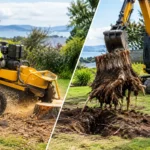
Ask early about stump grinding if you intend to replant, landscape or build over the area. Leaving a stump may be suitable in some settings, but it can create an obstacle and may continue to send up shoots depending on the species. Wood can be chipped for garden mulch where suitable, removed from site, or processed according to the agreed scope.
Before any major work, check whether council rules or consent requirements apply. Protected-tree work, trees near boundaries, and development-related clearance can involve obligations that should be understood before cutting begins. An arborist with consultancy experience can help identify the issues and prepare the right information where needed.
Choosing the decision that still makes sense in five years
The best outcome is not always the one that keeps the tree standing today. It is the option that gives people confidence in the safety of the property while treating the tree and its value with respect. For a sound tree with one manageable structural weakness, cabling and pruning may preserve an important asset for years. For a tree with widespread decay, compromised roots or a high-consequence position, early removal can prevent a far more difficult emergency later.
If you are unsure, arrange an assessment before the next strong wind makes the decision for you. A clear recommendation, realistic maintenance plan and professional completion of the work will make the choice far easier to live with.
www.treetechnician.co.nz