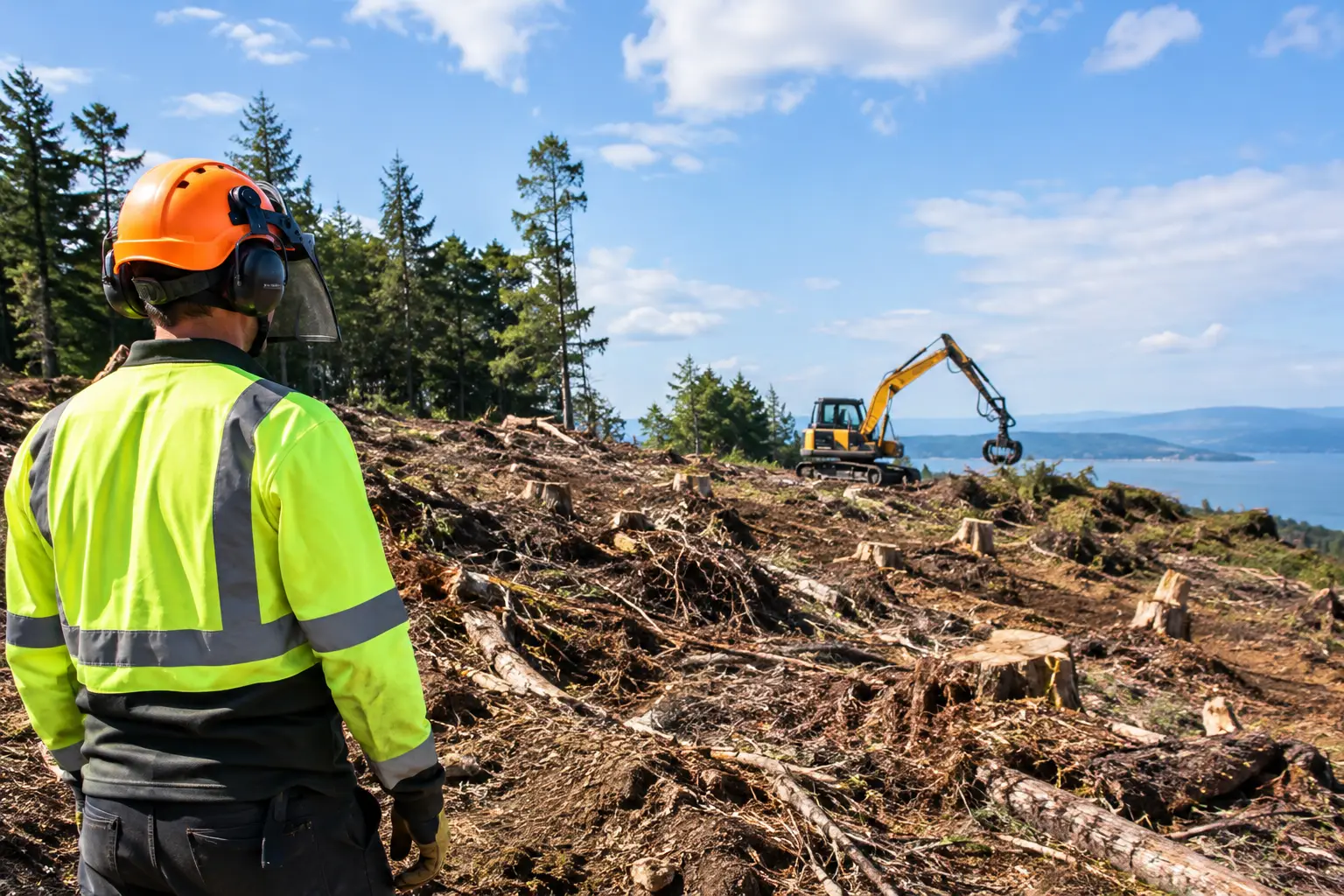
A cleared block can look dramatically different in a day, but strong land clearing results are about far more than removing trees, scrub and old vegetation. The real measure is whether the site is safer, workable and ready for its intended use, without creating drainage problems, damaging retained trees or leaving a costly cleanup behind.
For a new build, subdivision, accessway, farm improvement or commercial development, clearing should give you a clean starting point. It needs to be planned around the land, the work ahead and the trees that deserve to remain. That is how a cleared site becomes a useful asset rather than another job to fix later.
What Good Land Clearing Results Look Like
The best result is not necessarily the barest site. It is a site cleared to the agreed boundary and purpose, with hazards removed, valuable trees protected and the ground left in a condition that suits the next contractor.
If a house pad, shed or access track is planned, the cleared area should provide proper working space without needlessly opening up the whole property. On a lifestyle block, that may mean removing invasive growth and unsafe trees while retaining shelter belts, established specimen trees or vegetation that helps hold the soil together. On a development site, it may mean staged clearance so earthworks, drainage and construction can proceed safely and efficiently.
A professional finish also includes dealing with the material produced. Branches, logs, stumps and woodchip need a clear plan. Some timber may be retained for firewood or milling where suitable. Chip can sometimes be useful on site, but it should not be spread where it will hinder construction, affect levels or create a future mess. The remaining area should be left tidy, accessible and safe for the next stage of work.
The Result Starts Before Any Tree Comes Down
Land clearing can involve mature trees, buried services, steep ground, public boundaries, machinery movements and changing weather. A quick look from the road is not enough to plan it properly.
Before work begins, a capable contractor assesses the site access, tree condition, terrain, overhead lines, neighbouring property, planned use and likely removal method. That assessment determines whether trees can be dismantled conventionally, whether specialist machinery is needed, and how debris can be moved without tearing up areas that are meant to stay intact.
This early planning has a direct effect on the result. Sending machinery across saturated ground, for example, can compact soil and leave deep ruts. Removing all vegetation on a slope can increase erosion risk. Felling a tree without allowing for its spread, lean and defects can put fencing, buildings or retained trees at risk. The fastest-looking option is not always the most efficient once reinstatement is taken into account.
Consent and protected-tree checks matter
Not every tree can be removed simply because it is within a project area. Depending on the location and planning controls, trees may be protected, subject to consent requirements or included in landscape conditions attached to a development. Work near waterways, road reserves and shared boundaries can also require extra care.
Checking this early protects the programme. It allows decisions to be made before equipment is booked and construction schedules are locked in. Where retention is required or sensible, an arboricultural assessment can identify practical protection measures, such as root-zone fencing, exclusion areas and pruning rather than removal.
Retaining the Right Trees Improves the Site
Clearing land does not have to mean stripping it of every tree. Healthy, well-positioned trees can provide shelter, privacy, shade and visual value long after the build is complete. In Canterbury, established shelter planting can be particularly useful on exposed sites, provided it is sound, appropriately located and compatible with the intended development.
The decision to retain a tree should be based on more than appearance. Consider its health, structural condition, expected size, root spread, proximity to buildings and ongoing maintenance needs. A large tree close to a proposed dwelling may look worth keeping, but if its roots will conflict with foundations or its canopy will create a long-term hazard, removal before construction may be the better call.
Likewise, trees retained during earthworks need active protection. Compaction, trenching, changes to ground level and storage of materials over roots can cause decline that is not obvious until months or years later. A marked tree is not automatically a protected tree. It needs space, clear instructions for other contractors and sensible site management.
Soil, Drainage and Access Are Part of the Finish
A clean-looking site can still be poorly prepared if the ground has been damaged. Soil structure matters, especially where future landscaping, pasture or planting is planned. Heavy machinery has its place, but it must be matched to the ground conditions and access route.
On wet or soft land, work may need to be sequenced differently, paused after heavy rain or undertaken with machinery that reduces ground pressure. That can feel slower at the time, yet it often avoids the far greater disruption of repairing churned tracks and compacted growing areas.
Drainage should also remain front of mind. Removing dense vegetation changes how water moves over a block. Clearing beside drains, gullies or waterways needs a method that limits loose material entering them. Leaving appropriate vegetation in place can help stabilise banks and manage runoff, while access routes should be designed to suit the vehicles and equipment that will use them next.
For developers and property managers, these details affect more than presentation. They influence whether the following trades can get on site, whether neighbours are inconvenienced and whether the project stays on programme.
Matching the Method to the Job
There is no one-size-fits-all clearing method. A small residential section with limited access needs a different approach from a rural shelterbelt, a commercial site or a block with dense regrowth.
Trees near homes, fences and services are often dismantled in controlled sections. Larger open sites may allow more mechanical processing, while difficult terrain can require specialist equipment and careful manual work. Stumps may be ground where the land needs to be levelled, landscaped or built on, whereas removal can be handled differently if a stump sits outside the future working area.
The important thing is that the method is chosen for safety and the desired finish, not just speed. A crew should be able to explain where machinery will travel, how trees will be removed, what will happen to the material and what condition the site will be left in. Clear scope prevents the common disappointment of assuming that stump work, debris removal or final levelling was included when it was not.
Common Reasons Clearing Jobs Fall Short
Poor land clearing results usually come back to unclear scope or rushed decision-making. The block may be cleared, but the owner is left with stumps where a driveway needs to go, piles of debris beside the boundary, damaged retained trees or a surface that is difficult to work on.
A few issues deserve particular attention:
- Clearing beyond the actual construction or access footprint, which removes useful shelter and creates avoidable exposure.
- Skipping consent, protected-tree or boundary checks, which can stop work after the site has already been mobilised.
- Working in unsuitable ground conditions and creating compaction, rutting or erosion.
- Leaving no agreed plan for timber, chip, stumps and green waste.
- Failing to coordinate with surveyors, builders, earthworkers and utility providers before work begins.
These risks are manageable when the clearance is treated as part of the wider project rather than an isolated tree-removal task.
A Safer, Cleaner Way to Prepare Your Land
For homeowners, landholders and project teams, the most useful outcome is confidence that the site is ready for what comes next. That means a crew with the right equipment, safe operating systems and arboricultural judgement to recognise when a tree should be removed, retained, pruned or assessed further.
Tree Technician has worked across Canterbury since 1991, delivering planned tree work and site clearance with safety, careful site management and a professional clean-up at the centre of every job. Health and Safety is in our DNA, and it shows in how work is scoped before the first cut is made.
If you are planning clearance, bring the site plan, intended use and any known constraints into the conversation early. A clear brief lets the right work be done once, keeps the project moving and leaves you with land that is genuinely ready to use.
For practical advice on preparing a site safely and responsibly, visit www.treetechnician.co.nz