A mature tree can look untouched when the builders leave, yet fail months or even years later because its root system was compacted, cut or buried during the job. Knowing how to protect trees during construction means treating the ground around them as seriously as the trunk and canopy.
For homeowners, developers and site managers, early planning is the difference between retaining a healthy asset and inheriting an expensive hazard. Whether you are building a home, installing services, creating a driveway or clearing a development site, tree protection needs to be built into the programme before machinery arrives.
How to Protect Trees Construction Sites May Affect
The most common mistake is assuming a tree is safe because no one has cut a branch or damaged the trunk. In reality, most construction damage happens below ground. Roots need oxygen, moisture and uncompacted soil to function. Heavy vehicles, stored materials, excavations and changes to ground level can all compromise them.
A protection plan should identify every tree worth retaining, including neighbouring trees whose roots may extend onto the work area. Start with a qualified arborist assessment where mature, large, protected or high-value trees are involved. The assessment can record the tree’s condition, identify defects, establish practical protection zones and flag work that requires consent or a different construction method.
This is particularly useful where local planning rules apply. Protected trees, significant trees and trees within certain locations may need approval before pruning, removal or root disturbance occurs. Leaving this check until the job is underway can lead to delays, redesign costs and avoidable compliance issues.
Set a tree protection zone before work starts
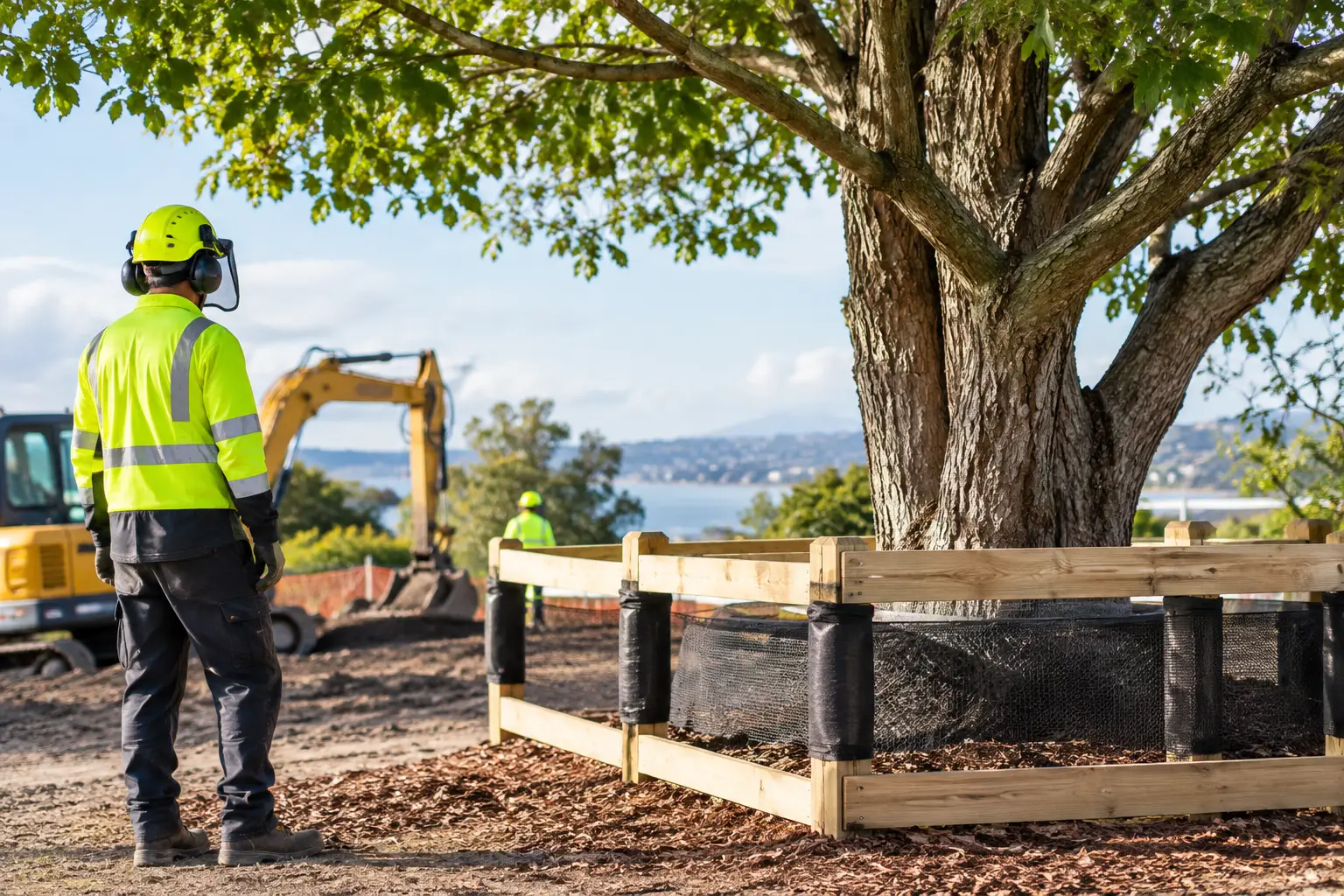
A tree protection zone, often called a TPZ, is a clearly defined area around the tree where construction activity is restricted. The correct size depends on the species, trunk diameter, age, condition, site soils and planned works. A broad rule of thumb is not a substitute for an arborist’s calculation, especially for established specimen trees.
Install solid, highly visible fencing around the zone before demolition, excavation or deliveries begin. Use fixed barriers rather than temporary tape or cones. The fencing needs to stay in place for the whole project, not just the first week.
Make the rules clear to everyone on site. The protected area is not a convenient place for turning a ute around, parking machinery, mixing concrete or stacking timber. Signage helps, but a pre-start briefing is what makes the boundary stick.
Keep Machinery, Materials and Compaction Away
Soil compaction is one of the most damaging and least visible construction impacts. Repeated vehicle movements squeeze air spaces from the soil, reducing the oxygen and water available to roots. A tree may retain green leaves initially, then show thinning foliage, dieback or branch failure later.
Keep vehicles and plant outside the protection zone wherever possible. Plan access routes, delivery points and machinery movements before the site becomes busy. If access near a tree is unavoidable, seek arboricultural advice on whether temporary ground protection, such as load-spreading mats, can reduce the impact. These measures are not a licence to drive anywhere – they are a site-specific compromise for limited, controlled access.
Materials cause similar problems. Soil piles, building supplies, spoil, gravel and rubbish should never be stored within the protected area. Even a shallow pile can compact the surface and alter moisture levels. Wet concrete washout, fuel, paint and other contaminants are especially harmful, as they can damage roots and change the soil chemistry.
Protect the Root Zone During Excavation
Trenching for drains, power, water, fibre and foundations can sever major roots in minutes. The damage is often irreversible, particularly when roots close to the trunk are cut. Large roots provide both water uptake and structural support, so removing them may create a future stability issue as well as a health problem.
Before excavating, identify services and review the route against the established tree protection zone. A small adjustment to a trench alignment can save a mature tree. Where services must pass near roots, alternatives may include directional drilling, hand digging, air excavation or bridging the root area, depending on site conditions and engineering requirements.
Do not instruct an operator to simply ‘work carefully’ around roots. If roots are encountered, stop work and have the area assessed. Any necessary root pruning should be clean, limited and carried out by a competent arborist using suitable tools. Tearing roots with an excavator bucket leaves ragged wounds and can open the way for decay organisms.
Avoid changing soil levels around retained trees
Both filling and cutting can put a tree under stress. Adding soil over roots reduces oxygen availability, while removing soil can expose and injure fine roots. Changes to drainage can also leave roots waterlogged or overly dry.
If a design requires altered levels near a retained tree, get advice before the earthworks begin. A retaining solution, suspended surface, specialised aeration approach or redesigned landscape may be needed. The right option depends on the tree, available space, soil type and the scale of the level change.
Manage Canopy Clearance Properly
Construction often creates pressure to remove low branches for scaffold, cranes, vehicle access or rooflines. Poorly chosen cuts can leave a tree unbalanced, vulnerable to decay or prone to excessive new growth.
Plan canopy clearance early and specify the access height and width actually required. An arborist can assess whether selective pruning will achieve clearance without compromising the tree’s structure. There is a real trade-off here: retaining every branch is not always practical, but excessive pruning can turn a healthy retained tree into a long-term management problem.
Never use machinery to push branches aside, attach cables to the tree or hang signage from the trunk. Protect trunks from accidental impact with barriers positioned outside the root zone, rather than wrapping material tightly around the bark and assuming that is enough.
Give One Person Responsibility for Tree Protection
Tree protection works best when responsibility is clear. On a larger project, nominate a site manager to check fencing, confirm storage areas and respond when the programme changes. On a residential build, the owner or builder should make sure every subcontractor understands where the no-go areas are.
Inspect the protection measures after storms, major deliveries and changes to site access. Fence panels can be moved, materials can creep into the wrong area and a last-minute trench can undermine months of good planning. Brief checks prevent small breaches becoming permanent damage.
Keep a simple record of inspections, photographs and any approved work within the protection zone. This is useful for project management and can demonstrate that reasonable care has been taken where consent conditions or tree management plans apply.
Watch for Problems After Construction
Tree protection does not end at practical completion. Stress symptoms can take time to appear, particularly after a dry summer. Look for smaller leaves, sparse canopy growth, premature leaf drop, dead twigs, fungal growth at the base, cracks in the soil or newly leaning stems.
Avoid trying to fix decline with heavy fertiliser or aggressive pruning. These responses can add further stress. A post-construction arborist inspection can identify whether mulching, watering, targeted pruning, soil improvement or ongoing monitoring is appropriate. In some cases, a tree may need a risk assessment or cabling and bracing to manage a structural concern safely.
For Canterbury properties, dry conditions and exposed sites can make post-build watering particularly valuable for retained trees. Apply water slowly across the active root area, rather than giving the trunk a quick soak. A coarse organic mulch can help conserve moisture, provided it is kept clear of the trunk and not piled deeply over roots.
A retained tree should be treated as part of the finished property, not leftover vegetation around it. With a clear protection zone, sensible site planning and qualified advice before ground is disturbed, it can continue providing shade, character and value long after the construction crew has gone.
For practical tree assessments, protected-tree advice and safe on-site tree work, speak with the experienced team at Tree Technician.
www.treetechnician.co.nz