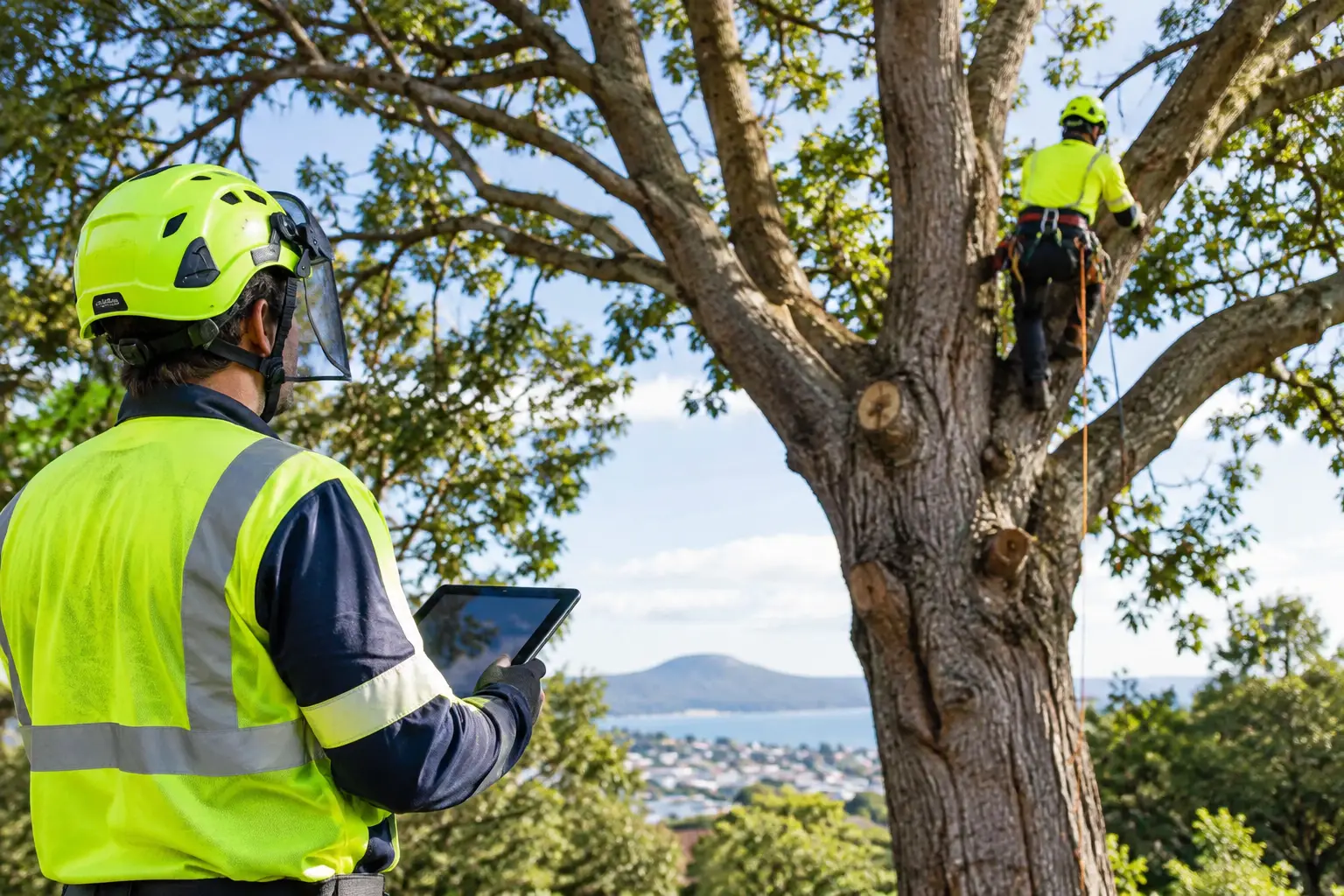
A leaning tree beside a driveway, a large limb over a neighbour’s roof, or a proposed build close to established trees can quickly raise a bigger question: what is a tree report, and do you need one? A tree report is a formal assessment prepared by a qualified arborist to document a tree’s condition, risks, likely management needs and, where relevant, its relationship to planned work on a site.
It gives property owners, managers, developers and councils a clear basis for making decisions. Rather than relying on appearances or a quick opinion from the ground, the report records what is present, why it matters, and what practical action is recommended.
What Is a Tree Report?
A tree report is an arboricultural document that assesses one tree, a group of trees, or all significant trees across a property. Its purpose depends on the situation. It may focus on a suspected hazard, tree health, protected-tree requirements, construction impacts, routine maintenance, or a long-term management plan.
The level of detail should match the decision being made. A homeowner concerned about a mature tree dropping branches may need a targeted assessment of that tree. A developer planning earthworks, new services or building footprints may require a broader report identifying trees worth retaining and the protection measures needed during construction.
A good report does not simply say whether a tree should stay or go. Trees are living structures, and the right answer is often more considered. Selective pruning, deadwood removal, cable bracing, monitoring, root-zone protection or a change to the building layout may reduce risk while retaining the tree’s value.
What an Arborist Looks For
An arborist considers the whole tree and its setting, not just a visible defect. Tree species, age, size, form and site conditions all influence how a tree is assessed. A crack in one tree may be a serious concern, while a similar-looking feature in another species may be stable or manageable with monitoring.
The assessment commonly considers the tree’s crown, trunk, root zone and surrounding targets. The crown may show dead branches, poor branch attachments, unbalanced growth, storm damage, disease symptoms or previous pruning wounds. The trunk may reveal cavities, decay, splits, fungal fruiting bodies or structural weakness. At ground level, the arborist looks for root damage, soil compaction, changes in drainage, nearby excavation and signs that the root plate may be compromised.
Just as importantly, the report considers what could be affected if part or all of the tree failed. A tree in an open paddock presents a different level of risk from the same tree over a house, public footpath, car park, playground or accessway. Risk is not based on the tree alone. It is based on the likelihood of failure, the likely consequences, and how often people or property are exposed to the area.
What Is Included in a Tree Report?
The format varies, but a professional tree report will usually identify the site, the assessed trees and the scope of work. It should record observations clearly enough that the client and any relevant authority can understand the arborist’s reasoning.
Depending on the purpose, it may include tree locations, species names, approximate dimensions, condition ratings, photographs and notes on defects or site constraints. It may also include a risk assessment, recommended works, timeframes for action, retained-tree protection zones and a management schedule.
For development sites, the report may map trees that should be retained, identify potential conflicts with buildings or services, and set out protection methods. These can include exclusion fencing, limits on excavation, ground protection for machinery, and supervision requirements for work near roots. Small changes made early in a project can prevent expensive damage later.
Where a tree is protected or subject to council controls, the report may support an application for consent or help explain why proposed work is necessary. Requirements differ between districts and according to the tree, site and planned work. A report is useful evidence, but it does not automatically grant approval to prune or remove a protected tree.
When You May Need a Tree Report
A tree report is worthwhile when the consequences of getting the decision wrong are significant. That includes situations where safety, compliance, construction timing or valuable established trees are involved.
You may need one after a storm has damaged a tree or exposed a crack, split or root movement. Emergency work can sometimes be required immediately to make an area safe, but a report can guide the follow-up work and determine whether the tree can remain.
It is also sensible to arrange an assessment when a tree appears to be declining, has recurring branch failures, is leaning more than usual, or is growing close to buildings, power infrastructure, accessways or high-use areas. Visible symptoms do not always reveal the full issue. Conversely, a tree that looks alarming may not require removal once properly assessed.
For land development, a report should be commissioned early, before plans are fixed and machinery arrives. Mature trees can be difficult to replace, and their roots often extend well beyond the dripline. Designing around viable trees may improve site amenity and reduce conflict later. Leaving the assessment until construction has started can limit options and create avoidable delays.
Commercial property owners and managers may also use reports as part of planned maintenance. An organised inspection programme helps prioritise work across multiple sites, budget for maintenance, and demonstrate a responsible approach to tree risk management.
A Tree Report Is Not the Same as a Quote
This distinction matters. A quote explains the work to be carried out and the expected scope of that work. A tree report explains the arboricultural basis for recommended actions. In some straightforward cases, a quote for pruning or removal may be all that is needed. In more complex cases, the assessment should come first.
For example, if a large tree has decay near its base, deciding on removal without assessment may be premature. The arborist may recommend further investigation, a reduction prune, exclusion from a target area, or removal if the defect and site use make the risk unacceptable. The report puts that recommendation on record.
A formal report is particularly valuable when several parties need to understand the decision, such as landlords, body corporates, insurers, project teams, neighbours or council staff. Clear documentation reduces uncertainty and helps work proceed with appropriate care.
How to Read the Recommendations
Tree reports usually provide recommendations in order of urgency. Immediate actions may relate to a high-risk branch, a compromised tree near a frequently used area, or a hazard that has followed storm damage. Other recommendations may be scheduled within weeks, months or at the next maintenance cycle.
Do not assume that a recommendation to monitor a tree means nothing needs to happen. Monitoring is an active management approach. It may involve repeat inspections after a set period, following significant weather events, or when site conditions change. It is often the right option where a defect is present but stable, and the risk can be managed.
Likewise, tree removal is not always a failure of management. Some trees are too compromised, poorly located or unsuitable for their site to retain safely. When removal is recommended, the report should explain the contributing factors rather than relying on a vague statement that the tree is dangerous.
Choosing the Right Level of Assessment
The best report is one that answers the actual question. A short assessment may be appropriate for a single tree with an obvious concern. A detailed tree management plan may be better for schools, commercial grounds, lifestyle blocks or sites with a large tree population.
Be clear with the arborist about why you need the report. Mention planned building work, previous failures, council correspondence, neighbour concerns, underground services, access restrictions and any deadline. Providing the right background allows the assessment to focus on the decisions ahead.
At Tree Technician, our consultancy arboriculture work combines practical field knowledge with a safety-first approach. We assess trees in the context of the property, the people using it and the work that needs to happen around it. Health and Safety is in our DNA, but retaining healthy, useful trees where possible matters too.
A tree report should leave you with a workable next step, not more uncertainty. Whether that means protecting a mature tree through a build, scheduling sensible maintenance, applying for approval, or acting quickly on a genuine hazard, sound arboricultural advice helps you make the call with confidence.
www.treetechnician.co.nz