A large limb hanging over the building after high winds is not a job for guesswork. The decision between tree removal versus pruning can affect safety, property value, council compliance and the long-term condition of the trees around your home, workplace or development site. The right answer is rarely about taking the cheapest option. It comes down to the tree’s health, structure, location and value to the site.
Pruning can often solve a problem while retaining the benefits of a mature tree. In other cases, removal is the responsible choice because the risk cannot be managed safely. A qualified arborist can assess the full picture before any work begins, rather than treating every overgrown or troublesome tree as a removal job.
Tree Removal Versus Pruning: The Core Difference
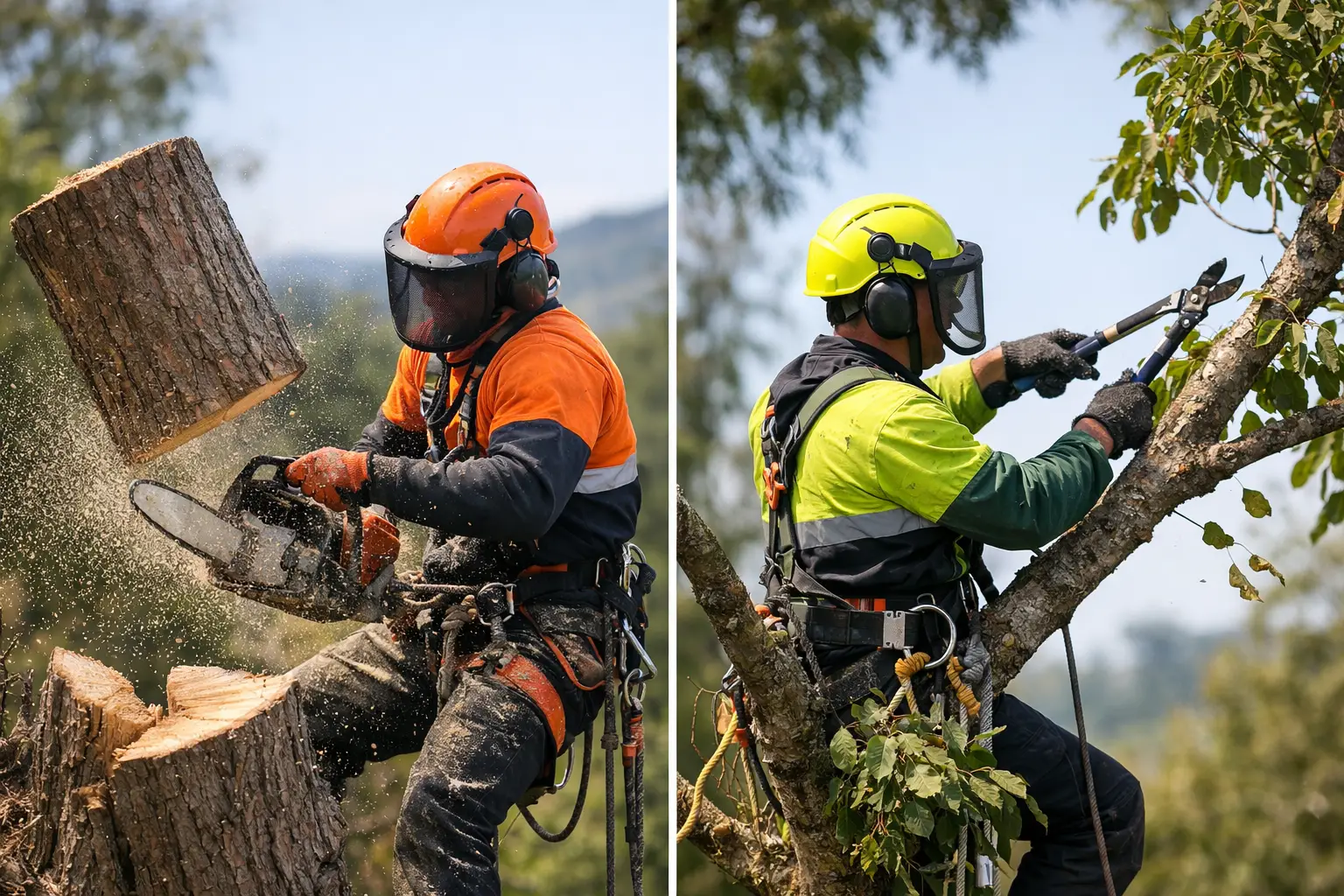
Pruning is the selective removal of branches to improve a tree’s health, form, clearance or safety. Done properly, it works with the tree’s natural growth habits. It may involve removing deadwood, reducing the weight on extended limbs, clearing branches from a building or driveway, or improving light beneath the canopy.
Tree removal means dismantling and taking down the entire tree, usually in controlled sections where space is limited. It is generally considered when a tree is dead, dying, structurally unsound, severely diseased, storm-damaged beyond repair, or unsuitable for its location.
Neither option is automatically better. A healthy tree with a few low branches over a footpath may only need targeted pruning. A tree with extensive root decay beside a house may need to be removed, even if much of its canopy still looks green.
When Pruning Is the Better Option
Pruning is often the most practical choice when the tree is fundamentally healthy and has a sound root system and trunk. The aim is to manage a specific issue without unnecessarily losing a valuable landscape asset.
A well-planned prune can create clearance from roofs, powerlines, sheds and accessways. It can remove dead, rubbing or poorly attached branches before they fail. It can also reduce the leverage on long, heavy limbs that are more exposed to wind.
For commercial sites, regular pruning helps keep entrances, car parks, signage and pedestrian areas clear. For homeowners, it can restore sunlight to a living area or garden without stripping a tree back so hard that it becomes stressed or unsafe.
Pruning for health and structure
Young trees often benefit from formative pruning. Early work can guide branch spacing and establish a stronger framework, reducing the need for major corrective work later. Mature trees need a more conservative approach. Their size and age can make large cuts harder to compartmentalise, leaving them more vulnerable to decay.
Deadwood removal is another common task. Dead branches can fall without warning, particularly during Canterbury’s strong winds. Removing them improves safety while preserving a healthy canopy.
The key is restraint. Cutting too much foliage at once can reduce the tree’s ability to produce energy, trigger weak regrowth and expose limbs to sun damage. Topping, where major upper branches are cut back indiscriminately, is not sound tree care. It may make a tree look smaller temporarily, but often leads to poorly attached shoots and greater maintenance needs later.
Pruning for clearance and amenity
Sometimes the problem is not the tree itself, but where its branches are growing. A carefully chosen reduction or lift can provide clearance over a driveway, improve visibility around an entrance, or stop branches brushing gutters and windows.
This is where professional experience comes in. Removing a few selected branches may be enough. On the other hand, repeatedly pruning a tree to keep it away from a structure can be a sign that it is simply too large for the available space. If ongoing cuts will compromise its stability or appearance, removal and replacement with a better-suited species may be the more sensible long-term plan.
When Tree Removal Is the Responsible Choice
Tree removal is not always a last resort, but it should be based on clear reasons rather than inconvenience alone. A professional assessment looks beyond the visible canopy to identify structural defects, decay, root problems and site pressures that may not be obvious from ground level.
Removal may be recommended where a tree is dead or declining with no realistic prospect of recovery. Fungal fruiting bodies, major cavities, cracking, hollow sections, lifting roots or significant trunk damage can all indicate a higher level of failure risk. The presence of one sign does not automatically mean a tree must come down, but several factors together can change the decision quickly.
Storm damage also needs careful assessment. A split leader, uprooted root plate or broken scaffold limb can leave a tree unstable even after the obvious debris has been cleared. Emergency work should focus on making the site safe first, then determining whether retention work, cabling and bracing, or full removal is appropriate.
Location can make a manageable defect high risk
A defect in a tree at the back of a large rural property is different from the same defect above a bedroom, public path, busy car park or neighbouring fence. Arborists assess both the likelihood of failure and the consequences if it happens.
A tree may be retained with monitoring where targets are limited. Near buildings, people or essential access routes, the acceptable level of risk is lower. Removal can be the right outcome when there is no practical way to reduce the risk through pruning, support systems or exclusion zones.
Removal can also be necessary where roots are causing ongoing damage, where a tree is in the footprint of approved construction, or where an invasive or poorly located species is crowding more suitable vegetation. On development sites, early tree assessment helps protect retained trees and avoids costly delays once machinery is on site.
Regulations and Protected Trees Need Checking First
Before arranging substantial pruning or removal, check whether the tree is protected by local planning rules, consent conditions or other restrictions. Protections can apply to particular species, mature trees, heritage trees, trees in notable landscapes or vegetation within specific zones.
Being on private land does not always mean work can proceed without approval. Unauthorised work on a protected tree can create compliance issues and may result in enforcement action. An arboricultural assessment can help establish the tree’s condition, outline justified work and support an application where consent is required.
This is particularly relevant for property managers, schools, body corporates and developers responsible for multiple trees. A documented management plan makes routine decisions clearer and helps demonstrate a considered approach to safety and environmental stewardship.
How an Arborist Makes the Call
A proper inspection starts with the whole tree and its surroundings, not just the branch that looks untidy. The assessment considers species, age, vigour, previous pruning, trunk condition, root zone, canopy balance, soil conditions and exposure to wind. It also considers what sits beneath or beside the tree.
From there, the recommendation may be simple: remove deadwood, reduce one overextended limb, install support cabling, monitor a defect, or remove the tree in sections. In some cases, further investigation is needed before a final decision is made.
The work method matters as much as the decision. Trees close to homes, glasshouses, fences or overhead services may require rope access, controlled lowering and carefully managed exclusion zones. Professional crews use maintained equipment, clear site controls and a planned clean-up process to protect people and property throughout the job.
Think Beyond the Day of the Work
The cheapest-looking solution can become the expensive one if it creates repeat maintenance, damages a healthy tree or leaves a stump and root system unaddressed. If removal is necessary, discuss stump grinding and replacement planting as part of the plan. Grinding can allow the area to be re-turfed, replanted or prepared for a new use.
If pruning is chosen, ask what maintenance interval is realistic. A healthy, well-placed tree should not need drastic cutting every year. Frequent hard reduction usually points to a mismatch between the tree and the site.
Tree Technician approaches these decisions with practical arboricultural knowelege, high safety standards and respect for the role trees play on a property. Whether the outcome is careful pruning or controlled removal, the goal is the same: a safer site, a clean result and a decision that makes sense well beyond this season.
If you are unsure which path suits a tree on your property, arrange an assessment before the next storm or building project forces the decision. A clear view of the tree’s condition now gives you more options, and usually a better outcome.
www.treetechnician.co.nz