A heavy limb hanging over a roof, roots lifting paving, or a tree that has shifted after prolonged rain can quickly become more than a garden concern. Tree removal is sometimes the safest and most responsible option, but it should never be the automatic answer. A good outcome starts with understanding why the tree is being considered for removal, what risks are present, and whether skilled pruning, bracing or ongoing management could achieve the same result.
For homeowners, property managers and landholders, the goal is straightforward: protect people, buildings and neighbouring property while treating the site with care. That calls for more than a chainsaw. It requires sound arboricultural judgement, a clear work plan and the right equipment for the tree, access and surroundings.
When Tree Removal Is the Right Decision
A healthy, well-positioned tree often adds shade, habitat, privacy and long-term value to a property. Removing it simply because it drops leaves or needs periodic maintenance is not always the best approach. Selective pruning can reduce weight in overextended limbs, improve clearance from buildings and remove deadwood without sacrificing the whole tree.
Removal becomes a stronger option when the tree has a serious structural defect, significant decline or a location that creates an unacceptable risk. A cracked union where major stems meet, a large cavity in the main trunk, extensive decay at the base, or roots disturbed by excavation can all affect stability. Storm damage may also expose weaknesses that were not obvious from the ground.
The tree’s position matters as much as its condition. A small dead tree in an open paddock presents a different level of risk from the same tree beside a house, school, driveway, public footpath or power line. Lean alone does not always mean failure is imminent, especially where a tree has grown at an angle for years. A new lean, lifted soil around the root plate, fresh cracking, or movement after high winds deserves prompt professional attention.
Trees can also become unsuitable through development pressure. A planned extension, new accessway, drainage installation or land-clearing project may affect root zones and future tree health. Assessing the tree before work begins gives owners a chance to retain viable trees, adjust a design where practical and make informed decisions about any removal required.
Start With an Arboricultural Assessment
From ground level, decay and structural weakness can be difficult to judge. Fungal growth around the trunk, dead upper branches, sparse foliage and peeling bark may be warning signs, but none tells the whole story on its own. An experienced arborist considers the species, age, growth habit, visible defects, root environment, exposure to wind and the targets nearby.
This assessment helps separate an urgent hazard from a manageable maintenance issue. It may lead to a recommendation for deadwood removal, crown reduction, cabling and bracing, monitoring, or full removal. The right recommendation depends on the tree’s condition and the level of risk a site can reasonably carry.
For commercial sites, schools, body corporates and organisations responsible for extensive grounds, documented assessments and management plans are particularly useful. They establish a clear record of known risks, planned maintenance and priority works. That supports better budgeting and helps avoid the disruption of reacting only after a branch or tree has failed.
Check approvals before work is booked
Some trees are protected because of their species, size, location, heritage value or contribution to the local landscape. Planning rules and approval requirements vary between councils and areas. Even a tree on private land may need consent before substantial pruning or removal can take place.
The safest approach is to check the relevant requirements early, particularly when a tree is near a boundary, road reserve, waterway or protected area. A professional tree contractor can identify when further advice, council approval or an arboricultural report may be needed. Starting this process before machinery arrives avoids costly delays and prevents work being carried out without the proper authority.
What Safe Tree Removal Looks Like
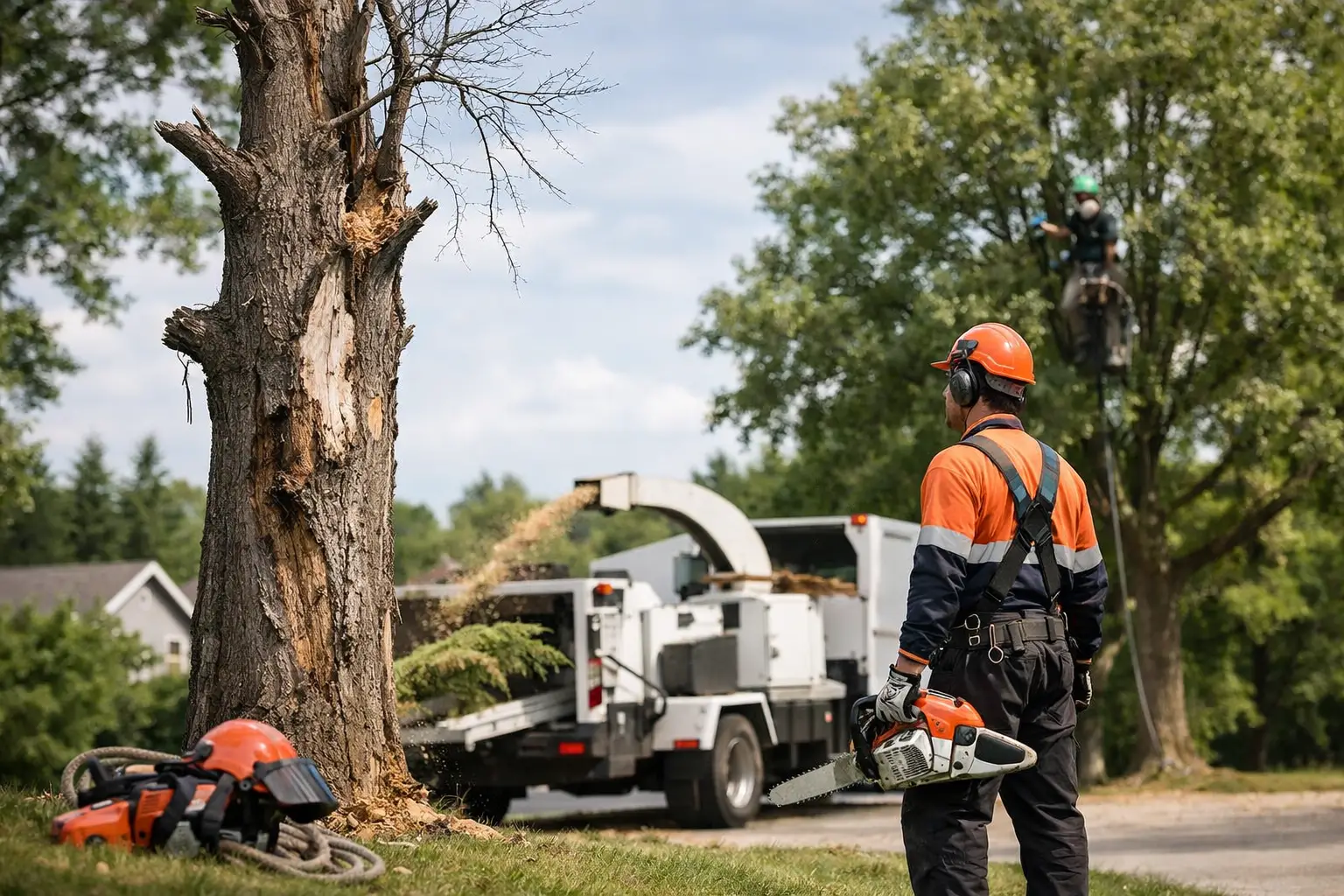
A professional tree removal job is planned around control. Before work starts, the crew should inspect the site, identify hazards, establish an exclusion zone and decide how each section of the tree will be dismantled. The plan changes depending on whether the tree stands in a clear section, behind a tight suburban home, above a garden, or close to overhead services.
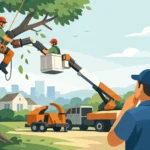
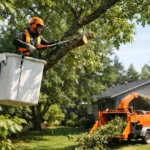
Where space allows, a tree may be felled in a controlled direction. In more confined locations, it is usually dismantled in sections. Climbers or elevated work platforms remove branches and trunk sections progressively, with ropes and lowering equipment used to guide material safely away from roofs, fences, glasshouses and landscaped areas.
This is where experience matters. Cutting a limb is the easy part. Predicting its weight, balance and movement once cut, then controlling where it lands, is the technical work. Decayed timber, heavy lean, tangled crowns and restricted access all change the method required.
Power lines require extra caution. Trees growing near electrical infrastructure should not be treated as a routine trimming job. The appropriate clearances, isolation procedures and specialist capability must be considered before work begins. If there is an immediate electrical hazard, keep clear of the area and contact the relevant emergency service or network operator.
Health and safety is not paperwork added after the fact. It is the foundation of a well-run job: trained people, maintained equipment, suitable protective gear, traffic or pedestrian management where needed, and clear communication with everyone on site.
Why DIY Removal Can Go Wrong
There is a big difference between pruning a small branch from the ground and removing a mature tree. The risks increase quickly once climbing, chainsaws, ropes, ladders, decay, nearby structures or power lines are involved. Even a modest branch can cause serious injury or expensive property damage when it falls unpredictably.
Hiring machinery without the right experience can create further problems. Elevated work platforms, chippers and stump grinders are effective tools in trained hands, but they need suitable access, stable ground and competent operation. A ute, trailer and household saw are not a substitute for a planned removal system.
Homeowners can still play an important role by keeping people and pets away from the work area, moving vehicles where requested, identifying irrigation lines or other underground services, and discussing access before the crew arrives. Clear preparation helps the work proceed efficiently and reduces disruption to the property.
Plan for the Stump and Site Cleanup
Removing the visible tree is only part of the job. The remaining stump may become a trip hazard, limit replanting options, attract pests or interfere with future landscaping. Stump grinding removes the stump below ground level and produces woodchip mulch that can often be reused on site, depending on the client’s plans and the tree’s condition.
Not every stump needs grinding. In a rural shelterbelt or a less-used corner of a large property, leaving a stump may be practical. In a lawn, driveway edge, garden renovation or development area, grinding is usually the cleaner option. Discuss this before the work is quoted so the finished site matches what you need next.
Cleanup should also be agreed at the start. Branches can be chipped, timber can be removed, and suitable firewood may be retained where requested. The best approach depends on access, volume and how the property will be used afterwards. A professional crew leaves the work area tidy, not simply with the tree on the ground.
Replanting After Removal
Where a tree has been removed for safety, replanting can restore shade, screening and habitat without repeating the original problem. The key is choosing a species suited to the site rather than selecting only for fast growth. Consider mature height and spread, root behaviour, soil conditions, wind exposure, available space and distance from buildings, drains and overhead lines.
A smaller species in the right position often delivers better long-term value than a large tree squeezed into a narrow strip beside a fence. In exposed locations, early formative pruning and watering can help a replacement establish a sound structure from the start.
If a tree on your property is showing new signs of movement, major limb failure, decay or storm damage, treat it as a safety matter rather than a weekend task. Early advice can preserve a tree where appropriate, and when removal is necessary, a properly planned job protects the people and places around it.