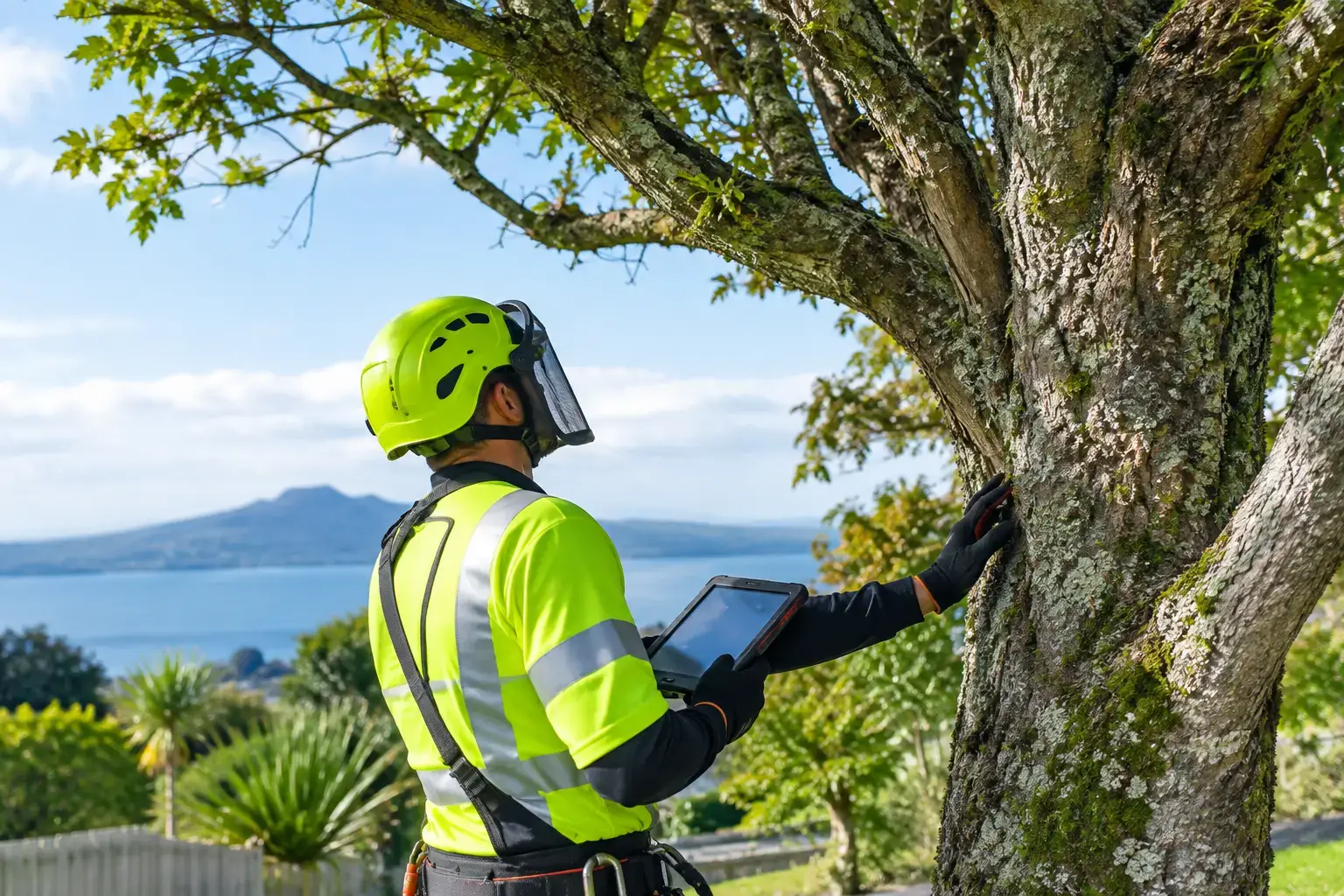
A tree can look perfectly fine from the kitchen window, then reveal a cracked limb, decaying base or stressed root system when viewed properly. A tree health assessment homeowners can begin from ground level is a sensible first check, but it should never involve climbing, cutting, or guessing at serious defects. The aim is simple: notice changes early, reduce avoidable risk and give a valuable tree the right care before a small issue becomes a costly one.
For Canterbury properties, trees commonly deal with dry periods, compacted soils, wind exposure, frost, storms and changes around the home such as new paving, drainage work or construction. These pressures do not always show up immediately. A thoughtful assessment helps separate normal seasonal change from a tree that needs professional attention.
What a tree health assessment looks for
A proper assessment considers more than whether a tree has green leaves. Health, structure and site conditions all matter. A mature tree may have a full canopy yet still present a hazard if it has poor branch attachments, internal decay or roots affected by ground works. Equally, a tree with thin foliage may recover well once the underlying stress is identified and managed.
An arborist will look at the whole tree, from the soil and root flare through to the upper canopy. They will consider the species, age, growth pattern, recent weather, pruning history, nearby targets and any changes to the site. A branch over a quiet garden bed is different from the same branch over a bedroom, driveway, footpath or neighbouring property.
This is why a quick visual check is useful, but it is not the same as a formal tree assessment or hazard report. Where safety, insurance, development work, protected-tree requirements or neighbour concerns are involved, documented arboricultural advice can provide the clarity needed to make a sound decision.
Signs your tree may be under stress
The most useful inspections are regular ones. Walk around your trees every few months, and again after high winds or heavy rain. Stand back first to assess the overall shape, then look more closely at the trunk, main limbs and ground around the base.
Changes in foliage are often the first thing homeowners notice. Sparse leaf cover, leaves that are unusually small, early leaf drop, yellowing outside the normal seasonal pattern or dead tips through the canopy can all indicate stress. They can also be caused by temporary weather conditions, so the timing and extent of the change matter.
Look closely at the trunk and major branch unions. Fresh cracks, peeling or sunken bark, hollow areas, fungal growth, bleeding sap and sections of dead bark deserve attention. Mushrooms or bracket fungi at the base do not automatically mean a tree must be removed, but they can indicate decay in the root or lower trunk area. That calls for a professional assessment rather than a wait-and-see approach.
At ground level, exposed roots, soil lifting, new leaning, damaged roots, puddling around the boot or a raised mound on one side can point to root problems. Roots need oxygen as well as moisture. Overwatering, poor drainage, compaction from vehicles and stored materials, or soil placed against the boot can all affect tree health over time.
Deadwood is another common issue. Small dead twigs are normal in many established trees. Larger dead branches, hanging limbs, broken stubs and branches that have dropped without an obvious storm event are different. They may indicate decline, pest damage, weak structure or an issue higher in the canopy that cannot be assessed safely from the ground.
Health and safety are not the same thing
A healthy-looking tree can still have structural weaknesses, while a stressed tree is not always dangerous. This distinction is central to sensible tree management.
For example, a large limb with included bark at the union may be heavily leafed and growing well, yet have a weak attachment that is more likely to split under wind loading. A tree with a modest amount of canopy dieback may be structurally sound and suitable for careful pruning, watering changes and monitoring. The right approach depends on the defect, the tree’s location and what could be damaged if it fails.
Homeowners should act promptly if a tree has suddenly leaned, a major limb has cracked, roots are lifting, branches are touching power lines, or storm damage has left material hanging overhead. Keep people, pets and vehicles clear of the area. Do not pull on lodged branches, use a ladder, or attempt to cut tensioned timber. Tree work can change rapidly once weight is released, particularly in wind-damaged or decayed trees.
Start with the site, not just the canopy
Trees respond to what happens around them. If a previously healthy tree begins declining, think back over the past year or two. Was a driveway extended? Was soil level changed? Has a new shed, retaining wall or trenching project occurred near the root zone? Has runoff from a roof or hard surface started pooling nearby?
Even well-intentioned gardening can create problems. Heavy mulch piled against a trunk retains moisture where it should not. Repeated mowing or line trimming can wound the bark at the base. Deep cultivation near surface roots causes damage that may take months to become visible in the canopy.
Good care is usually straightforward. Keep mulch loose and away from the trunk, avoid compacting soil beneath the canopy, water deeply during extended dry conditions where appropriate, and protect roots before building or landscaping work begins. Avoid routine topping or hard cutting. Removing large amounts of live canopy can create stress, stimulate weak regrowth and leave large pruning wounds that may not close well.
When pruning helps, and when it does not
Correct pruning can improve clearance, remove deadwood, reduce the weight on selected limbs and support better long-term structure. It is not a cure-all. A severely decayed trunk cannot be made safe through cosmetic trimming, and removing too much foliage from a stressed tree can worsen its condition.
The best pruning decisions are specific to the tree. Young trees often benefit from formative pruning that encourages a sound framework early. Mature trees may need conservative reduction, selective deadwood removal or cabling and bracing where suitable. Some trees are better monitored than heavily altered, particularly when their defects are minor and the surrounding target area is low-use.
Timing can matter too. Certain species respond better when pruned at particular times of year, while nesting birds and other site considerations may affect scheduling. An experienced arborist can recommend work that suits the tree rather than applying the same cut to every species.
When to call an arborist for a formal assessment
A professional assessment is worthwhile when you need more than a general opinion. This includes trees near homes, public areas, accessways or boundary lines; trees affected by storms; trees showing signs of decay or movement; and trees that may be protected under local planning rules.
It is also smart to get advice before construction, subdivision, land clearing or major landscaping near established trees. Root damage is often irreversible by the time the canopy shows distress. Planning protection zones and work methods early can retain worthwhile trees and avoid problems later.
A formal assessment may include observations on tree condition, defects, likely risk, recommended works and a management timeframe. Depending on the situation, it can help property owners make informed decisions, meet regulatory requirements and demonstrate that hazards have been managed responsibly.
A practical approach for homeowners
Keep simple records of changes. Take clear photos from the same locations every few months, especially if you are concerned about a lean, canopy thinning or a crack. Note when symptoms first appeared, whether they followed a storm or site work, and whether the issue is getting worse. This gives an arborist useful context and helps distinguish a one-off seasonal change from a developing problem.
If there is no immediate hazard, avoid rushing into removal. Established trees provide shade, shelter, privacy and character, and many problems can be managed with careful pruning, soil care or monitoring. On the other hand, do not ignore warning signs simply because a tree has been in place for decades. Mature trees deserve informed care, particularly when people and property are nearby.
Tree Technician brings practical arboricultural judgement to assessments, maintenance and hazard management across Canterbury. A clear assessment lets you move forward with confidence, whether the right outcome is pruning, monitoring, protection during site works or removal.
For practical tree-care advice and professional help, visit www.treetechnician.co.nz