A disused yard, overgrown boundary, old shelterbelt or self-seeded trees can hold up an otherwise ready-to-go project. Industrial site clearance is not simply a matter of pushing vegetation over and carting it away. It requires a clear plan for people, plant, access, underground services, protected trees and the condition the site must be left in for the next trade.
For developers, facility managers and landowners, getting the clearance stage right protects the programme before construction, storage, subdivision or redevelopment begins. It also avoids the costly surprises that can arise when machinery meets concealed hazards, unstable trees or regulatory requirements.
What industrial site clearance involves
Industrial sites come in all shapes and conditions. One may have mature trees around an active warehouse, while another may be an unused block with dense scrub, old fences, dumped materials and poor vehicle access. The work can include tree removal, pruning, scrub and gorse clearance, hedge removal, stump grinding, wood chipping and removal of green waste.
The scope should be based on the intended use of the land. If a new hardstand or building footprint is planned, stumps and major roots may need to be dealt with differently than they would for a site being tidied for lease or sale. A stump left beneath future pavement can cause settlement issues later. Conversely, full stump removal may not be necessary where vegetation is outside the development area and can be retained.
Clearance also needs to work around the wider site. Trucks, forklifts, staff vehicles, public roads, neighbouring properties and overhead lines can all affect how the job is staged. Good planning keeps a manageable tree job from becoming a disruption to operations.
Start with a proper site assessment
Before machinery arrives, the site needs a practical assessment. This identifies the vegetation to be removed or retained, likely hazards, vehicle entry points, work zones and the best way to process and remove material. It is also the point where an arborist can identify trees that need a closer look for structural defects, decay or poor attachment points.
On industrial land, the ground itself deserves attention. Old sites can conceal concrete, wire, steel, rubbish, irrigation, drains and redundant services beneath long grass or fallen branches. Disturbing these items without a plan can damage equipment and create avoidable safety risks.
A clear scope also prevents misunderstandings. It should establish whether the job includes only cutting vegetation down, or whether it includes stump grinding, chipping, cartage, mulching, final rake-up and a clean handover. The difference matters when the next contractor needs an accessible, level work area rather than a site with piles of material still waiting to be moved.
Trees are not all treated the same
A large established tree near a building, road or power line cannot be approached like low scrub on an open section. It may need to be dismantled in sections using ropes, an elevated work platform or specialist machinery. The method depends on available space, timber condition, drop zones and the risk to surrounding assets.
Some trees are worth retaining. Mature trees can provide shelter, visual screening and environmental value, particularly around site boundaries. A professional assessment can help separate trees that are practical to keep from those that are unsafe, poorly located or likely to conflict with the proposed works. Retention is often a better outcome where it fits the development plan, but it must be supported by suitable protection during construction.
Safety controls keep programmes moving
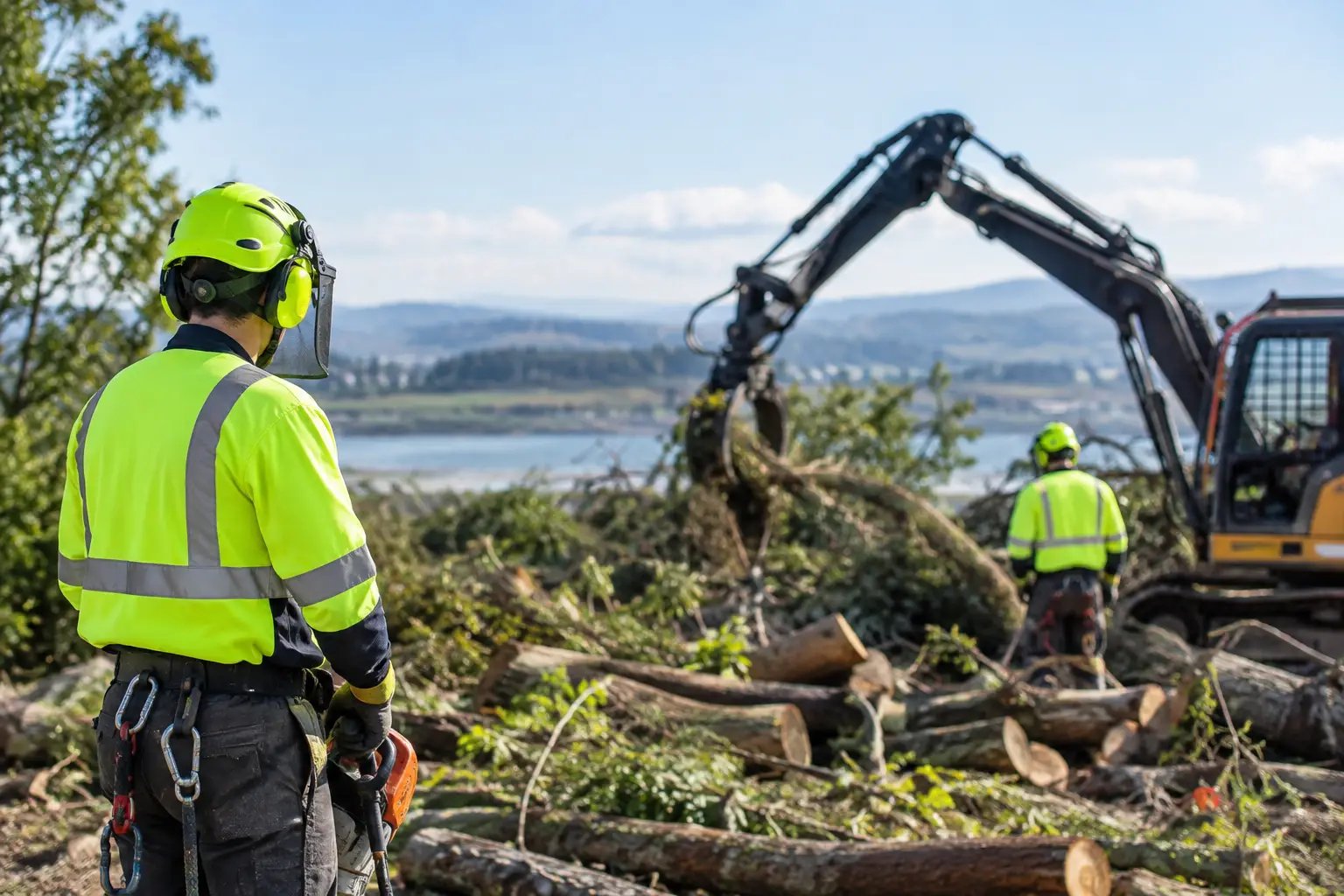
Health and safety is in our DNA, particularly where industrial environments involve multiple contractors and moving plant. A clearance crew should establish exclusion zones, communicate with the site representative and control vehicle movements before cutting begins. Workers should not be operating beneath suspended limbs, within a tree’s drop zone or near machinery without a defined system of work.
The right equipment makes a major difference, but it is only effective in trained hands. Maintained chippers, chainsaws, stump grinders, loaders and access equipment allow work to be completed efficiently while reducing manual handling and unnecessary exposure to risk. For constrained sites, a smaller machine may be safer and more productive than trying to force large plant through narrow access.
Weather can change the plan as well. Canterbury wind is not something to work around casually when removing tall trees or using elevated access equipment. High winds, poor ground conditions and reduced visibility may mean delaying part of a job. That decision can be frustrating when deadlines are tight, but it is preferable to damaging a building, blocking an accessway or putting people at risk.
Compliance and environmental care need early attention
Industrial land can be subject to planning conditions, easements, consent requirements and tree protection rules. If a tree is protected or sits within an area with specific controls, approval may be needed before work begins. Checking this early is far easier than dealing with a stop-work issue once equipment is already on site.
There are also practical environmental considerations. Birds may be nesting, waterways or drains may need protection from debris, and chipped material needs an appropriate destination. Wood chip can be useful mulch where it suits the site, but it is not always the right option. If the ground is being prepared for construction, stockpiling mulch in the wrong place can create another handling task for the next contractor.
Where there is suspected contamination, asbestos, hazardous waste or unknown dumped material, vegetation clearance should be coordinated with the appropriate specialists. Arborists can manage trees and green waste safely, but hazardous materials require their own controls. Separating those responsibilities is good site management, not unnecessary red tape.
Choose a clearance partner who understands the whole job
The lowest-effort approach can look attractive at the start: cut everything down quickly and deal with the mess later. In practice, that can leave damaged ground, inaccessible stockpiles, unaddressed stumps and an unclear safety record. Industrial clients need a contractor who can work to the site’s programme while keeping the result orderly and documented.
Look for an experienced team with appropriate insurance, trained staff, maintained equipment and established safety systems. SiteWise Gold certification is a useful indicator that health and safety processes are taken seriously. It also helps when the team can provide arboricultural advice rather than treating every tree as a straightforward removal.
At Tree Technician, we have been working with trees and complex sites since 1991. Our team can assess vegetation, identify practical risks, carry out clearance work safely and leave the area clean and ready for its next stage. Whether the job involves a small industrial boundary tidy-up or broad land clearance before development, the aim is the same: reliable work, clear communication and no unnecessary hold-ups.
A clean handover is part of the clearance
The best industrial site clearance is measured by what the next person sees. Accessways are open, agreed vegetation is removed, retained trees are protected, green waste is processed or taken away, and the site is left in the condition set out at the start. A final walk-through with the client is worthwhile, especially where the work has been completed in stages.
If your site is due for redevelopment, expansion or a serious tidy-up, arrange the assessment before the programme becomes urgent. Early planning gives you more options for retaining valuable trees, managing approvals and selecting the safest, most efficient method for the work.
www.treetechnician.co.nz