A tree removal review can sound reassuring while telling you very little about the work that mattered. “Great service” is positive, but it does not confirm whether the crew managed overhead lines safely, protected a nearby shed, handled council requirements, or left the site properly clear. Useful tree removal contractor feedback gives you a clearer picture of how a team works when the job is complex, time-sensitive or close to valuable property.
For homeowners, property managers and landholders, the goal is not simply to find someone who can cut down a tree. It is to choose a qualified team that can assess the risk, plan the work, communicate clearly and complete the job without creating a bigger problem on the way through.
What good tree removal contractor feedback looks like
The most helpful feedback is specific. Look for comments that explain what the contractor did, the conditions they worked in and the outcome for the customer. A review that mentions careful dismantling near a house, safe removal of storm-damaged limbs, respectful communication with tenants or a clean finish carries more weight than a general star rating alone.
Pay attention to whether customers mention reliability. Tree work often needs to fit around tenants, access requirements, weather and other trades. Feedback that refers to crews arriving as arranged, keeping the client informed about changes and finishing within the agreed scope is a strong sign of professional site management.
Cleanup is another useful indicator. Tree removal can leave a surprising volume of timber, branches, sawdust and stump material. Good feedback may mention that the crew removed green waste, chipped material as agreed, raked work areas and took care around lawns, gardens, driveways and footpaths. A clean site is not an optional extra. It reflects planning, equipment and respect for the property.
Read reviews for the job you actually need
Not all tree removals carry the same level of risk. A small ornamental tree in an open backyard is very different from a large, declining tree over a home, a wind-damaged macrocarpa near a boundary, or trees requiring clearance for a development site.
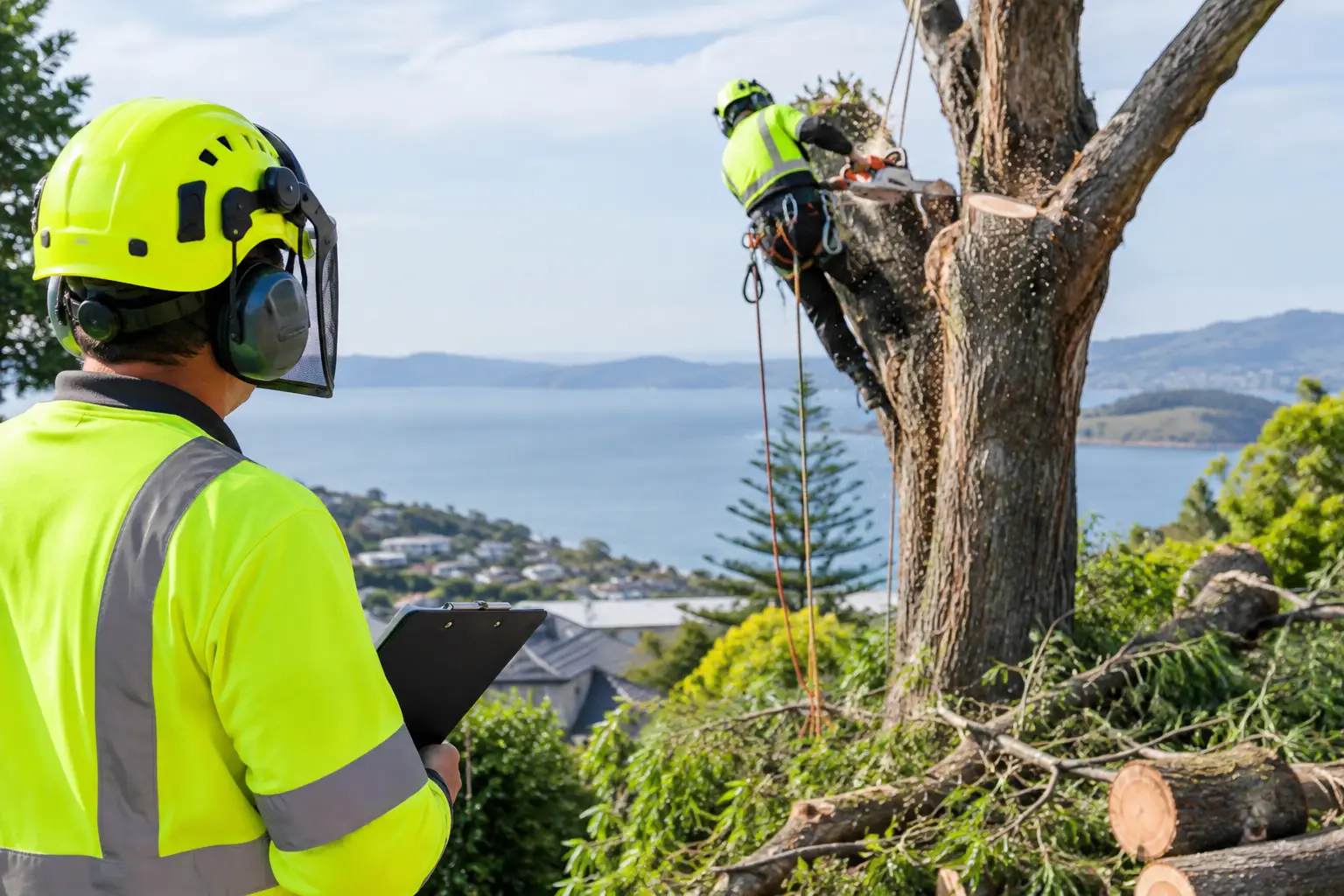
When reading feedback, seek examples that resemble your situation. If a tree is close to buildings, fences, pools, power lines or public areas, look for reviews describing controlled sectional dismantling, use of appropriate machinery and careful exclusion zones. If you manage a commercial site, feedback about scheduling, traffic or pedestrian management, documentation and tidy handover is more relevant than a simple residential pruning review.
For rural properties and larger blocks, reviews may reveal how well a contractor handles access, difficult terrain, larger timber and substantial green-waste volumes. The right approach depends on the site. A capable contractor should be able to explain why a tree can be felled from the ground, dismantled in sections, or requires specialist equipment and additional controls.
Look beyond five-star ratings
A perfect rating is encouraging, but the written detail matters more. Read a spread of recent feedback rather than relying on one or two standout comments. You are looking for patterns: clear communication, professional crews, safe work practices, punctuality and a clean result.
Also consider how a business responds when conditions change. Weather, hidden decay, access restrictions and protected-tree requirements can alter the safest method or timing of a job. Feedback that describes honest updates and practical solutions is often more valuable than a review that suggests every job is effortless. Tree work requires judgement, and good contractors do not take shortcuts to make a difficult job appear simple.
Match feedback with real safety evidence
Reviews should support your decision, not make it for you. Ask direct questions about qualifications, insurance, safety systems and how the job will be managed. A professional tree contractor should be comfortable discussing these points in plain language.
Before confirming work, make sure you understand:
- who will assess the tree and plan the removal;
- how the crew will protect people, buildings, services and neighbouring properties;
- whether traffic, pedestrian or public-area controls are needed;
- what equipment will be used and whether site access is suitable for it; and
- what will happen to timber, branches, mulch and the stump once the tree is down.
These answers should match the confidence shown in the feedback. If reviews repeatedly praise safe, organised work but the contractor cannot explain their process, treat that as a warning sign. Health and safety should be visible in the way a contractor quotes, communicates and sets up a site, not only in a marketing claim.
Check whether the quote reflects the review
Strong reviews and a detailed quote should tell the same story. The quote does not need to be overloaded with jargon, but it should clearly state the proposed work, access assumptions, removal method where relevant, waste handling and any exclusions.
For example, “remove tree” can mean very different things. Does it include dismantling and removal from site? Is timber to be left for firewood? Is the stump included, or does it require separate stump grinding? Are branches being chipped and removed, or retained as mulch? Clear wording helps avoid disappointment and makes it easier to compare service levels fairly.
If a tree has signs of decay, has failed during a storm or is close to structures, ask whether an arboricultural assessment is needed before removal. In some cases, a formal assessment or management plan can help identify the safest option and support decisions for owners, managers or regulatory bodies. Removal is sometimes necessary, but it is not automatically the only responsible answer.
Protected trees and permissions deserve more than a quick promise
Feedback can be particularly useful when it refers to protected-tree work, council processes or work completed within tight site constraints. However, do not rely on a review as proof that your own tree can be removed without approval.
Rules can depend on the tree species, location, planning controls, site overlays and the scope of proposed work. A professional contractor can help identify when further checks are needed and explain the likely process. This matters for developments, commercial grounds and established residential areas where mature trees may have planning or environmental value.
The sensible approach is to raise this early, before machinery is booked and schedules are set. It avoids delays and protects you from unnecessary compliance issues.
Questions that reveal the quality behind the feedback
A brief conversation often tells you whether positive reviews are backed by practical experience. Ask how the team will access the site, how they will manage a tree over a building, and what happens if wind or rain makes the job unsafe. Ask who is responsible for final cleanup and whether the work area will be checked before the crew leaves.
For a larger or higher-risk job, ask about the site-specific safety plan and how neighbours, staff or tenants will be kept clear of the work zone. A competent answer should be calm and specific. You should not feel pushed to accept vague assurances, especially where there are power lines, public access or substantial trees involved.
Tree Technician has worked across Canterbury since 1991, combining practical tree work with consultancy arboriculture, hazard management and maintained professional equipment. For clients, that means the conversation can start with the safest long-term option, not just the fastest way to get a tree on the ground.
Use feedback to set the right expectations
The best tree removal contractor feedback gives you confidence, but it should also help you set realistic expectations. Larger removals can be noisy, access may need to be restricted, and weather can affect timing. A good crew will minimise disruption, but safe work sometimes means pausing rather than pushing ahead in unsuitable conditions.
Choose feedback that points to professionalism under real site pressure: a crew that communicated before arriving, worked carefully around property, adjusted safely when conditions changed and left the place looking orderly. That is the sort of experience worth seeking when a tree needs more than a quick cut.
For practical advice on safe tree management, removals and site-specific assessments, visit www.treetechnician.co.nz