A branch over a roof, a leaning tree beside a driveway, or storm damage near power lines can turn routine tree maintenance into a serious risk quickly. Safe tree work procedures are not just about wearing a helmet and starting a chainsaw. They are the planning, judgement, equipment checks and site controls that protect people, property and the tree itself.
For homeowners, property managers and landholders, knowing what good practice looks like makes it easier to choose the right contractor and understand why some jobs need more preparation than others. A small prune in an open backyard is very different from dismantling a large tree above a house, road, fence or neighbouring property.
Start with a proper site and tree assessment
Safe work begins before a crew unloads equipment. An experienced arborist assesses the tree’s condition, structure, location and likely hazards. Decay, cracks, deadwood, unstable root plates, hanging branches and previous storm damage can all change the safest way to approach the job.
The surrounding site matters just as much. Crews need to identify buildings, glasshouses, vehicles, fences, public access, underground services, overhead lines, gardens and fragile surfaces. On commercial sites, this also includes pedestrian routes, staff parking, delivery areas and public-facing entrances.
Tree species and seasonal conditions can affect the plan. A tree that appears sound from ground level may have internal decay, while wet ground can make access machinery unsuitable or increase the chance of turf damage. Strong winds, rain and poor visibility can also make climbing, elevated work platforms and controlled lowering unsafe. Sometimes the right decision is to postpone the work until conditions improve.
Safe tree work procedures begin with a clear plan
A safe work plan sets out how the job will be completed, who is responsible for each task and what controls are needed before cutting starts. For straightforward pruning, this may be a concise pre-start discussion. For complex removals, protected trees, emergency work or large land-clearing projects, the planning needs to be more detailed.
The crew should agree on the work sequence, access route, drop zone, communication method and emergency response arrangements. They should also confirm where timber, chip and equipment will be placed so the site stays orderly and accessible.
A reliable plan includes an exclusion zone. This is the area where branches, timber, machinery or rigging could create a hazard. Nobody should enter that zone unless they are directly involved in the work and have been briefed by the crew. On sites near a footpath, road or shared driveway, traffic and pedestrian management may be required as well.
Good planning is not red tape. It prevents the common mistakes that lead to damage, delays and injuries – such as cutting a limb without allowing for its weight, swing or landing area.
Check permissions before work begins
A tree may be protected by local planning rules, subject to consent conditions, or located close to boundaries and services. Large development sites can also have tree-retention requirements that affect access, pruning and root-zone protection.
Work should not proceed on assumptions. A qualified arboricultural assessment can help establish the tree’s condition, management needs and the appropriate scope of work. Where a protected tree is involved, careful planning supports both compliance and the long-term health of the tree.
Use trained people and suitable equipment
Tree work involves specialised skills. Chainsaw use, climbing, rigging, aerial rescue, chipper operation and elevated-platform work all require training, experience and sound judgement. The person making cuts aloft needs to understand wood behaviour, load forces and how each section of a tree will move as it is removed.
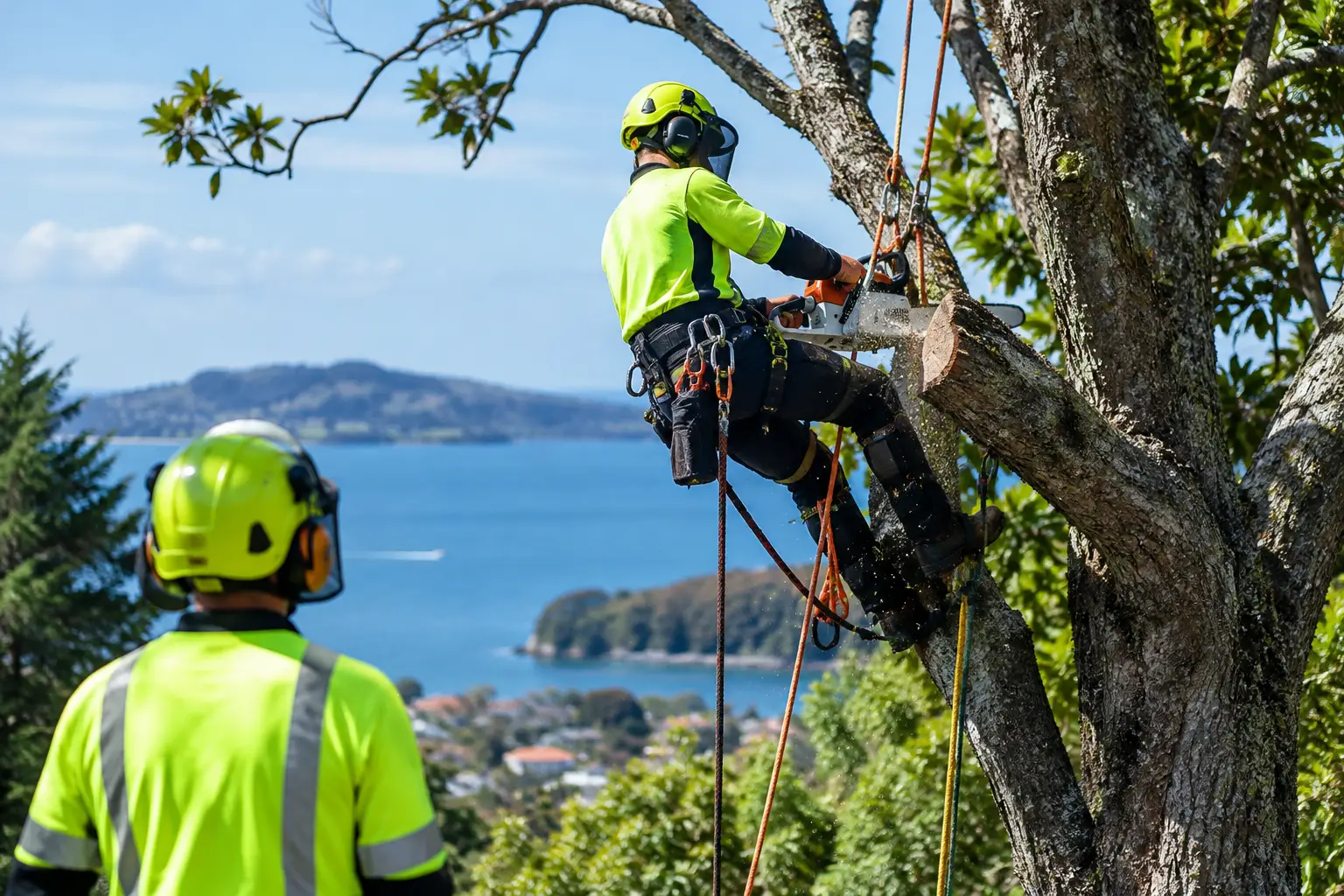
Personal protective equipment is essential, but it is only one layer of protection. Helmets, eye and hearing protection, chainsaw trousers, gloves and suitable footwear help reduce injury severity. They do not make an unsafe cut, poor rigging choice or unstable work position safe.
Equipment must suit the job and be maintained properly. Depending on the site, this may include climbing ropes and harnesses, rigging equipment, chainsaws, wood chippers, stump grinders, cranes or elevated work platforms. Worn ropes, damaged saws, blunt chains and poorly maintained machinery create avoidable risks.
For clients, a professional crew should look organised rather than rushed. Equipment is checked, vehicles are positioned safely, and the team communicates before significant cuts are made. This approach may take a little longer at the start, but it reduces disruption once the work is underway.
Manage overhead and underground hazards carefully
Electricity is one of the most serious risks in tree work. Trees growing near overhead lines require careful assessment, and clearance work may need to be coordinated with the network operator. Branches can conduct electricity, fall onto lines or bring people and equipment too close to live infrastructure.
Never attempt to prune or remove branches near power lines yourself. The risk is not limited to direct contact. A branch can move unexpectedly during cutting, especially in wind, and machinery or ladders can create further exposure.
Underground services need attention too, particularly where stump grinding, land clearing, new planting or machinery access is planned. Utility locations should be confirmed before excavation or grinding begins. Guessing can lead to expensive damage and dangerous incidents.
Control how timber comes down
The safest removal method depends on the tree, the available space and what sits below it. In an open paddock, sections may be felled or dropped into a clear area. In a tight residential setting, branches and trunk sections are often dismantled progressively and lowered with ropes.
Controlled lowering protects roofs, fences, gardens and neighbouring properties, but it also introduces rigging forces that must be calculated and managed. A heavy piece of timber can place enormous load on an anchor point when it is caught suddenly. This is why complex removals need experienced crews, appropriate gear and a clear understanding of forces at work.
Not every tree needs removal. Selective pruning, crown reduction, deadwood removal, cabling or bracing may be the better option where the goal is to reduce risk while retaining a valued tree. The right treatment depends on the tree’s health, structure, location and future management needs.
Keep the work area clean and controlled
A tidy site is a safer site. Loose branches, sawdust, ropes, fuel containers and machinery can become trip hazards or obstruct emergency access if they are not managed throughout the job. Chipper operators need a clear feeding area, and no one should stand where they can be struck by material being moved or processed.
Property protection should be part of the work method, not an afterthought. Crews may use ground protection where access could affect lawns or soft ground, and they should take reasonable steps to prevent damage to gardens, paving and structures. Once work is complete, timber, chip and green waste should be dealt with as agreed, leaving the site safe for normal use.
For commercial properties, handover matters. Before reopening an area, check for remaining hazards such as cut stumps, low branches, debris, temporary barriers or damaged surfaces. Clear communication with the site manager helps ensure staff, tenants and visitors can return safely.
Know when the job is beyond DIY
Homeowners can often manage light ground-level garden work with hand tools. Once a job involves a chainsaw, climbing, ladders, overhead branches, decay, large timber or proximity to services, the risk rises sharply. A ladder and chainsaw is a particularly dangerous combination because balance, cutting control and escape routes are all compromised.
Emergency tree work deserves extra caution. After a storm, trees can be under tension, partially supported by structures or caught in other branches. What looks like a simple branch removal may release stored energy without warning. Keep people away, take photographs from a safe distance if needed for insurance, and arrange professional assessment.
Health and safety is in the DNA of good arboriculture. It protects the people carrying out the work, the people nearby and the property you have worked hard to maintain. When a tree needs attention, choosing a qualified, safety-focused team gives you a clear plan and a safer path from first assessment to final clean-up.
For practical arboricultural advice and professional tree care, visit www.treetechnician.co.nz
Get a free quote
Contact Tree Technician for a free, no-obligation quote.
Explore Tree Trimming & Pruning