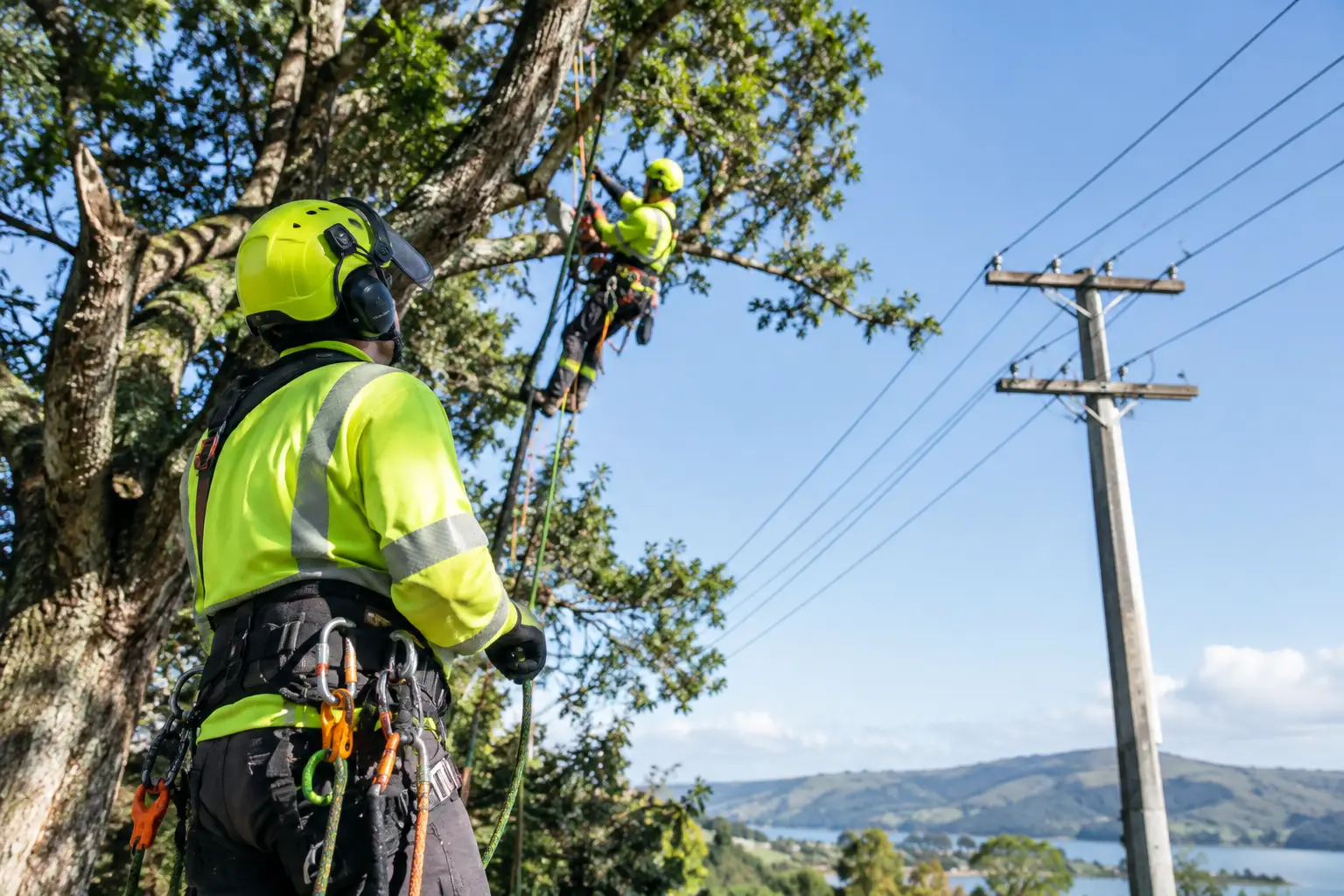
A branch brushing an overhead line is not a job for a ladder, a chainsaw and good intentions. It can place people, homes, vehicles and the electricity network at serious risk. So, can arborists work near powerlines? Yes, but only when the work is properly assessed, planned and carried out by suitably trained, authorised professionals under the right controls.
For property owners, the safest decision is simple: do not attempt to prune, remove or pull vegetation away from powerlines yourself. Even a branch that looks harmless can conduct electricity, shift unexpectedly as it is cut, or bring a worker and their equipment within a dangerous distance of live conductors.
Can arborists work near powerlines?
Qualified arborists can undertake tree work near powerlines, but it is specialist work. The answer depends on the voltage of the line, the tree’s position and condition, the access available, weather, equipment being used, and the requirements of the local electricity network operator.
Not every arborist is authorised or equipped for electrical line clearance work. A professional tree crew may be able to assess the tree and manage parts of the job outside the electrical hazard zone, while work closer to the lines may require a specifically approved line-clearance team, isolation of the supply, or coordination with the network owner.
That distinction matters. Tree pruning is not automatically safe just because the worker is experienced with a chainsaw or climbing gear. Near electricity, the work method has to account for electrical risk first, then tree-care outcomes.
Why trees and powerlines are a high-risk combination
Trees grow gradually, while powerlines remain fixed. A healthy tree can eventually extend into the space around service lines, street lines or higher-voltage network infrastructure. Wind, snow, heavy rain and dry, brittle timber can then turn an overhanging limb into an immediate problem.
A branch does not need to visibly touch a line for the situation to be dangerous. Electricity can arc through the air when people, tools, branches or equipment get too close. Wet foliage, damp ground, metal tools and aerial equipment can add further hazards. Cutting a limb can also change its balance in an instant, causing it to swing, drop or fall in an unpredictable direction.
For homeowners and property managers, the risk is not limited to the person doing the cutting. A fallen limb can damage a line, interrupt supply, start a fire, block access, or leave live wires on the ground. If a tree is pressing on a service line supplying a house, shed or commercial building, treat it as a safety issue rather than a weekend maintenance task.
What a professional assessment looks at
Before any work begins, a capable arborist assesses far more than which branches need removing. The team needs to understand the tree, the electrical environment and the site around it.
The tree itself may have deadwood, decay, cavities, poor branch attachments or storm damage that makes climbing unsafe. Its height, lean and likely falling direction matter, as do the species and how the timber is likely to react when cut. Some branches hold tension or compression and can move sharply once released.
The crew will also identify the line type and its location. Powerlines may be overhead network lines, private service connections, telecommunications cables or a combination of services. They are not all managed in the same way, and they must never be assumed to be safe, insulated or inactive based on appearance alone.
Access is another practical factor. A narrow driveway, a busy road, a neighbouring property, a glasshouse, fencing or a steep section can rule out a straightforward dismantle. The safest option may involve using a different access point, specialist machinery, traffic management, staged pruning, or arranging an outage where appropriate.
The controls that make the work safer
Safe work near electrical lines is planned, not improvised. The exact controls change from site to site, but they commonly include a documented risk assessment, an exclusion zone, clear communication between crew members and a carefully selected work method.
Where necessary, the electricity network operator is contacted before work begins. They may advise on clearance requirements, arrange isolation, disconnect a private service, or confirm what is required for vegetation management in that location. Arborists should not make assumptions about who owns a line or whether it can be moved, covered or worked around.
The crew also needs the right equipment in good condition. That may include insulated tools where they are appropriate, rigging gear to control cut sections, elevated work platforms, wood chippers and barriers to keep residents, staff and the public out of the drop zone. Equipment helps, but it does not replace training, planning or sound judgement.
Weather can stop the job altogether. High winds make branches and conductors move. Rain can reduce visibility and make climbing, rigging and ground conditions more difficult. In a high-risk electrical setting, postponing work is often the professional choice.
What property owners should do first
If branches are close to or touching a powerline, keep people away from the area. Do not climb the tree, use a pole saw, shake the branch, throw a rope over the line, or try to move vegetation with a rake, ladder or ute. Keep children and pets clear as well.
If a line is down, sparking, damaged or lying on the ground, stay well clear and contact emergency services and the electricity network operator immediately. Do not approach the wire or anything touching it, including fences, trees, vehicles or puddles. Electricity can travel through the ground and surrounding materials.
For a non-emergency concern, arrange a professional site inspection. Photos from a safe distance can help explain the issue when booking, but they do not replace an on-site assessment. The crew needs to see the tree’s structure, line position, access and hazards before confirming the right scope of work.
Pruning is often better than removal
Powerline clearance does not always mean removing an entire tree. Correct pruning can reduce the risk while retaining a healthy, well-structured tree where space allows. Selective removal of unsuitable limbs, reduction pruning and ongoing maintenance can be more practical than waiting for branches to reach the lines again.
However, there are situations where removal is the responsible option. A declining tree directly beneath lines, a species that repeatedly outgrows the available space, or a tree with major structural defects may create ongoing risk and repeated maintenance costs. The best decision balances safety, tree health, future growth, site use and local requirements, including protected-tree rules where they apply.
Poor pruning near powerlines can create a long-term problem. Cutting back too hard may trigger weak, fast regrowth, leave large wounds, or unbalance the tree. A proper arboricultural approach considers how the tree will respond over the next few years, not just how it looks when the crew leaves.
Emergency tree work near lines
After a storm, the pressure to act quickly is understandable. Broken branches can hang over driveways, roofs and accessways, while trees may be leaning into lines or dragging conductors down. These are not conditions for rushed DIY work.
An emergency arborist can assess the immediate hazard, establish a safe work area and coordinate the response needed to make the site safe. Sometimes the first step is not cutting at all. It may be isolating the area, contacting the network operator and waiting until the electrical risk has been controlled.
This can feel slower than expected, particularly when access is blocked. But it protects everyone on site and avoids turning storm damage into a much more serious incident.
Choose expertise, not a quick fix
When engaging a contractor for a tree near powerlines, ask direct questions about their experience with electrical hazards, their safety process and how they will coordinate with the network operator if required. Confirm that they are insured, use maintained professional equipment and will leave the site tidy once the work is complete.
For Canterbury property owners, Tree Technician brings practical arboricultural judgement to complex tree work, from hazard assessments and careful pruning through to removals and emergency response. Health and Safety is in our DNA, particularly where trees, people and electricity share the same space.
A tree near a powerline may not look urgent today, but early assessment gives you more safe, affordable options than waiting for a storm or a falling branch to make the decision for you.
www.treetechnician.co.nz