A branch across the driveway is inconvenient. A split limb hanging above a car, footpath or play area is a different matter altogether. To manage storm fallen branches safely, start by treating every damaged tree as unstable until it has been properly checked. Wind, saturated ground and broken timber can leave hazards that are not obvious from ground level.
The aim after a storm is not to tidy everything at once. It is to keep people clear of danger, prevent further damage where practical, and bring in qualified help when the work exceeds what can be handled safely from the ground.
First, make the area safe
Before moving a branch, look up, look around and keep others back. Broken limbs can be caught in the canopy, resting on fences or held under tension by other branches. What looks like a clean break may shift without warning once the weight changes.
Keep children, pets, visitors and vehicles away from the affected area. If a branch blocks a driveway or accessway, use cones, bins or another visible barrier rather than asking someone to squeeze past it. For commercial sites, property managers should restrict access to the area and notify staff or tenants promptly.
Do not approach a tree or branch that is touching, leaning towards or close to power lines. Stay well clear and contact the electricity network operator. Even a seemingly small branch can conduct electricity if it is in contact with a live line. This is not a job for a chainsaw, ladder or a well-meaning neighbour.
Check what has actually failed
Once the immediate area is secure, assess the scene from a safe distance. A branch on the ground may be only part of the problem. Look for torn bark, fresh cracks in the trunk, exposed roots, a newly leaning tree, hanging limbs and branches lodged high in the canopy.
Storm damage often reveals defects that were already developing, such as decay pockets, included bark at weak branch unions, poor previous pruning or root damage. A large limb may have fallen because of a one-off gust, but it can also be evidence that the remaining structure needs attention.
Pay particular attention to trees near homes, garages, sheds, boundary fences, access roads and public areas. On rural or larger properties, inspect tracks, gateways, stock areas and buildings before reopening normal access. A tree that has shifted at the root plate can fail days later as the soil dries or another wind event arrives.
Take clear photos from several angles before cleanup begins. This helps document damage for insurers, body corporates, landlords or maintenance records. It also gives an arborist a useful starting point if the situation needs an urgent assessment.
When you can clear small fallen branches
Small, fully detached branches on open ground can usually be moved by hand once you have checked that nothing is suspended above them. Wear sturdy footwear, gloves and eye protection. Drag branches rather than carrying awkward lengths over your shoulder, particularly where the ends can swing or catch on gates and garden features.
For manageable material, cut it down only with tools you are competent to use. Hand pruners or a handsaw are often safer and more controlled than reaching for a chainsaw. Keep cuts low and stable, work from the outer twigs inward, and avoid standing on piles of branches while cutting.
Wood chipping is a tidy option for suitable green waste, but only if the chipper operator is trained and the area is clear. Never feed tangled, muddy or contaminated material into machinery. Keep stones, wire, fence staples and soil out of the chipper, as they can damage equipment and create a serious hazard.
If you are using the material as mulch, keep it away from building cladding and do not pile it against tree trunks. Fresh chip can be useful around garden beds, but it is not a substitute for addressing the damaged tree that produced it.
Leave these storm jobs to an arborist
Some fallen branches should not be touched until a professional crew has assessed them. The risk rises sharply where there is height, weight, tension, machinery, traffic or nearby infrastructure involved.
Call an emergency tree service if the branch or tree involves any of the following:
- Power lines, communication lines or street lighting.
- A limb hanging overhead, caught in another tree or resting on a roof.
- A trunk that is split, cracked, uprooted or suddenly leaning.
- Large timber under compression or tension, especially where it has fallen across a fence, building or vehicle.
- A tree blocking a road, shared accessway, emergency route or public space.
- A protected tree, or a tree where council rules may apply before pruning or removal.
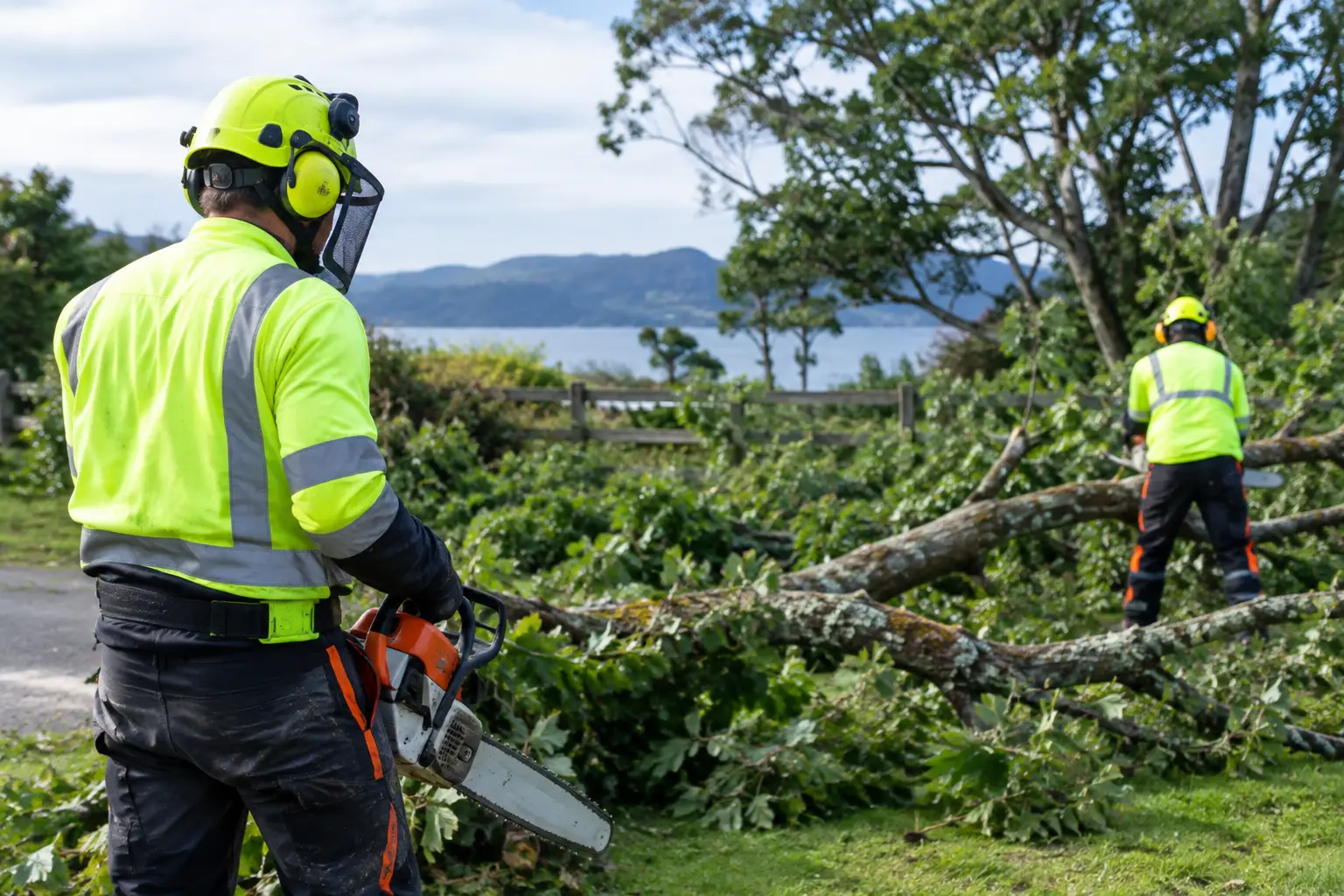
Chainsaw injuries commonly happen when timber rolls, springs, pinches the bar or moves in an unexpected direction. Ladders make that danger worse. Professional arborists use appropriate climbing systems, elevated work platforms, rigging methods, traffic management and maintained equipment to control the job rather than relying on luck and brute force.
Do not make damaging cuts in a rush
After a storm, it is tempting to remove every broken-looking branch. That can leave a tree unbalanced, stressed or more exposed to future wind. Good remedial pruning is selective. It removes failed and unsafe material while retaining as much sound structure as possible.
Avoid flush cuts into the trunk, stubs that cannot close properly, and indiscriminate topping. Topping may make a tree look smaller in the short term, but it often triggers weak, fast regrowth and creates more maintenance issues later. A qualified arborist can determine whether the tree can be retained with corrective pruning, cabling or bracing, or whether removal is the safer long-term option.
This judgement matters for mature specimen trees, trees near buildings and trees with amenity or environmental value. It also matters where a tree may be protected by local planning rules. Check requirements before arranging major pruning or removal, especially on development sites and properties with known protected trees.
Plan the cleanup around the whole property
A clean site is about more than taking away branches. Storm debris can hide damaged gutters, broken fences, crushed garden beds and blocked drains. Once the immediate tree hazard has been dealt with, check rooflines, stormwater grates, paths and access points. Clearing branches from a drain can prevent a minor storm issue becoming a water problem at the next downpour.
For property managers and commercial sites, record the inspection, actions taken and any remaining restrictions. This creates a clear trail for health and safety obligations and helps schedule follow-up work. On development land, storm-damaged trees should be considered alongside site access, machinery movement, earthworks and boundary protection zones.
Tree Technician provides emergency response, hazard assessment, specialist pruning, removal and full site cleanup across Canterbury and surrounding areas. With experienced crews, maintained professional equipment and SiteWise Gold safety standards, the focus is on making the site safe without creating new damage in the process.
Reduce the next storm’s workload
Not every branch failure can be predicted, particularly in severe wind. However, regular inspections and well-timed pruning can greatly reduce the likelihood of deadwood dropping, overextended limbs failing or branches striking roofs and services.
Have trees assessed before winter weather if they are large, mature, close to structures or showing warning signs such as dieback, fungal growth, cracks, cavities or soil lifting around the base. Young trees may benefit from formative pruning, while older trees may need crown reduction, deadwood removal or structural support. The right approach depends on the species, condition, location and the level of risk around it.
After the storm has passed, take the time to make one careful decision rather than several rushed ones. Secure the area, photograph the damage, clear only what is genuinely safe from ground level, and get experienced arboricultural advice where the tree or branch could still move. That is how you protect people, preserve worthwhile trees and get your property back to normal with confidence.
For practical, safety-first tree care and emergency support, visit www.treetechnician.co.nz