A healthy-looking canopy can hide a problem developing much lower down. A patch of thinning foliage, a fresh fungal growth at the base, or one branch dying back ahead of the rest can be among the early tree disease signs that deserve a closer look. Catching change early gives you more options to protect the tree, your property and the people using the space beneath it.
Trees naturally shed leaves, drop small twigs and respond to dry periods. The key is not to panic over one imperfect leaf. Look instead for changes that are sudden, spreading, uneven or out of character for that species and season. If a mature tree near a driveway, building, play area or public access route is declining, treat it as both a tree-health and safety matter.
Early tree disease signs to look for
Dieback in the canopy
Dieback is when branch tips stop producing healthy growth, leaves become sparse, and sections of the crown gradually die. It may begin on one side of a tree or in isolated upper branches before becoming more widespread.
A small amount of inner-canopy dieback can be normal, particularly where a dense tree is self-pruning shaded branches. Concern increases when larger limbs are affected, dead branches remain throughout the crown, or new spring growth is weak. Dieback can be associated with fungal disease, root stress, compaction, drought, poor drainage or damage to the boot. It tells you something is wrong, but it does not identify the cause on its own.
Leaves that change too early or unevenly
Leaves provide useful clues. Watch for yellowing outside the normal autumn period, browning leaf edges, unusual spots, curling, wilting or leaves that are noticeably smaller than usual. A disease may affect one branch, one side of a canopy or one type of leaf first.
However, leaf symptoms are not always disease. Hot, dry conditions, herbicide drift, insect feeding, salt exposure and root disturbance can produce similar results. Before treating or pruning, consider recent changes around the site. Have vehicles repeatedly driven beneath the tree? Has soil level changed, drainage been altered, or construction work taken place nearby? Roots often show the effects of site work long after the work has finished.
Fungal growth on trunks, roots or at the base
Mushrooms and bracket fungi around a tree should never be ignored, especially when they appear from the boot, exposed roots or soil immediately beside the stem. Some fungi feed on dead organic matter and may not threaten a living tree. Others indicate internal decay in roots, the lower boot or major structural limbs.
The location matters. A bracket growing high on a dead branch has different implications from a substantial shelf fungus at the base of a large tree. Take clear photos, note when it appeared, and arrange an assessment if the tree could affect people or property. Do not knock fungi off and assume the issue has gone away. The visible fruiting body is often only one sign of activity within the wood.
Cracks, sunken areas and loose bark
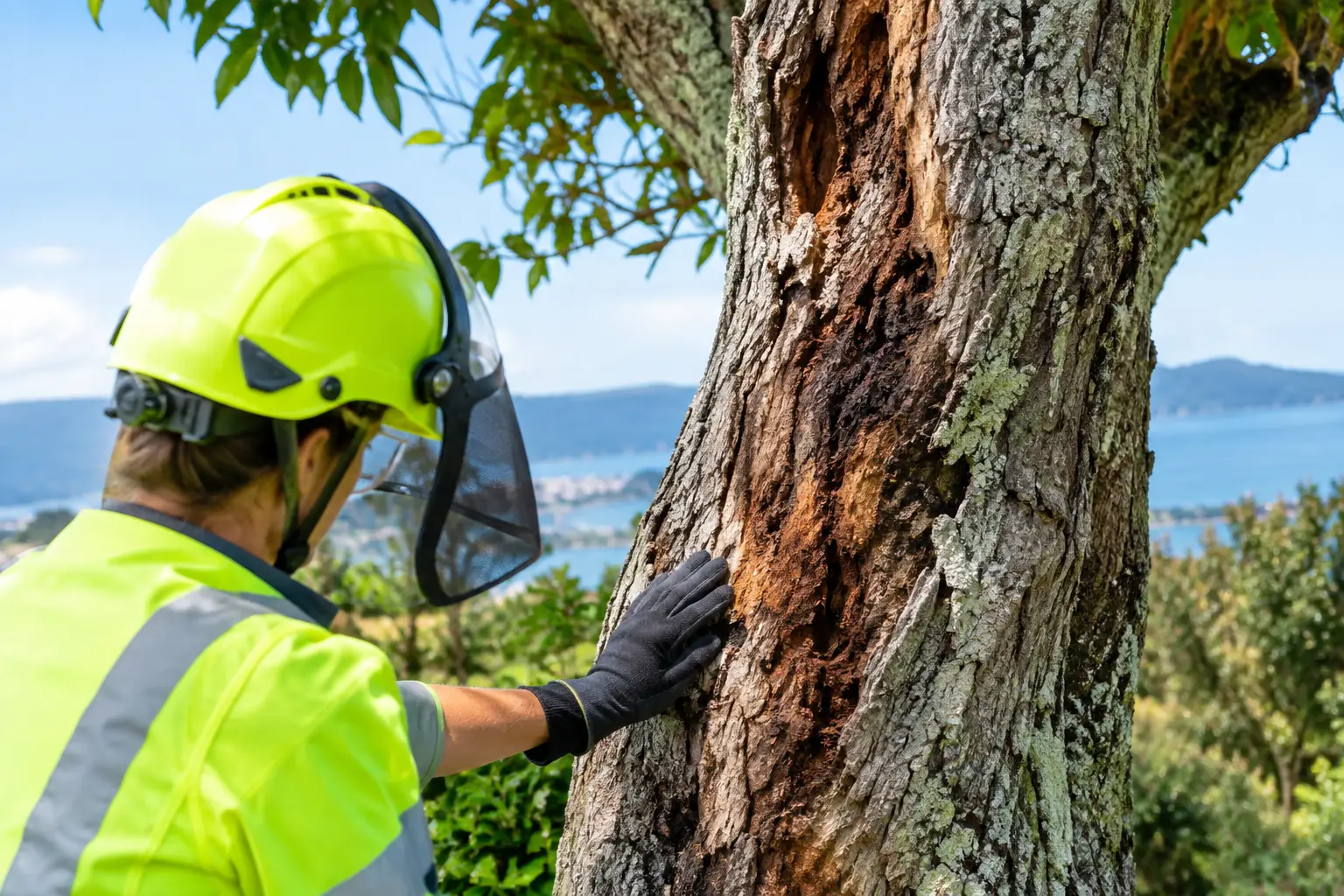
Inspect the boot from a safe distance. Long vertical cracks, fresh splits, sunken patches, weeping areas, peeling bark and cavities can all point to damage or decay. Some trees naturally develop textured bark, buttress roots or old hollows, so the concern is a new change or one that is worsening.
A crack combined with a leaning stem, a heavy limb over a roof, or soil lifting around the base needs prompt professional attention. Never climb a suspect tree, strike it with tools or remove large limbs yourself to investigate. Decayed wood can fail without much warning, and cutting can change the load on an already weakened tree.
Root-zone changes
Roots are where many serious problems start, but they are often overlooked because they sit below ground. Sparse growth, early leaf drop and dieback may follow root damage from trenching, soil compaction, flooding or repeated parking beneath a canopy.
Visible signs include mushrooms near the base, exposed or damaged roots, cracked soil around the root plate, water pooling where it did not previously, and ground that appears to be heaving. A tree that has begun to lean after rain or wind is not a wait-and-see situation. Keep people away from the area and seek urgent advice.
Signs that need a faster response
Not every suspected disease issue is an emergency. A few spotted leaves on a small ornamental tree can usually be monitored while you improve watering and remove fallen leaf litter where appropriate. The response changes when there is a realistic chance of structural failure.
Arrange a timely assessment when a tree has significant deadwood, rapidly worsening canopy decline, fungal brackets near the base, obvious boot decay, or roots affected by recent earthworks. The need is more urgent after storms, prolonged rain or high winds, particularly if the tree is close to a house, fence, road, footpath, power service or occupied area.
If a branch has partially failed, the boot has split, or the tree is suddenly leaning, keep clear and prevent others from entering the drop zone. Do not attempt to pull branches down with a ute, rope off a limb from a ladder, or cut under tension. Emergency tree work requires the right equipment, exclusion zones and an understanding of how timber is loaded.
What a proper assessment can establish
An arborist does more than identify a leaf symptom. A useful assessment considers the tree species, age, site conditions, recent weather, pest activity, root environment, structural form and targets beneath the tree. That broader picture helps separate a manageable health issue from a hazard requiring action.
Depending on the findings, the recommended work may be selective pruning to remove dead or infected material, canopy management to reduce loading, improved mulching and root-zone protection, cabling or bracing for a suitable specimen, monitoring, or removal where the risk cannot be reasonably managed. There is no single treatment that suits every tree.
Pruning also needs care. Removing too much live canopy can stress a tree further, while cuts made in the wrong place can create entry points for decay. A qualified arborist can make targeted cuts that support tree health and reduce risk without stripping the tree of the foliage it needs to recover.
For commercial sites, rural properties and development areas, documented advice can be especially valuable. It supports maintenance planning, helps prioritise works across multiple trees and provides a clear record of hazard management decisions. Protected-tree rules and consent requirements may also apply, so checking the position before work begins can avoid costly delays.
Simple checks homeowners and managers can make
A regular visual check is worthwhile, particularly after rough weather and at the change of seasons. Walk around the tree from a safe distance and compare it with nearby trees of the same type. Look up for dead branches, then check the trunk and ground around the base.
Keep mulch away from direct contact with the trunk, avoid piling soil over roots, and do not store building materials or park machinery repeatedly beneath the canopy. During dry weather, deep, occasional watering is generally more useful for established trees than frequent shallow watering, though the right approach depends on soil, species and local conditions.
Avoid applying fungicides, sealing pruning wounds or cutting major limbs based on an online diagnosis. These actions can be ineffective or harmful when the underlying issue is root damage, poor drainage or structural decay rather than a leaf disease. Clear photographs and notes on when symptoms first appeared will be far more useful if an arborist needs to inspect the tree.
Act while the options are still open
The best time to investigate a declining tree is before deadwood becomes a falling-branch problem or hidden decay becomes a failure. Early action can sometimes preserve a valued tree through better site management and carefully planned pruning. Where removal is the safer option, acting before an emergency develops also gives you greater control over timing, access and site protection.
For Canterbury property owners and managers, Tree Technician provides practical arboricultural advice and safe tree-care work backed by experienced crews, maintained equipment and a safety-first approach. A clear assessment now can make the next decision far easier.
www.treetechnician.co.nz
Get a free quote
Contact Tree Technician for a free, no-obligation quote.
Explore Tree Trimming & Pruning