A mature tree can be one of a property’s best assets – until a dead limb hangs above a driveway, roots begin affecting a service line, or urgent work is stopped because the tree has planning protection. Clear tree management plan requirements turn those uncertain moments into planned, defensible decisions. For homeowners, landholders and property managers, the goal is not simply to cut trees back. It is to manage risk, protect worthwhile trees and keep the property functioning safely.
A good plan is scaled to the site. A single ageing tree beside a home does not need the same level of documentation as school grounds, Uni campus, Polytech campus, retirement village, development site or rural property with shelterbelts and established Plantings. What does not change is the need for solid arboricultural expertise, practical on-site safety measures and a clear record of the work to be carried out and reasoning behind it.
When a tree management plan is needed
A formal plan is particularly useful where trees are numerous, high-value, protected, close to people or property, or likely to be affected by ongoing works. It may be requested as part of a resource consent, development approval, insurance matter, body corporate process or long-term property maintenance programme.
It is also sensible when responsibility is shared. Commercial owners, schools, facilities managers and rural businesses often need a plan so staff, contractors and decision-makers are working from the same priorities. Rather than reacting to the next fallen branch or tenant complaint, they can schedule inspections and works around actual risk.
For a homeowner, a shorter management plan or formal tree assessment may be enough. The right level of detail depends on the tree’s condition, location, council requirements and the consequences if something fails. An overgrown ornamental tree in an open backyard is different from a large declining gum over a public accessway.
Core tree management plan requirements
The strongest plans begin with an on-site inspection. Photographs and old maintenance records can help, but they do not replace looking at the tree, its root zone, surrounding targets and the site conditions. Recent storms, soil disturbance, drainage changes and building work can all change a tree’s stability.
A clear tree inventory
Each relevant tree or tree group should be identifiable. This usually includes its species, approximate size, location and a reference number linked to a site plan or map. For larger sites, the inventory may also record canopy spread, trunk diameter, age class and whether the tree is native, exotic, protected or part of a shelterbelt.
The point is simple: no one should be left guessing which tree an action applies to. Accurate identification also makes future inspections more useful, especially when different contractors or property managers are involved over time.
Condition and risk assessment
A plan should describe the condition of each priority tree and the hazards that need attention. This can include deadwood, decay, cavities, cracks, hanging branches, poor branch attachments, pest damage, lean, root plate movement or reduced vigour.
Risk is not determined by tree condition alone. A branch over an unused paddock may require monitoring, while a similar branch over a car park, playground or neighbour’s roof may need prompt work. An arborist considers both the likelihood of failure and what the tree could strike if it does fail.
A useful assessment avoids alarmist language. Trees naturally shed small branches and develop imperfections. Removal is sometimes necessary, particularly where decay, instability or limited site space leaves no acceptable alternative. In many cases, however, selective pruning, crown reduction, cabling, exclusion zones or more frequent inspections can reduce risk while retaining the tree’s benefits.
Recommended works and priorities
Recommendations need to be specific enough for safe, consistent completion. “Prune tree” is not a management instruction. The plan should state whether the work involves deadwood removal, clearance pruning, reduction, formative pruning, pest management, removal, stem or root plate treatment or another defined action.
It should also set priorities and timeframes. Immediate work may be needed for a dangerous hanging limb or a storm-damaged tree. Other tasks can be planned within the next maintenance cycle. Separating urgent hazards from routine work helps owners allocate resources sensibly without delaying genuine safety issues.
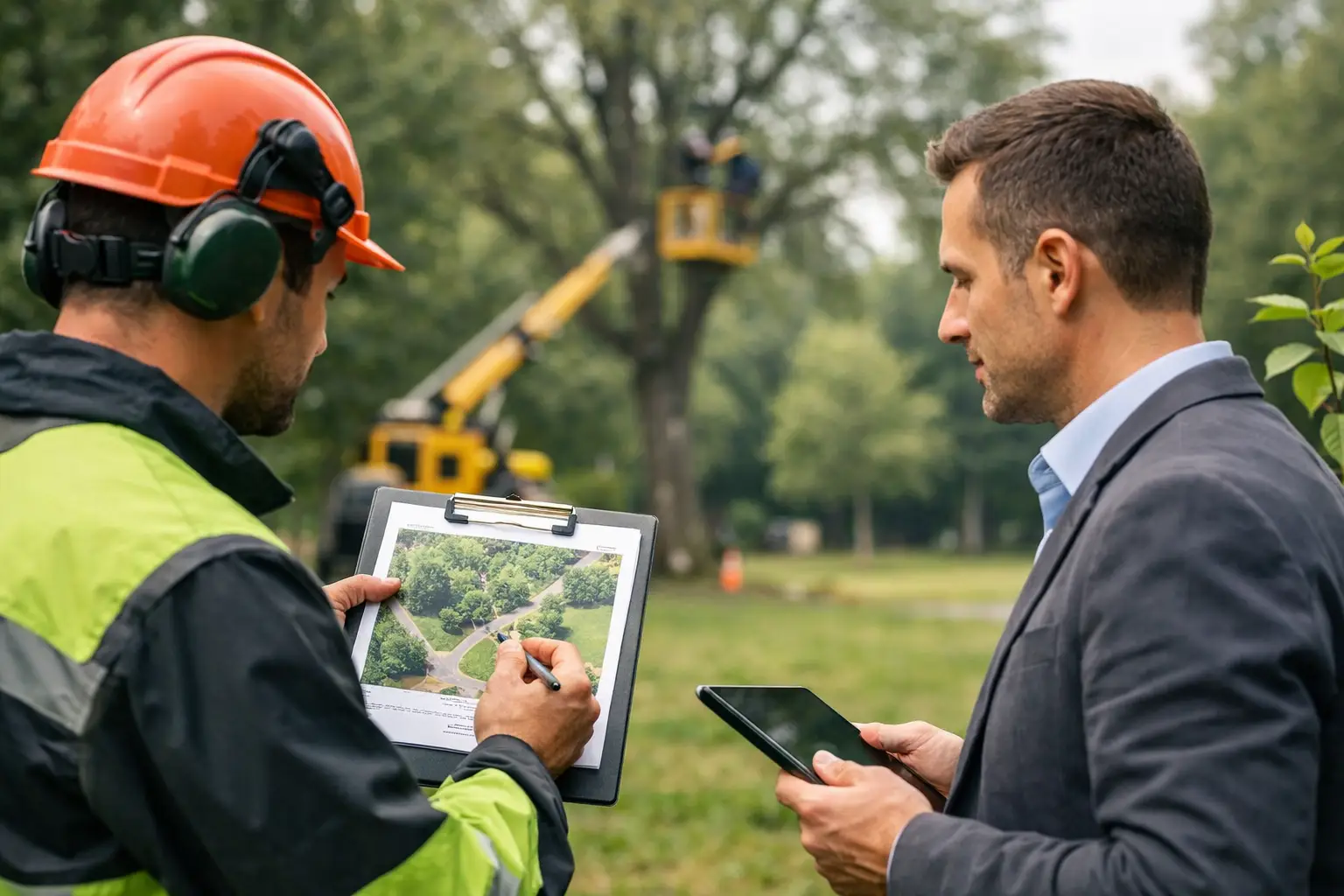
For complex sites, recommendations should identify access limits, traffic or pedestrian controls, nearby power lines, buildings, underground services and the equipment likely to be required. This is where professional planning pays off. A tree job that appears straightforward from the ground can require controlled dismantling, elevated work platforms, rigging or a crane once the surrounding targets are considered.
Regulatory and consent checks
Before any work begins, confirm whether district planning rules apply. Local council requirements can vary by location, zoning, species, tree size, heritage status and whether a property sits within a protected area. Trees beside roads, waterways, reserves or shared boundaries can bring additional obligations.
A management plan should flag the need for consent, notification or further advice rather than assume every tree can be pruned or removed immediately. This protects the owner from avoidable delays and helps preserve trees that are significant to the streetscape, local ecology or character of an area.
Protection measures matter during construction as well. If a tree is to be retained, the plan should define its tree protection zone and set rules for excavation, storage, vehicle movements, changes to ground level and service installation near roots. Damage below ground is often not obvious until months or years later, when canopy decline becomes difficult to reverse.
A workable maintenance schedule
Trees are living assets, so a plan should not be treated as a one-off report filed away after the first job. It needs review dates and realistic maintenance intervals. Young trees may need formative pruning every few years to establish good structure. Mature trees in high-use areas may need regular inspections, particularly after major wind events or site changes.
Seasonal timing can affect the choice of work. Some pruning is better scheduled around growth patterns, nesting activity, fruit drop or site use. Emergency hazards are different: where there is an immediate threat, the priority is making the site safe, then reviewing the longer-term management response.
Safety, environmental care and site controls
A plan is only useful if it can be carried out safely. Work methods should account for the people on site, the public, neighbouring properties and the crew completing the job. This includes setting exclusion zones, managing traffic and pedestrians, checking overhead hazards and using maintained equipment suited to the tree and access conditions.
Environmental considerations should be practical rather than token gestures. Retaining healthy trees where appropriate, avoiding unnecessary root disturbance, identifying habitat features and managing green waste responsibly all belong in good tree management. Wood chips can often be retained for garden mulch or site use, while timber may be processed or removed according to the property’s needs.
Where wildlife or habitat values may be affected, the work programme may need to be adjusted. The right response depends on the species present, the condition of the tree and the urgency of the risk. A hazardous limb over a busy entrance cannot be ignored, but the method and timing can often be planned to reduce disturbance.
Records that stand up over time
Keep the plan, inspection notes, photographs, approvals and completed-work records together. This gives a future manager or contractor the context behind earlier decisions. It can also demonstrate that foreseeable hazards were identified and acted on through a reasonable process.
After significant work, update the inventory and note what was completed. If a tree was retained with monitoring conditions, record the next inspection date. If a storm changes its condition, do not wait for the scheduled review – arrange another assessment.
Tree Technician prepares management plans with the same practical approach used on site: identify the real risks, set out sensible actions and make sure proposed work can be completed safely and professionally. The value is not in producing paperwork for its own sake. It is in giving owners a clear path from assessment to action.
A well-managed tree should not become a surprise expense or a recurring worry. Start with an assessment that reflects the site as it is now, then keep the plan current as trees, weather and property use change.