A hedge can go from a neat boundary to an overgrown problem surprisingly quickly. Professional hedge trimming services keep growth in proportion, improve access and presentation, and help avoid the risks that come with branches pushing into paths, driveways, roofs, power lines or neighbouring properties. The right cut also matters for the hedge itself. A hard, poorly timed trim can leave bare patches, stress plants and create a long recovery period.
For homeowners, commercial sites and rural properties, hedge work is more than a cosmetic tidy-up. It is practical property maintenance carried out with an understanding of plant health, site safety and the finished result.
What quality hedge trimming achieves
A well-maintained hedge should look intentional without appearing stripped or overly rigid. The aim is to retain a dense, even screen while allowing light to reach the lower foliage. This encourages growth from the base, rather than leaving the common top-heavy shape with thin, bare stems underneath.
Trimming also keeps a hedge within its intended footprint. That may mean preserving sightlines from a driveway, keeping a footpath clear, opening access to a gate, or preventing growth from rubbing against a building. On commercial premises, it helps maintain a professional appearance and keeps entrances, car parks and shared areas safe for staff, visitors and contractors.
There is a clear safety benefit as well. Dense, neglected hedges can hide hazards, restrict visibility near vehicle entrances, obstruct signage, and provide cover around security-sensitive areas. Where growth is tall or runs alongside a boundary, the work needs careful planning to protect people, fences, gardens and nearby structures.
Hedge trimming is not simply cutting everything back
Different species respond very differently to pruning. Fast-growing hedges such as griselinia, pittosporum, photinia and conifers can usually tolerate regular light trimming during active growth. Formal hedges often need more frequent attention to hold a crisp shape, while informal screening hedges may only need periodic reduction and selective pruning.
The condition of the hedge changes the approach too. A healthy hedge that receives routine maintenance can be shaped gradually with minimal stress. A neglected hedge may require staged reduction over more than one visit, particularly if it is overgrown, woody or sparse at the base. Taking too much foliage away at once can expose previously shaded growth to sun and wind, or remove the leaf cover the plant needs to recover well.
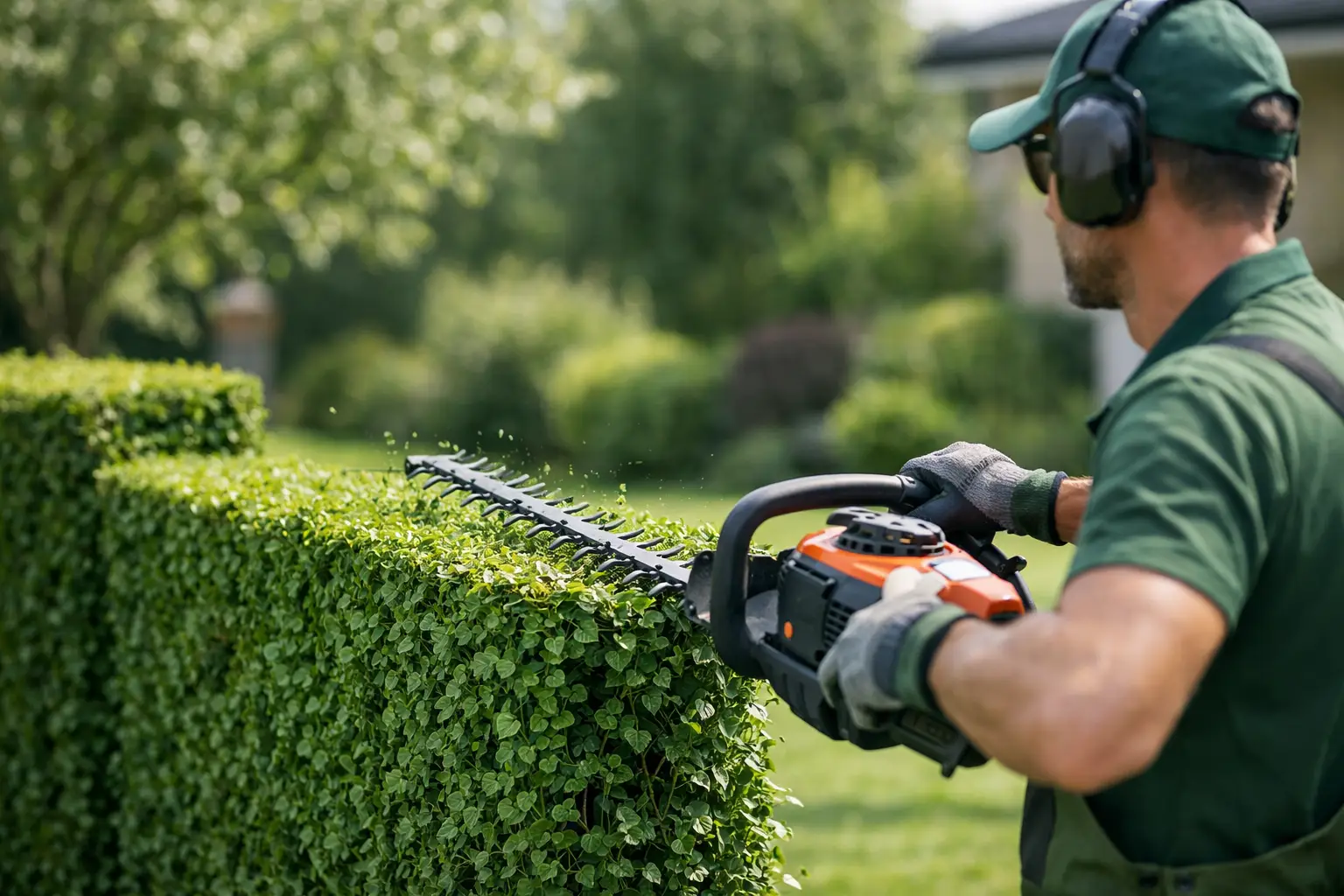
Height is another key consideration. A hedge may have outgrown the tools and techniques suitable for a homeowner, especially where uneven ground, slopes, garden beds or narrow access are involved. Working at height with powered equipment is not a job to improvise from a ladder. A professional crew can assess the site, use appropriate equipment and manage falling clippings without damaging the area below.
The best shape supports healthy growth
Most boundary hedges benefit from being slightly wider at the base than the top. This allows light to reach the lower foliage and supports a fuller screen from ground level upwards. It is a simple detail, but it makes a considerable difference over time.
A perfectly square hedge may suit some formal designs, but it is not always the healthiest option. The best finish depends on the species, location, desired privacy level and how often the hedge can realistically be maintained. Good advice should account for all of these factors rather than applying the same cut to every property.
When should a hedge be trimmed?
Timing depends on the plant, its growth rate and the purpose of the work. Light maintenance cuts are often completed when new growth is active, allowing the hedge to fill out after trimming. However, the ideal schedule can vary with seasonal conditions, flowering habits and exposure to frost, heat or coastal wind.
For many established hedges, one or two planned trims each year is enough. Fast-growing formal screens may require more regular visits during the growing season. Waiting until a hedge becomes excessively tall or wide may appear to save time in the short term, but it often results in a larger, more disruptive job and a less even finish.
If a hedge flowers, trimming at the wrong time can remove the season’s blooms. If birds are nesting, work may need to be delayed or adjusted. These are the practical details that should be checked before work begins, particularly on mature gardens and larger sites where hedges support local habitat.
What to expect from professional hedge trimming services
The best hedge work starts with a clear look at the site. Before cutting begins, the crew should identify access points, work zones, overhead services, obstacles, nearby vehicles and anything beneath the hedge that needs protection. They should also confirm the required height, width and finish, particularly where a hedge sits along a shared boundary.
For a routine maintenance visit, the work commonly involves shaping the hedge, reducing excess growth, clearing branches from paths and garden areas, and removing or chipping green waste. For larger reductions, the process may include staged cutting and careful lowering of heavier material to avoid damage below.
At Tree Technician, health and safety is in our DNA. That means using maintained equipment, appropriate personal protective equipment and a work method suited to the property rather than rushing through a one-size-fits-all job. It also means leaving the site tidy, so the benefit of the work is visible as soon as the crew leaves.
Boundary hedges need a measured approach
Hedges along fence lines can create uncertainty when growth crosses a boundary or access is limited from one side. The practical answer is to discuss the intended work early, agree on access where needed and avoid assumptions about who is responsible for which portion of the hedge.
Care is especially important around older timber fences, retaining walls and services. A thick hedge can conceal leaning posts, damaged wire, irrigation lines or other issues that only become apparent once material is removed. Reducing a hedge can also change wind exposure, so a heavily sheltered fence or garden may need a gradual approach rather than an immediate, drastic cut.
Where a hedge adjoins a road, public path or commercial entrance, traffic and pedestrian management may be necessary. This is one reason professional planning matters. A tidy finish is valuable, but not at the expense of safe access for the public or the people completing the work.
Signs your hedge needs attention now
Some hedges simply need routine shaping. Others signal a more urgent maintenance issue. Watch for growth blocking a driveway view, branches pressing against gutters or cladding, foliage encroaching on footpaths, or a hedge becoming too heavy for its fence or supporting structure.
Dead sections, discolouration, dieback and unusual thinning deserve a closer look. They may be caused by drought stress, poor drainage, pests, disease, root disturbance or competition from nearby trees. Trimming can improve airflow and remove damaged material, but it is not a cure for every underlying problem. In some cases, an arboricultural assessment is the sensible first step.
Very tall conifer hedges also require particular care. Once cut back beyond green foliage, many conifers will not regrow from old bare wood. Reducing them too far can permanently change their appearance. A staged plan may preserve privacy while bringing the hedge back to a manageable size.
Keep maintenance manageable between visits
Regular watering during dry periods, mulch kept clear of the stems, and avoiding damage from mowers or line trimmers all support hedge health. It is also worth checking that sprinklers are reaching the root zone rather than only wetting surface foliage.
Avoid tackling high or overgrown hedges with unsuitable equipment. Uneven cuts, torn branches and unsafe ladder work can turn a straightforward maintenance task into a costly repair. Tree Technician offer, a planned service schedule as this is usually easier on the plants, safer for the property and more predictable for property managers responsible for multiple sites.
A hedge should make a property feel private, defined and well cared for – not create an ongoing access or safety problem. Addressing excessive growth while it is still manageable gives you more options for a healthy, attractive result.