A stump left after tree removal can become the most frustrating part of the job. It sits in the middle of a lawn, catches the mower, creates a trip hazard and limits what you can do with the space. Professional Tree Technician for all your stump grinding service in and around Canterbury will remove that obstacle below ground level, leaving the area ready for practical use rather than simply hiding the problem.
For homeowners, that may mean reclaiming room for a garden bed, lawn, patio or children’s play area. For commercial sites, farms and developments, it can mean safer grounds, easier access and a cleaner finish to a tree removal or clearance project. The right approach depends on the stump’s size, species, position and what is planned for the site next.
When stump grinding in around Canterbury the right call is Tree Technician
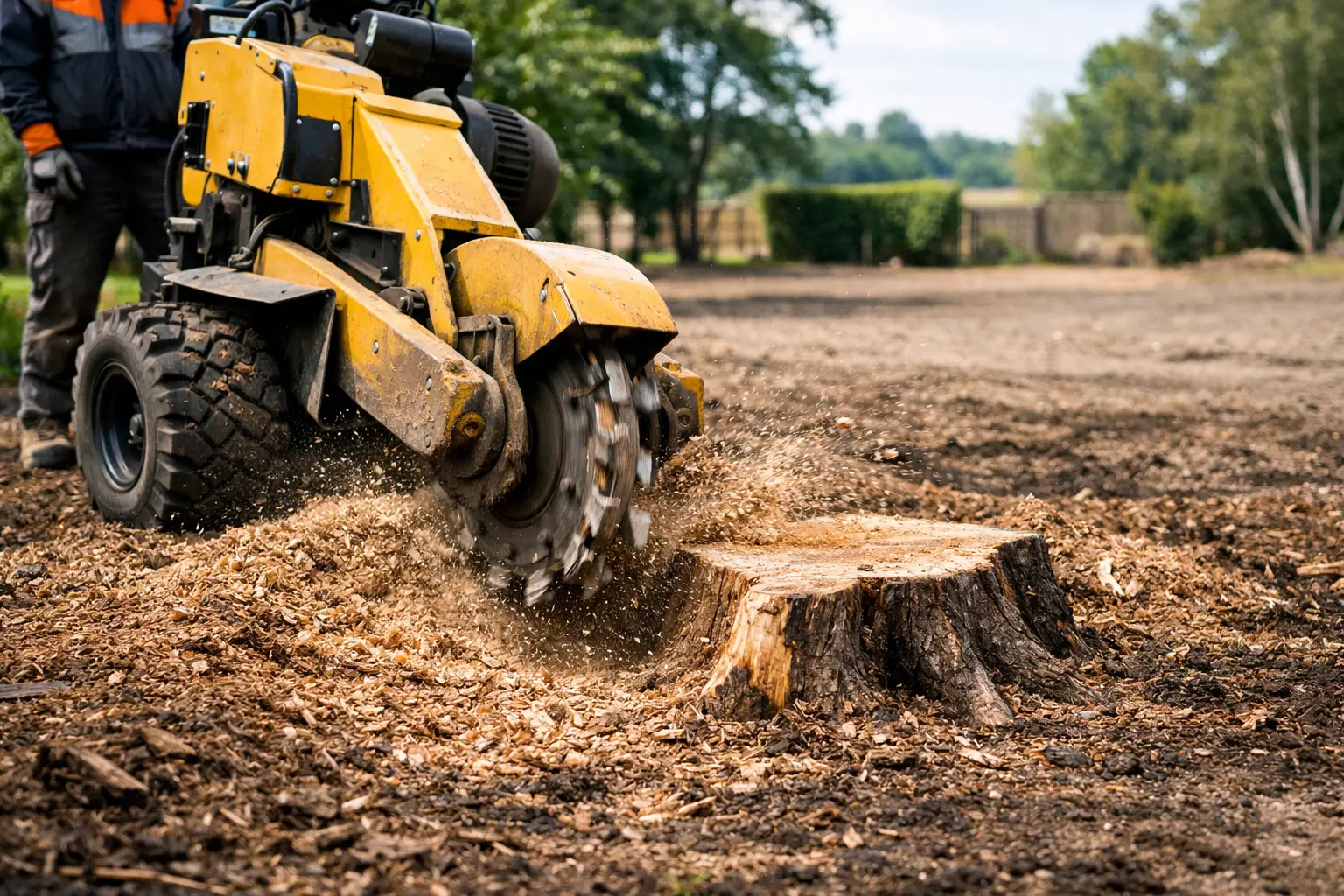
Grinding is usually the most efficient option when a tree has been removed but its stump remains in the way. A specialist stump grinder uses a rotating cutting wheel to break down the timber into fine mulch, working progressively below the surface. Unlike trying to dig out a stump by hand or pulling it with machinery, grinding avoids large-scale excavation and the unnecessary damage that can come with it.
This matters on established properties where lawns, garden edging, irrigation, driveways, retaining walls or neighbouring trees are close by. It is also useful in tight-access urban sections, where bringing in large extraction machinery would be impractical or disruptive.
Grinding is not always the same as complete root removal. Most tree roots remain underground and naturally break down over time. In many cases, that is the sensible outcome. Pulling every root can disturb a much larger area, affect nearby services or undermine ground that has already settled. If a new structure, deep footing, pool or substantial paving is planned, the site should be assessed so the stump treatment suits the build requirements.
Why an old stump should not be ignored
A weathered stump may look harmless, but it can create issues well beyond appearance. The obvious concern is safety. Stumps are easy to catch with a mower, obscure in long grass and hazardous on shared accessways, rental properties, schools and commercial grounds.
They can also make routine grounds maintenance harder. Mowing around protruding roots takes time, while whipper-snipping close to decaying timber can damage equipment and leave an untidy edge. On development sites and rural properties, old stumps can obstruct fencing, vehicle access, planting lines and drainage work.
Some species may also attempt to send up new shoots from the remaining root system. Grinding the stump well below the finished ground level removes the main source of this regrowth, although ongoing monitoring can be sensible for particularly vigorous species. Decaying wood may attract fungi and insects as well. Not all fungal growth is a concern, but a stump beside a healthy tree, timber structure or high-use area deserves informed attention rather than guesswork.
A safe stump grinding process starts before the machine arrives
A quality result is about more than reducing visible timber. The work begins with checking the area around the stump. Underground services, irrigation lines, drainage, lighting cables and old site infrastructure must be considered before grinding begins. On older Canterbury properties, service locations are not always obvious from the surface.
Access is checked too. A stump grinder needs a safe route through the property without damaging lawns, paving, gates or garden features. The best machine for a wide-open rural block is not necessarily the best choice for a narrow residential section. Matching the equipment to the access and stump size helps keep the work efficient and limits disruption.
The operator then establishes an exclusion area and manages flying debris. Grinding produces wood chips, soil and small stones, so protection for windows, vehicles, garden features and nearby footpaths is essential. This is particularly important where the stump is beside a boundary, driveway or public-facing area.
At Tree Technician, health and safety is built into every stage of tree work. Experienced operators, maintained machinery and a controlled work area help deliver a tidy result without treating your property as an afterthought.
What happens to the stump mulch?
Grinding creates a mix of wood fibre and soil. Depending on the site and your plans, this material can be left in place, spread into nearby garden beds or removed. There is no single right answer.
Leaving mulch can be useful in low-traffic garden areas, where it will break down gradually. However, it is generally not ideal as the final surface for new lawn or paving. Fresh woody material settles as it decomposes, so a lawn may become uneven if the hole is filled only with grindings. For turf, the usual approach is to remove or redistribute the excess mulch, backfill with suitable topsoil and allow the area to settle before sowing or laying new grass.
If you are planting a replacement tree, avoid placing it directly over the old stump location. The remaining roots and decomposing timber can make establishment more difficult. Moving the new tree a sensible distance away gives it better soil conditions and room to develop a healthy root system.
Canterbury conditions can affect the work
Canterbury properties range from compact urban sections to large rural blocks, each with different access and ground conditions. Dry summer soil can be hard and dusty, while winter rain may make lawns soft and vulnerable to rutting. A capable contractor will plan the machine route and timing around those conditions rather than forcing access that leaves avoidable damage behind.
Stump species matter as well. Dense hardwood stumps, large conifers and old multi-stemmed specimens require more time than a small ornamental tree. A stump close to concrete, a fence line or established planting also needs careful technique, because the grinder must remove enough material without striking nearby structures or disturbing the area unnecessarily.
For a single small stump in open ground, the work can be straightforward. For multiple stumps after land clearing, tree removal or shelterbelt work, a coordinated programme can reduce downtime and prepare the site for its next stage more efficiently. Property managers and developers often benefit from grouping stump work with pruning, removal, chipping or site clearance rather than arranging each task separately.
Preparing your property for stump grinding
A few simple steps can make the job smoother. Move vehicles, outdoor furniture, pots and loose items away from the work zone. Let the contractor know about irrigation, buried cables, drains, septic systems or anything else that may be below the surface. If access is through a shared driveway or gate, organise clearance in advance.
It also helps to be clear about the intended finish. Do you want the area levelled for lawn, planted as a garden, prepared for a path, or simply made safe and easy to maintain? That information guides the grinding depth, mulch handling and clean-up required.
Do not rely on a stump’s appearance to judge how difficult it will be. A low, decayed stump may have a broad root flare below ground, while a recently cut tree can still have dense, solid timber. A site assessment provides a more reliable basis for planning the work and identifying any risks.
The clean finish makes the difference
Removing a stump is often the final step that turns a tree removal into a genuinely usable result. It eliminates a lingering hazard, makes maintenance simpler and gives you control over the space again. Just as importantly, it avoids the temptation to cover a problem with soil and hope it disappears.
Whether you are tidying a backyard, managing a commercial property or preparing land for its next purpose, stump grinding should be planned with the wider site in mind. A properly assessed, safely completed job leaves more than an empty patch of ground – it leaves a practical area ready for whatever comes next.