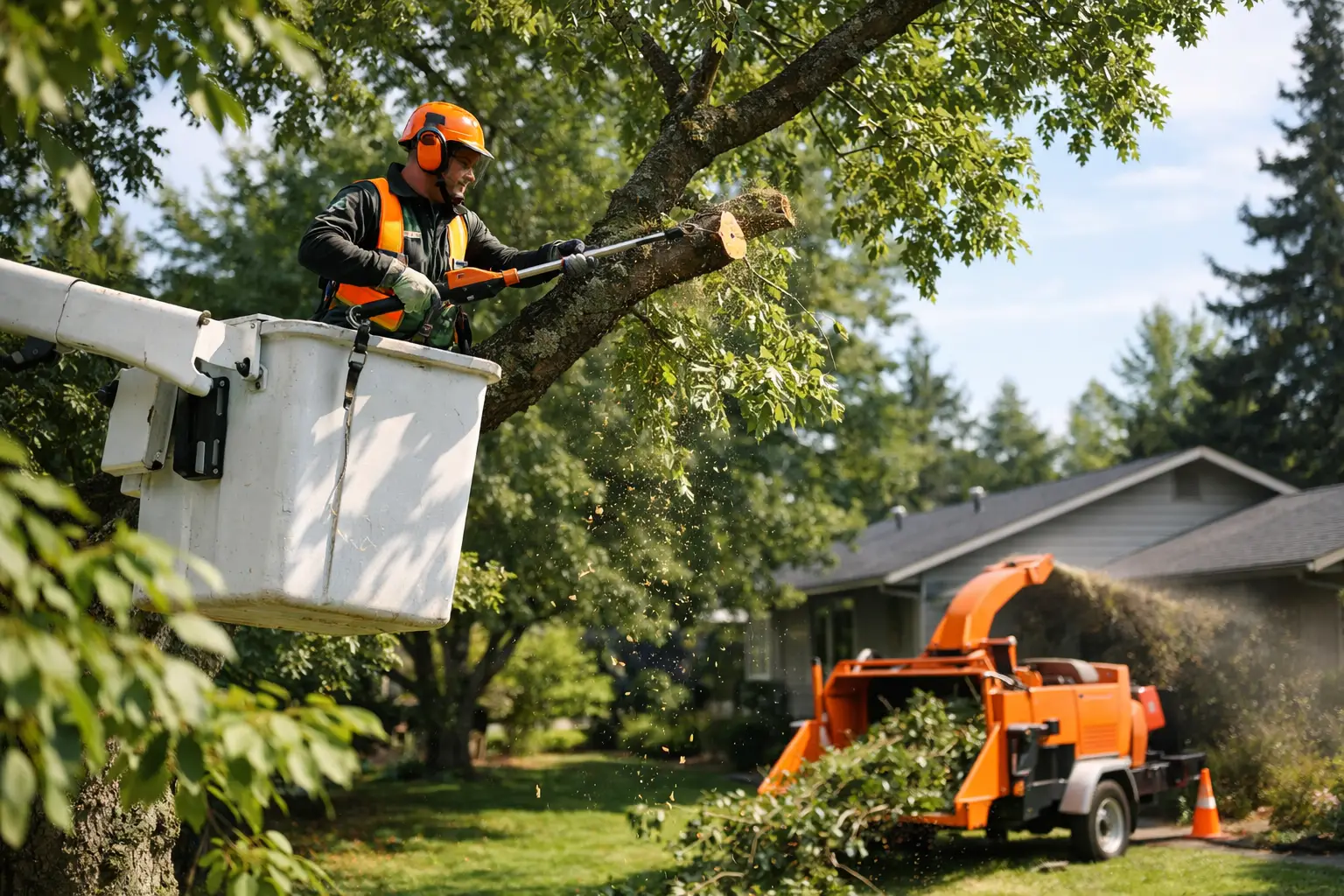
A branch scraping a roof, a dense canopy blocking winter light, or deadwood hanging above a driveway is more than a garden annoyance. Professional tree pruning services help Canterbury property owners deal with these issues before they become costly damage, access problems or safety risks.
Good pruning is not simply about making a tree smaller. It is a considered piece of arboricultural work that balances the tree’s condition, its location, its species and the purpose it serves on your property. Done well, it can improve health, appearance and clearance while retaining the natural form and long-term value of the tree.
What professional tree pruning services achieve
Trees need room to grow safely alongside homes, sheds, driveways, power lines, footpaths and neighbouring properties. Over time, branches can become overextended, cross and rub, shade valuable areas, or develop weak attachments. The right pruning approach removes or reduces the parts creating a problem without stripping the tree of the foliage it needs to remain healthy.
For homeowners, that may mean lifting low branches above a driveway, clearing growth away from gutters or reducing a canopy that has become too close to the house. For commercial sites and managed grounds, pruning can maintain access for vehicles, improve visibility around signs and entrances, and reduce foreseeable risk in areas used by staff, visitors or the public.
Pruning can also be part of a wider tree-health plan. Removing dead, damaged or diseased material may help limit decline and makes inspections easier. Selective thinning can improve light and airflow through a crowded canopy, although thinning is not the answer for every tree. The best method depends on the species, age, structure and condition of the tree, as well as the result you need.
The right cut depends on the tree and the site
There is no one-size-fits-all pruning job. A mature specimen tree in a confined residential section calls for a different approach from shelterbelt maintenance on a rural property or clearance work around a commercial building.
Crown lifting removes lower branches to create clearance beneath the canopy. It is often useful above paths, lawns, driveways and accessways, but it needs restraint. Removing too much lower growth can affect a tree’s stability, shape and ability to cope with wind.
Crown reduction shortens selected branches to reduce spread or height where a canopy is outgrowing its available space. A proper reduction works back to suitable lateral branches, retaining a natural-looking canopy rather than leaving blunt stubs. It is commonly used where branches are approaching buildings or have become too long and heavily loaded.
Deadwood removal focuses on branches that are dead, broken or clearly failing. This can be particularly valuable over roofs, outdoor living areas, car parks and public spaces. It does not automatically make every tree safe, though. A sound inspection considers the trunk, roots, branch unions, previous cuts and site conditions as well.
Formative pruning is most valuable on younger trees. Small, timely cuts can guide branch structure and reduce the likelihood of major corrective work later. This is often one of the most cost-effective ways to protect the future of a newly planted tree.
Why topping creates bigger problems
When a tree has become too large, it is tempting to cut the canopy back hard and quickly. Topping, which removes large sections of the crown or cuts branches back to stubs, may provide an immediate change in size, but it often creates a worse management problem.
Large wounds can be harder for a tree to compartmentalise. The tree may respond with fast, weakly attached regrowth, leaving a denser and less stable canopy within a few years. Its appearance and health can suffer too. In some cases, replacement is the more sensible option if a tree is fundamentally unsuitable for its position, but that decision should follow an informed assessment rather than a rushed cut.
Professional arborists look for practical alternatives first, such as selective reduction, clearance pruning, cabling and bracing where appropriate, or staged management over several seasons. The aim is not to preserve every branch at all costs. It is to choose a solution that properly manages risk while treating the tree responsibly.
Safety starts before anyone leaves the ground
Pruning at height involves more than a chainsaw and a ladder. Branch weight, decay, overhead services, restricted access, nearby buildings and pedestrian movement all change how a job needs to be planned. A branch that looks manageable from the ground can behave very differently once it is cut and lowered.
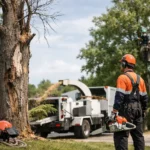
Before work begins, a competent team assesses the tree, work zone and likely drop areas. They identify hazards, establish exclusion zones and select the access method and equipment suited to the site. That may include climbing equipment, elevated work platforms, rigging systems, chippers and appropriate traffic or pedestrian controls.
This planning matters just as much on a tight residential property as it does on a large commercial site. It protects people, lawns, fences, roofs and vehicles, while helping the work progress efficiently. Health and safety is in our DNA, which is why Tree Technician brings trained crews, maintained equipment and SiteWise Gold-certified safety systems to every suitable job.
Protected trees and consent requirements
A tree on private land is not always free to prune, reduce or remove. Planning rules, protected-tree schedules, heritage considerations, consent conditions and site covenants can all affect what work is allowed. Requirements vary by location and may apply to a specific tree, a group of trees or an area of land.
The work proposed matters too. Light maintenance may be treated differently from major crown reduction, root disturbance or removal. If a tree is protected, poorly planned work can lead to delays, remedial requirements or enforcement action.
For this reason, check the relevant local authority requirements before booking substantial work. Where approval, reporting or specialist advice is needed, consultancy arboriculture can provide the documented assessment and management recommendations needed to make a clear, compliant decision. This is especially useful for developers, property managers, schools and organisations responsible for significant tree assets.
When to arrange pruning
Visible dead branches, storm damage, rubbing limbs and growth against a structure all warrant timely attention. Do not wait for a branch to fail if it is already over an occupied area. After strong winds, look for cracked unions, freshly exposed wood, hanging branches, lifted root plates and sudden changes in canopy lean. Keep clear of damaged trees and arrange an assessment rather than trying to pull or cut material down yourself.
Routine maintenance is best planned before a tree becomes an urgent problem. The ideal timing can depend on the species and the purpose of the work. Some trees respond best to pruning during dormancy, while others need to be managed around flowering, fruiting, active growth or disease risks. Urgent hazard work, of course, should be completed when it is needed, not delayed for a preferred pruning season.
A recurring maintenance schedule is often the simplest option for properties with established trees, large hedges or shared grounds. It keeps clearance and presentation under control, spreads work across the year and makes budgeting easier than dealing with several years of unchecked growth at once.
What a professional result should include
A good pruning job should leave your site safer, cleaner and easier to manage. The tree should retain a balanced, appropriate form where retention is the goal, with cuts made carefully to support sound recovery. You should also know what work has been completed and whether the tree needs follow-up monitoring or further management.
Site clean-up matters. Branches, leaves and chip should be dealt with as agreed, and work areas left tidy once equipment is removed. On larger sites, the team should coordinate access, work around operating hours where practical, and communicate clearly with site managers or tenants.
If you are unsure whether a tree needs pruning, reduction, support work or removal, start with an on-site assessment. The right advice can prevent unnecessary cutting, identify hazards early and give your trees the care they need to remain an asset to the property for years to come.